

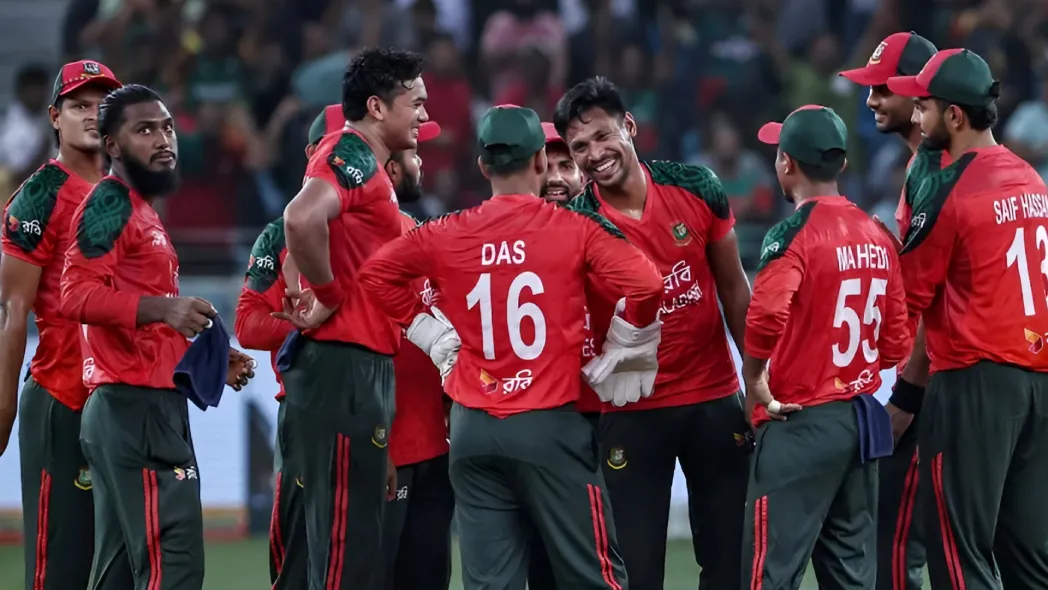

The Bangladesh cricket crisis has intensified because the national team skipped the ICC T20 World Cup, triggering long-term consequences beyond a single tournament. The BCB decision controversy has created uncertainty around player exposure, sponsorship value, and domestic stability, raising serious questions about governance. As Bangladesh cricket uncertainty in 2026 grows, concerns now stretch from national team development to Bangladesh domestic cricket problems, ongoing BPL controversies, and payment issues. This is no longer a short-term setback; it’s a structural challenge with lasting implications for the country’s cricketing future.
World Cup Absence and Player Impact: Bangladesh cricket crisis
The global skipping of an event, such as the World Cup, will have significant impacts on both the development and the international visibility of all cricketers. The major route through which Bangladeshi players can gain franchise interest is through their participation in the ICC events. Therefore, without the platform provided by the World Cup, they are missing out on the opportunity to display their skills to a wider audience, and the value of their performances in bilateral matches is reduced around the world. The lack of opportunities abroad and a diminished talent pipeline reinforce why there was widespread criticism in the cricket community for Bangladesh skipped ICC T20 World Cup.
Governance Questions Inside the BCB
BCB governance is directly related to transparency in decision-making as it relates to communication. A lack of clear communication on why the team was going to skip the tournament caused a loss of player, official, and stakeholder confidence. The combination of the uncertainty of upcoming elections along with the current instability of governance has placed attention away from the priority of cricket and toward political survival, which is a detrimental factor for long-term performance.
Domestic Cricket Under Financial Stress
Bangladesh’s domestic cricket problems are no longer isolated incidents. League withdrawals, uncertainty around the Dhaka Premier League, and payment dependency have placed lower-tier cricketers at risk. Domestic competitions remain the backbone of national selection and income, yet participation instability threatens the ecosystem. When domestic pathways weaken, national depth inevitably suffers.
BPL Controversies and Market Confidence
Despite entering a new cycle, BPL controversies and payment issues continue to damage credibility. Franchise instability, delayed payments, and integrity concerns reduce player confidence and investor trust. For a league meant to offset lost international exposure, these unresolved issues highlight how structural flaws compound the wider crisis rather than solving it.
Numbers That Signal the Decline
In terms of competitive preparedness in 2026, Bangladesh was entering 2026 having won the majority of its T20I matches during 2025. Nonetheless, Bangladesh missed the ICC T20 World Cup, therefore denying themselves the opportunity to earn additional ranking points, international broadcast media exposure, and performance benchmarking opportunities. There are no figures available regarding financial loss; nonetheless, we may reasonably assume that missing out on participation in ICC events was likely to yield the greatest returns in terms of both commercial and sporting returns. This is, therefore, a quantifiable competitive disadvantage.
Missing the upcoming WC has exposed the problems of how the game is governed at the BCB, and has disrupted the path to international competition for players; it also further destabilized the domestic structure of the sport. Local tournaments have been suggested as short-term solutions to keep players active. However, no amount of local tournaments can substitute the level of global competition or commercial confidence needed to restore the influence and momentum of the sport going into 2026. The Administrative Cycle of the next year will be critical to determining if this crisis will be an opportunity to “reset” or a prolonged decline for the Sport of Bangladesh.
Key Takeaway
Skipping the T20 WC transformed a tough decision into a full-scale crisis driven by governance, exposure, and structural failures.
FAQs
Why did Bangladesh skip the T20WC?
The decision was taken citing security concerns, though it later became a major governance controversy.
How does skipping the World Cup affect Bangladeshi players?
It reduces global exposure, franchise opportunities, and competitive benchmarking at the highest level.
What are the main Bangladesh domestic cricket problems right now?
League instability, financial uncertainty, and reduced participation in key domestic tournaments.
Is the BPL helping offset the World Cup absence?
Not fully ongoing BPL controversies and payment issues have limited its stabilizing impact.
Can Bangladesh recover from this cricket crisis by 2026?
Recovery is possible, but only with governance reform, domestic stability, and restored international participation.
Disclaimer: This blog post reflects the author’s personal insights and analysis. Readers are encouraged to consider the perspectives shared and draw their own conclusions.