

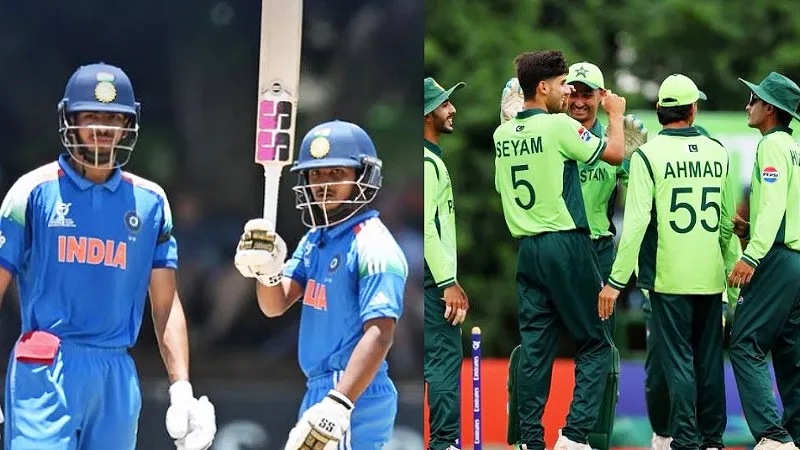

As each of India’s Pakistan World Cup matches arrives with an abundance of noise, memory, and national anxiety, the scripts are reversed for India and Pakistan at the U-19 World Cup level. The two countries’ U-19 teams may be loud and vocal; however, they continue to develop in terms of how to play within the rules of the game. Therefore, there is no better way to describe this match-up than that of a match that is being played by two calm teams in a world of hype, not the hype itself, but the fact that both teams have a very calm approach to the hype.
Momentum Built, Not Announced
India’s 201-run victory margin against Zimbabwe showed a lot of order and organization on their part. Youth cricket margins are generally very large when they are based on disorganization (chance) rather than order. This match demonstrated that India had the ability to build long innings for their batsmen with consistent line bowling from the bowlers and constant pressure at all times in the field. Most likely, a big margin such as the 201-run victory will reflect the organizational discipline of the winning team. India checked off all the boxes: scoreboard pressure, consistent line bowling, and zero compassion once the door was open.
Pakistan’s Net Run Rate Awareness
Pakistan’s victory over New Zealand revealed a team thinking two steps ahead. Bowling the Kiwis out for 110 set the platform, but the real statement came after. The chase wasn’t rushed; it was engineered. Captain Farhan Yousaf later confirmed it was pre-planned: bowl first, then finish early. That clarity matters in tournaments decided by decimals. Young sides often play the situation; Pakistan played the table.
Sameer Minhas and the Value of Intent
Chasing fast only works if someone owns the intent. Sameer Minhas’ 76 off 59 balls*, laced with 10 fours and two sixes, wasn’t reckless acceleration; it was controlled aggression. Yousaf’s praise afterward wasn’t captain’s courtesy; it was recognition of leadership through batting. At the U19 level, one confident innings can recalibrate a dressing room. Minhas didn’t just win a game; he validated a plan.
Conditions as a Quiet Advantage
Pakistan’s pre-tournament tri-series in Zimbabwe now looks like a hidden asset. Bulawayo’s surfaces reward patience early and smart shot selection later, knowledge you can’t download overnight. Yousaf’s emphasis on playing “natural cricket” isn’t motivational fluff; it’s tactical comfort. Indians are quick learners, but Pakistanis arrive already fluent in the conditions’ subtleties.
Comparative View: When Preparation Beats Emotion
History has shown that the youth level matches between India and Pakistan are far less about talent and a great deal more about managing emotions. Consider the history of U-19 World Cups; in those instances where the calmest side (often the best prepared) outlasted the flashiest opponent, as with all U-19 World Cups in the last few years, teams have found success when they travel early, adapt quickly, and have role clarity. The format for this match is a perfect fit for how these teams will prepare.
Strip away the flags and fireworks, and this becomes a fascinating chess match. India brings brute momentum and systemic confidence. Pakistan counters with planning, conditions expertise, and a top order already tuned to the situation. The team that wins won’t be the one that “handles pressure” better; it’ll be the one that turns pressure into routine.
Key Takeaway
This U19 India–Pakistan clash will be decided by planning, not passion.
FAQs
- What makes this U19 match so crucial?
It could decide which team reaches the semi-finals and which goes home.
- Why was Pakistan’s chase against New Zealand significant?
It was a deliberate net run-rate strategy executed perfectly.
- How do conditions in Zimbabwe influence the game?
They reward teams familiar with pace, bounce, and tempo control. Experience matters here.