

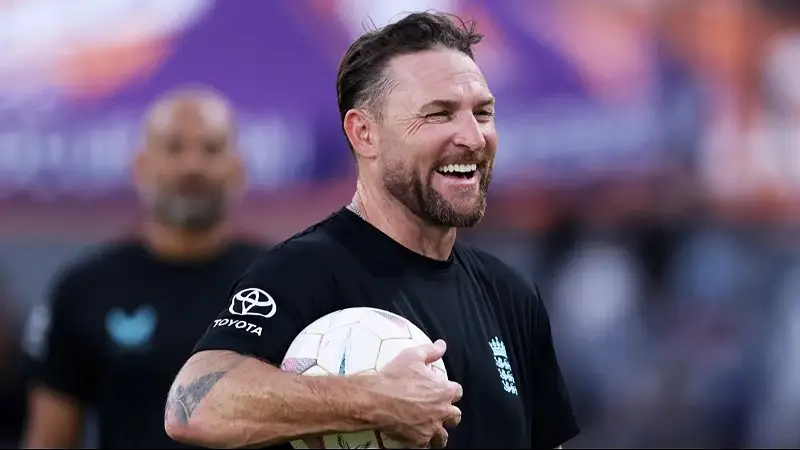

Australia retained the Ashes 3-1. England’s only win in the series came in Melbourne, their first Test win in Australia in almost 15 years. Two matches in the series finished in two days, the first Ashes series with two two-day Tests since 1888. England’s ODI record under McCullum stands at four wins and eleven defeats. They exited the Champions Trophy without winning a match. England has lost more Tests, 13, than they have won, 12, in the last two years. The batting strike rate has jumped from 48.1 to 70.7 under McCullum’s coaching, and England now ranks first in batting average and strike rate among Test nations. Against everyone except India and Australia, where their win percentage is half what it is against the rest of the World Test Championship field.
Why the Bazball Philosophy Has a Specific Opponent Problem
The statistical case for McCullum’s impact is genuine. England’s batting was ranked fifth and sixth in the world before his appointment. It is now ranked first. Joe Root has averaged 58 in the 41 Tests since McCullum took charge, scoring 14 centuries, as many as Botham, Lamb, Hussain, and Trescothick each managed in their entire careers. The batting transformation is real, measurable, and would define any coaching tenure as successful in most contexts.
The problem is not the transformation but its limitations. England have not beaten Australia since 2015. They have not beaten India away since 2018. The win percentage gap between those two opponents and everyone else is not narrowing under McCullum; it is the same as it was before his appointment.
What the Ashes 2025-26 Exposed About the Coaching Structure
Australia retained the Ashes in eleven days, the fastest series victory since 2002-03. England were bowled out inside 40 overs twice in Perth. Mitchell Starc took 7 for 58 in that first Test, a career best, on a surface England’s preparation had not adequately addressed. Their warm-up before the Perth Test was an internal match at a club ground rather than a quality simulation of Test conditions.
England have had no fielding coach since Paul Collingwood left the setup before the 2025 summer. Harry Brook’s costly drops in Adelaide were not an isolated incident; they followed a series of catching failures in the India home series that were never corrected through specialist intervention.
Why Brendon McCullum’s Coaching Philosophy Works Against Everyone But the Best
The sixteen Tests England has played against Australia and India since June 2022 confirm the structural ceiling of the current approach. England failed to take twenty wickets in six of those sixteen matches. Their bowling average against India and Australia is ten runs higher than against the other six WTC teams. Their balls-per-wicket ratio against India and Australia is fifteen deliveries longer than against everyone else.
That divergence in messaging after a difficult series is not itself a problem. But combined with the statistical pattern, improved against the rest, unchanged against the best, it confirms the philosophy has reached the boundary of what instinct without structural discipline can achieve at the highest level of Test cricket.
What Changes Are Required for the Next Cycle
The clearest changes are structural rather than philosophical. A fielding coach is the most straightforward gap to address. A more disciplined approach to preparation for overseas Tests, specifically against high-quality seam attacks in conditions that don’t suit England’s driver-heavy batting method, is the tactical correction the Ashes exposed most specifically.
The ODI record, four wins, eleven defeats, and the Champions Trophy exit confirm that expansion has not produced the results that justified it. Whether the coaching structure changes in response to the Ashes result will determine whether England’s next cycle produces a different outcome against the two teams that McCullum’s transformation has so far failed to move.
- Do you think McCullum deserves to continue as England coach after the Ashes, or has the philosophy reached its limit and needs replacing? Drop your view in the comments and follow for cricket coverage.
FAQs
What went wrong with England after the Ashes?
England struggled due to tactical rigidity, poor adaptation to conditions, and unclear player roles.
Why is Liam Livingstone important in this discussion?
His situation reflects wider issues in role clarity and communication within the team setup.
How has Brendon McCullum’s coaching style affected England?
His freedom-based approach has boosted confidence but exposed tactical weaknesses in tough conditions.
Does the Indian Premier League impact England selection?
Yes, it shapes player skillsets, but England has not effectively translated those skills into defined international roles.
Can England recover from this phase?
Yes, but only if they balance attacking intent with structured planning and clearer selection policies.