

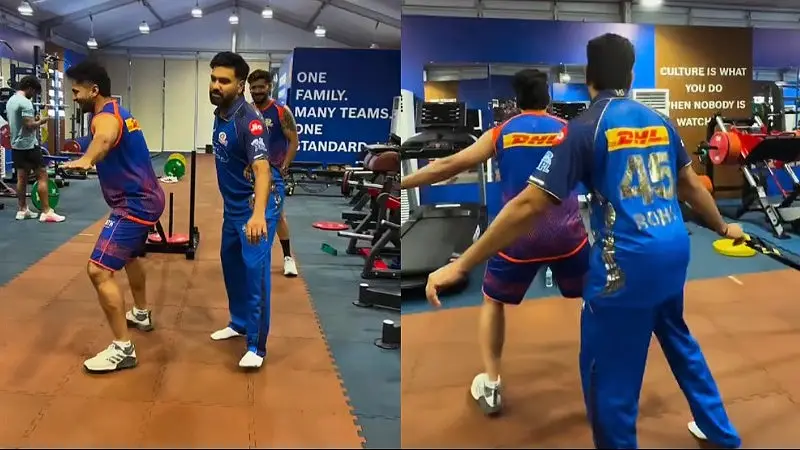

The MI spokesperson’s update on Rohit Sharma’s availability says exactly what toss-day fitness decisions always say: he has trained, he hasn’t been cleared, and the final call waits until matchday. For fans, that reads as good news wrapped in caution. For the Mumbai Indians, it describes a more uncomfortable situation. Their most structurally important batter is available enough to be considered and injured enough to remain uncertain. That gap, between probable and confirmed, is where this season’s biggest decision for MI now lives.
Toss Decision Signals Managed Return
When a team defers fitness confirmation until the toss, the underlying message is consistent across cricket: the player has resumed training but hasn’t reached the intensity that removes all physical risk. Rohit is close. He hasn’t crossed the threshold yet.
Hamstring injuries make that distinction especially important. They stay quiet through light training and declare themselves in the split-second acceleration of a quick single or a diving stop. If Mumbai Indians bring Rohit back at 80 percent readiness and the hamstring responds badly under match conditions, they haven’t gained an opener. They’ve lost him for a more critical stretch of the season than this fixture alone. The toss decision reflects careful medical management, not a signal about full fitness.
Top Order Cannot Wait Longer
Rohit’s absence has produced the predictable consequence: multiple opening combinations tested across consecutive matches, none of them settled, all of them shifting the burden onto the batters who follow.
The damage isn’t just at the top of the order. An unsettled opening partnership changes when Suryakumar Kumar arrives, how much acceleration responsibility he absorbs before field restrictions lift, and what role the middle order plays before the innings finds rhythm. That ripple runs all the way down MI’s batting structure.
Wankhede Suits His Natural Game
Wankhede under lights is as close to an ideal Rohit Sharma surface as T20 cricket offers. The pitch sits up, the ball travels through quickly, and powerplay boundaries arrive off timing rather than brute force.
His career figures against SRH (535 runs in 25 innings at 24.32) carry a caveat worth acknowledging: multiple of those innings were played on surfaces and under conditions less suited to his style. Dismissing his threat on aggregate alone ignores the specific advantage Wankhede gives him over a bowling attack he would otherwise find difficult.
IPL 2026 Punishes Every Cautious Call
MI’s season position removes the comfortable option from this fitness decision. IPL 2026 has shown repeatedly that teams unable to stabilise their top-order structure through the middle rounds don’t recover before the playoff race closes. Mumbai Indians have been in that position, and the window for course correction is narrowing with each fixture.
That context makes the gamble real in both directions. Rushing Rohit back at partial fitness helps MI immediately and risks the longer term if the hamstring breaks down under match intensity. Holding him out protects the injury but continues a top-order problem that hasn’t been solved without him. Neither option is clean, and the toss decision will reveal which risk the MI management chose to accept.
SRH Will Target Rohit Immediately
Sunrisers Hyderabad won’t ignore an opener returning from a hamstring issue. Their bowlers will apply pressure designed specifically to test his mobility: tight deliveries that force hesitation between the wickets, aggressive field settings requiring quick judgments about running, and pace into the pitch that demands sharp footwork. That’s standard professional preparation against someone known to be carrying a physical concern.
Stat | Figure |
Career runs vs SRH | 535 |
Innings vs SRH | 25 |
Average vs SRH | 24.32 |
Strike rate vs SRH | 136.13 |
Injury | Hamstring |
Return status | Toss decision |
- Does Rohit Sharma’s return solve Mumbai Indians’ powerplay crisis against SRH, or does the hamstring risk make keeping him out the smarter call at this point of the season? Drop your pick in the comments and follow for IPL updates.
FAQs
Q: Will Rohit Sharma play MI vs SRH today?
The final decision will be made at the toss following a last-minute fitness assessment by MI’s medical staff.
Q: What injury has kept Rohit Sharma out of recent IPL matches?
He has been managing a hamstring issue that forced him out of several Mumbai Indians fixtures this season.
Q: How has Rohit Sharma performed against Sunrisers Hyderabad historically?
He has scored 535 runs across 25 innings against SRH at an average of 24.32.
Q: Why does Rohit Sharma’s return matter so much for Mumbai Indians?
His presence resets MI’s entire batting structure and resolves an opening combination problem no replacement has solved.
Q: What makes Wankhede Stadium suit Rohit Sharma’s batting style?
The fast surface and powerplay suit his timing-based game better than most other IPL venues.