



Under-19 World Cups rarely reward reputation alone. They reward readiness, adaptability, and nerve. Group D of the 2026 Men’s Under-19 World Cup reflects that reality perfectly. South Africa and the West Indies arrive as former champions. Afghanistan arrives with momentum. Tanzania arrives with freedom and nothing to lose.
Group D has eight such players spread across four teams whose performances could quietly redefine expectations. Instead of listing them as prospects, it’s worth asking a sharper question: Which skill sets actually win youth World Cups in these conditions?
Afghanistan’s Control Axis: Faisal Shinozada & Salam Khan
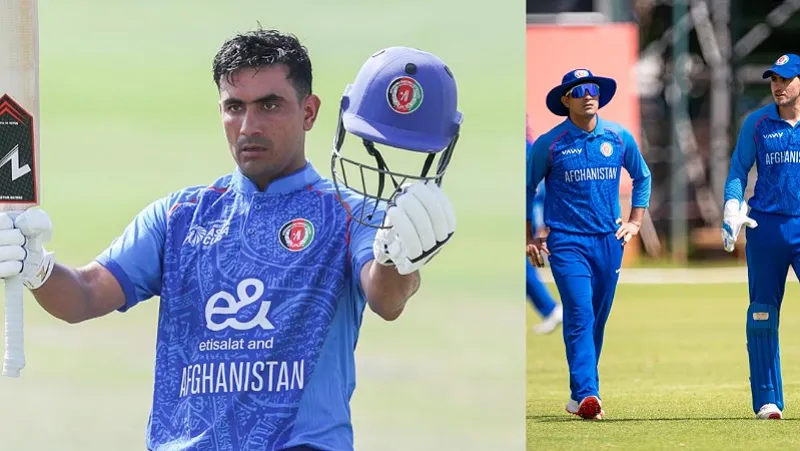 Faisal Shinozada & Salam Khan
Afghanistan’s Under-19 success story has matured from raw aggression into controlled efficiency, and this duo represents that shift. Faisal Shinozada, batting at No. 3, offers stability Afghanistan once lacked. Four Youth ODI hundreds, an average of 52.00, and a strike rate near 88 underline a batter who understands tempo rather than chasing dominance.
To complement Shinozada’s style is the type of fast-bowler that many young cricketers dream about, Salam Khan, whose ability to take early wickets has been shown through his 14 wickets from the last four games in the Zimbabwe tri-series. With three four-fours during this time, he has shown he can have an impact on the outcome of a match with early wickets; even when his team lost to Pakistan, his 4 for 40 almost won the game by itself.
South Africa’s Rebuild Pillars: Jason Rowles & Jorich Van Schalkwyk
 Jason Rowles & Jorich Van Schalkwyk
South Africa enters this World Cup amid quiet uncertainty, but these two batters offer structural clarity. Jason Rowles was a rare positive in a 3–0 home series loss to India, scoring a patient 114, South Africa’s only century. Batting at No. 4 and bowling left-arm spin, he provides tactical flexibility and emotional steadiness. His CSA Under-19 Player of the Year award in 2025 wasn’t accidental.
If Rowles is reliable, Jorich van Schalkwyk is scale. His historic 215 against Zimbabwe, the first Youth ODI double-hundred, showcased stamina as much as skill. More telling is his exposure to senior cricket, including first-class runs against experienced attacks. South Africa won’t need miracles from him; they’ll need innings architecture, and that’s his strength.
West Indies’ Reset Core: Joshua Dorne & Jakeem Pollard
 Joshua Dorne & Jakeem Pollard
Joshua Dorne and Jakeem Pollard are providing a foundation to the West Indies youth cricket team that is more stable than their previous “flair & fragile” nature. The Captain returns in his second Under-19 World Cup after an impressive form in the lead-up, and more importantly, without the weight of hope. After a disappointing performance in the 2024 season, the team under the leadership of Dorne won both the series against England and Sri Lanka, and Dorne has been at the top of the run charts through 95, 90, 80, and an unbeaten 102.
Pollard, meanwhile, offers something West Indies youth sides don’t always prioritize: control. At 17, his 18 wickets in 10 Youth ODIs come at an average of 16.27 with an economy of 3.71. His four-maiden spell against Sri Lanka showed rare discipline. In pressure matches, Pollard’s restraint could prove as decisive as Dorne’s leadership.
Tanzania’s Fearless Engine: Laksh Bakrania & Khalidy Juma
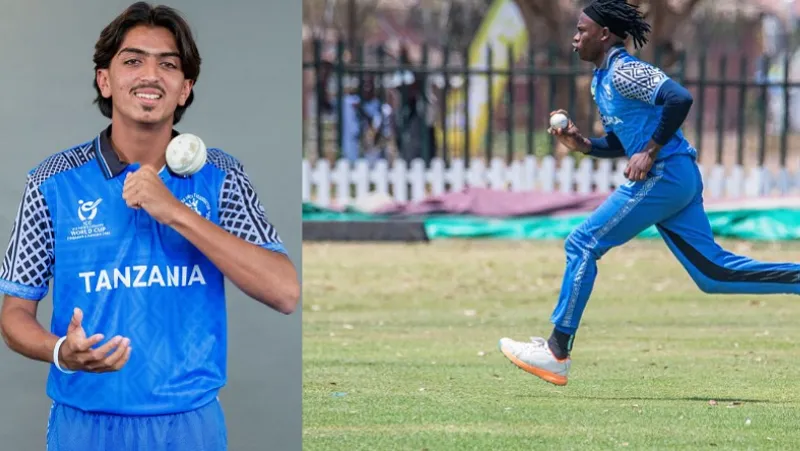 Laksh Bakrania & Khalidy Juma
Debutants are often dismissed early, but Tanzania arrives better equipped than most first-timers. Captain Laksh Bakrania brings senior experience, having already played 16 T20Is. His left-arm orthodox spin of 20 wickets at an economy of 5.22 gives Tanzania control in the middle overs and calm in leadership.
Supporting Juma as well is Khalidy Juma, an aggressive strike bowler who isn’t worried about how he looks in front of the media. Bowling the opening over at 17 years of age, Juma has picked up 21 wickets from just 15 T20I matches and was Tanzania’s top wicket taker during the Africa Qualifier. He made that clear with his Player-of-the-Match 4-For against Uganda and shows his ability to take the opportunity when it presents itself. While Tanzania lacks depth in its team, these two will certainly provide the necessary spark needed to win games.
Key Takeaway
In Group D, balance beats reputation every single time.
FAQs
- What makes Group D unpredictable?
Strong individuals across all four teams with match-shifting skills.
- Why are Afghanistan genuine contenders?
They combine early wickets with a stable top order.
- How can Tanzania challenge bigger teams?
By striking early and controlling tempo through spin.
Disclaimer: This blog post reflects the author’s personal insights and analysis. Readers are encouraged to consider the perspectives shared and draw their own conclusions.
Step into the world of cricket with JeetBuzz News—where expert opinions, trending Blogs, and behind-the-scenes insights meet all your favorite topics. Stay informed, stay entertained, and never miss the stories shaping the cricketing world—only on JeetBuzz News!