

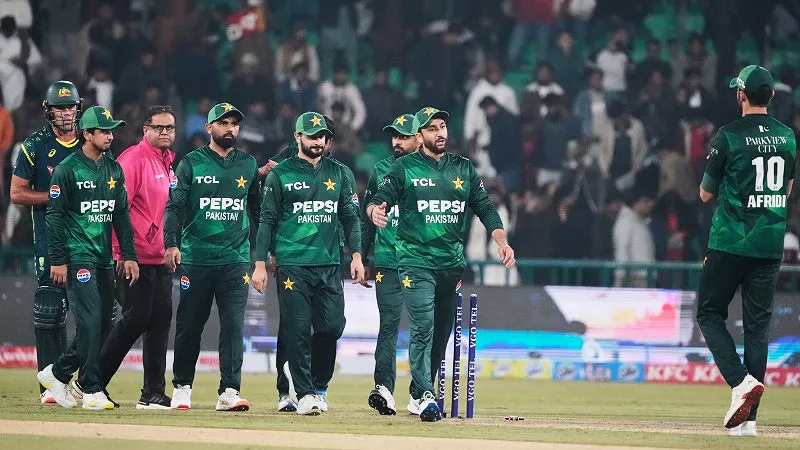

Pakistan is now preparing to enter the T20 World Cup as they often do, with the expectation of seeing occasional moments of brilliance, a few questionable coaching staff decisions, and the rest of the country worried about whether this is the right team that has shown up. However, the overall tone of excitement feels like it is going to be somewhat different than usual – it is not louder; it is clearer. It is one thing to beat Australia, but to humiliate them 3-0 is a different level of thrill entirely. The series was defined by Pakistan’s record-breaking 198/5, their biggest T20I score against the Kangaroos, turning what could have been a routine contest into an unforgettable showcase of explosive power.
Aggression With a Clear Blueprint
Pakistan’s batting has often swung between caution and chaos. This time, the intent is structured. Salman Ali Agha’s 40-ball 76 wasn’t reckless slogging; it was tempo control with muscle. Usman Khan’s 36-ball 53 complemented it perfectly, targeting match-ups rather than merely surviving them. The message is simple: power-play pressure first, flexibility later. That’s modern T20 thinking, and Pakistan are finally committing to it.
Middle Overs No Longer a Black Hole
For years, Pakistan’s innings used to stall between overs 7 and 15. Against Australia, that stretch became a launchpad instead of a pause button. Rotating strike against pace, picking boundaries off spin, and avoiding the classic cluster-wicket collapse suggests something deeper, pre-planned scenarios rather than instinctive batting. That’s preparation talking.
Abrar Ahmed’s Timing Feels Perfect
Warm-up series often hide bowling form. Not here. Abrar Ahmed’s 3/14, all against Australia’s top six, wasn’t just about figures; it was about control. He didn’t chase magic deliveries; he built pressure. In T20 tournaments, wrist-spin that attacks early is gold, especially on slower surfaces like Colombo. Pakistan knows this, and they’re leaning into it.
Fielding as a Statement, Not a Bonus
Salman Ali Agha’s post-match praise for fielding wasn’t throwaway captain-speak. Pakistan’s athleticism backed up their plans with sharp stops, aggressive ring fielding, and visible energy. In tournaments where margins are tiny, this is often the difference between semi-finals and early flights home.
Expert Insight
Pakistan’s present strategy has similarities to the 2009 T20 World Cup success, which was achieved by identifying players’ roles and executing their responsibilities fearlessly and with confidence, not based on reputation. Compare that to the recent (2022) blueprint of England, clarity, rather than conservatism. The difference is that Pakistan is creating a strategy with subcontinental nuances: with an emphasis on planning around spin, flexibility in batting order lineups, and specific planning for venues. By playing all Group A games in Colombo, they have reduced the variables and eliminated uncertainty. When Pakistan reduces variables such as conditions, combinations, and intentions, historically, they perform better than expected.
This Pakistan side isn’t claiming invincibility, and that’s precisely why they look convincing. There’s no talk of experiments or rotations despite sealing the series. Instead, there’s insistence on intensity, repetition, and trust in calculations. Salman Ali Agha’s words, “forget the 2-0 scoreline,” might be the most important line of the build-up.
With India, the Netherlands, Namibia, and the USA waiting in Group A, Pakistan won’t lack motivation. What they finally seem to have is alignment. If this version turns up on February 7 in Colombo, the question won’t be whether Pakistan can beat top teams but whether anyone can comfortably predict how they’ll do it.
Key Takeaway
Pakistan’s form isn’t a warm-up illusion; it’s a preparation meeting clarity.
FAQs
- What makes Pakistan’s batting different this time?
Clear intent from ball one, with roles defined rather than improvised.
- Why is Abrar Ahmed so crucial to their campaign?
He attacks top-order batters early, especially effective on slower pitches.
- How does playing all Group A matches in Colombo help Pakistan?
It reduces variables and allows tailored, condition-specific strategies.