

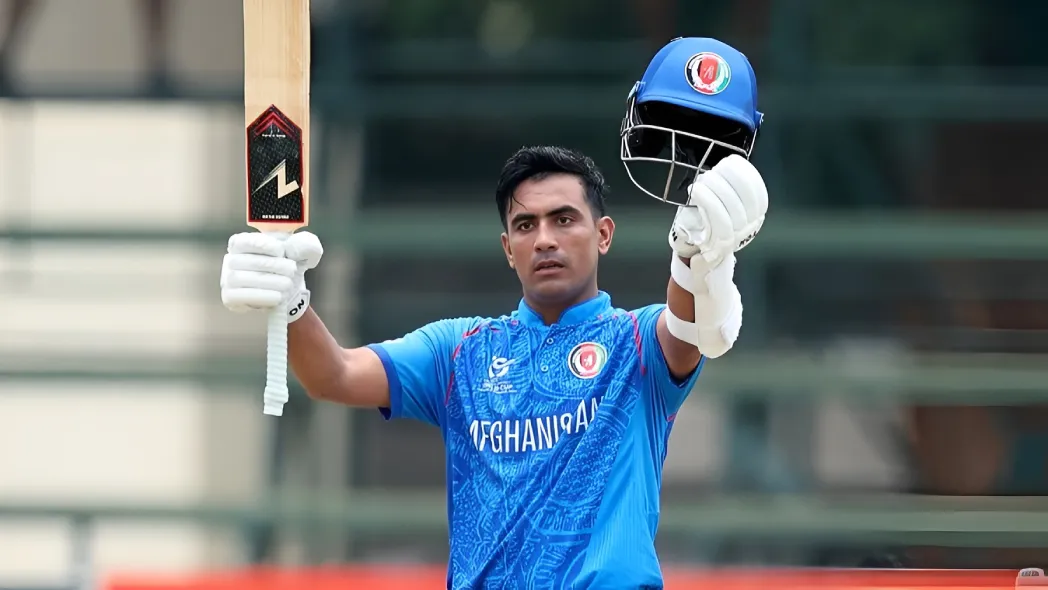

The 2018 U-19 Cricket World Cup will produce its own quiet moment that will reshape the destiny of a country’s cricket team. For Afghanistan, that moment was created by the calmness, clarity, and timing of Faisal Khan, who scored a record 163 against Ireland in Harare, but this was more than a record; this was a patient statement.
With his 156 runs (in a match) far exceeding Karim Janat’s record of 156 set in 2016, Khan has established the highest total run scored by an Afghan batsman in all-time U-19 World Cup history. What may be even more telling was that Khan became the second Afghan to reach the mark of 150 or more in the entirety of the U-19 World Cup. While the style of play of many youth cricketers can reflect the excesses of T20 cricket, the fact that Khan’s 142-ball innings reflected a mature approach to batting indicated that there is evidence that Afghanistan’s batting is learning how to pace their batting rather than simply to punch.
Patience as the New Power
Khan’s innings defied the modern U-19 obsession with immediate dominance. His strike rate of 114.78 came not from reckless acceleration, but from consistently finding gaps and punishing errors. Eighteen fours told the real story, precision over brute force. Afghanistan’s youth batters have often been celebrated for flair; Khan showed that patience can be just as destructive.
Breaking a Decade-Old Ceiling
Karim Janat’s 156 had stood since 2016, surviving multiple tournaments and generations. Khan crossing that mark wasn’t a coincidence; it reflected a gradual technical refinement in Afghanistan’s youth setup. Only two Afghan batters have breached 150 across a decade, which underlines how rare such control-based big hundreds have been.
A Partnership That Changed Tempo
The 188-run fourth-wicket stand with Mahboob Khan (89) was the innings’ strategic backbone. While Faisal anchored, Mahboob rotated and counterpunched, preventing Ireland from settling into defensive fields. This wasn’t accidental chemistry; it was game awareness, keeping the run rate alive through traditionally tricky middle overs.
Harare Conditions, Mastered
Harare rewards batters who trust bounce and play late. Faisal Khan did exactly that. Rather than forcing cross-batted shots, he leaned into timing and placement. His single six arrived as punctuation, not necessity, signaling control rather than desperation.
Youth Innings Predict Senior Futures
Faisal Khan’s 163 wasn’t about spectacle; it was about maturity. In a Super Six stage where pressure multiplies and bowlers probe relentlessly, he chose control over chaos and clarity over flair. Afghanistan has never lacked raw batting talent. What it has lacked, historically, is innings architecture, the ability to build big scores without emotional spikes.
Khan showed that Afghanistan’s next generation understands tempo, partnerships, and situational awareness. If this is where their youth cricket is heading, opponents won’t just fear Afghanistan’s bowlers anymore. They’ll fear being batted out of games slowly, decisively, and without warning.
Key Takeaway
Faisal Khan’s 163 wasn’t just a record; it was Afghanistan’s learning how to bat time.
FAQs
1. What record did Faisal Khan break?
He surpassed Karim Janat’s 156 to post Afghanistan’s highest individual U-19 World Cup score.
2. Why is this innings significant beyond numbers?
It showcased control, tempo management, and partnership batting areas that Afghanistan is still evolving in.
3. How did the Mahboob Khan partnership impact the match?
Their 188-run stand stabilized the innings and sustained momentum through the middle overs.
Disclaimer: This blog post reflects the author’s personal insights and analysis. Readers are encouraged to consider the perspectives shared and draw their own conclusions.
Step into the world of cricket with JeetBuzz News—where expert opinions, trending Blogs, and behind-the-scenes insights meet all your favorite topics. Stay informed, stay entertained, and never miss the stories shaping the cricketing world—only on JeetBuzz News!