

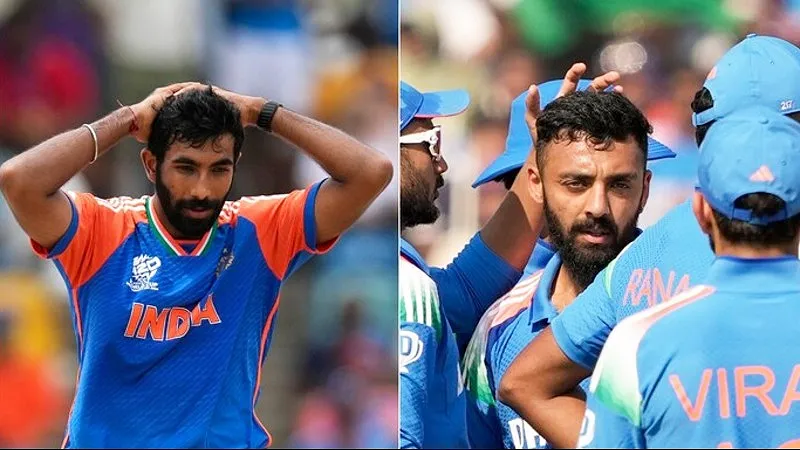

Cricket has a love affair with redemption stories, but not nearly enough to give fans an arc that is dramatic. The story of Varun Chakravarthy’s fall from the world’s top cricketer in 2020 to not taking a single wicket in the 2021 T20 World Cup is still fresh on many fans’ minds. That same bowler will be touted as the world’s best wicket-taker at the 2026 T20 World Cup by a long list of former Indian cricketers.
The numbers don’t represent nostalgia; they show the real thing. Over the last few months, Varun has been the best T20I bowler globally. By the end of 2025, he had taken 36 wickets from 20 games for an incredible average of 13.19 with an economy rate that was a mere step above seven. All this is even more impressive when you consider that all this came about during a World Cup in India and Sri Lanka; on spin-friendly surfaces; and with a team set up to be aggressive, rather than defensive, in its bowling.
From Tactical Liability to Strategic Asset
Varun Chakravarthy’s early international struggles were never about skill; they were about clarity. In 2021, he was overused as a middle-overs stock spinner, expected to defend rather than attack. Since his return post–2024 T20 World Cup, India has flipped that script.
Now, Varun has been made an opener and a match controller. He usually bowls in his first over (or 2nd) during powerplay overs, or in his last two overs of a match when batters want to get back on track, or accelerate at the end of the match. As such, he can create false shots, cause batters to mis-time their sweep shots, and make batters guess incorrectly far more often than not. What was once “mystery bowling” has now become calculated deception.
Rankings Don’t Lie, Context Explains Them
Varun’s current T20I statistics are impressive (58 wickets from 35 games at 15.34 and under 7 runs per game). What has changed is how he controls his speed and trajectory. His ability to bowl slow without appearing to do so forces batsmen into being creative and make up for their lack of timing with shot-making. With this type of skill on surfaces found in India (where a batter must be able to play well when the ball grips in their hands as much as it does when it bounces), the results can be devastating.
Historically, World Cups in the subcontinent reward bowlers who make batters second-guess intent. Varun doesn’t just ask questions; he forces wrong answers.
Why Bumrah Still Looms Large
Not everyone is convinced spin will rule the 2026 World Cup. Cheteshwar Pujara, Suresh Raina, and Anil Kumble have all backed Jasprit Bumrah as India’s leading wicket-taker, and there’s logic there too.
Fifteen wickets, an average of 8.26, an economy of 4.17. Bumrah’s Player of the Tournament numbers from 2024 read less like T20 statistics and more like a formatting error in a spreadsheet. All-in-all, he now has 106 T20I wickets from 85 appearances to be second on the list of India’s top T20I wicket takers. If pitches continue to get flatter and games become tighter as they move into knockout rounds, it is easy to imagine Bumrah having a massive impact and possibly dominating the statistics.
Key Takeaway
Varun Chakravarthy’s resurgence isn’t redemption, it’s strategic evolution meeting perfect conditions.
FAQs
- What makes Varun Chakravarthy a top wicket contender in 2026?
His elite recent form, No1 T20I ranking, and suitability to Indian conditions.
- Why is Jasprit Bumrah still a strong pick?
His death-over dominance and proven World Cup match-winning ability.
- How does Arshdeep Singh fit into the debate?
Sheer wicket volume, left-arm variation, and consistent World Cup impact.
Disclaimer: This blog post reflects the author’s personal insights and analysis. Readers are encouraged to consider the perspectives shared and draw their own conclusions.
Step into the world of cricket with JeetBuzz News—where expert opinions, trending Blogs, and behind-the-scenes insights meet all your favorite topics. Stay informed, stay entertained, and never miss the stories shaping the cricketing world—only on JeetBuzz News!