



Across nine editions of the ICC Men’s T20 World Cup, only a handful of spells have truly broken games, spells so ruthless that they’re still whispered about years later. While five five-fors and beyond make the official honor roll, only three performances crossed into the realm of cricketing folklore.
These aren’t just spells of speed or luck; they are examples of timing, deception, nerves, and the ability to read conditions better than the batter can. With the 2026 T20 World Cup being held in India and Sri Lanka, both areas of the world where good tactical bowling is rewarded, looking at this spells now isn’t about memories of the past as much as it’s about a lesson.
Ajantha Mendis: 6 for 8
 Ajantha Mendis
T20 bowling lists can never be complete without the inclusion of Ajantha Mendis’ 6 for 8 in 2012, a period where he was solving a riddle which batters could not solve as much as playing cricket. Mendis had a huge array of weapons to unleash against Zimbabwe in Hambantota, including the carrom ball, googly, and the floater with a dip at the last moment.
Zimbabwe did not take risks; they were baffled. Mendis dismissed batsmen via stumpings, bowls, and lbws in all directions. To date, six wickets in a T20 innings have not been beaten, and how he achieved this is far more important than who he beat.
At his peak, Mendis represented something rare in T20s: fear of the unknown. Batters couldn’t premeditate because they couldn’t identify the delivery. This spell stands as the high-water mark for mystery spin in World Cup history.
Rangana Herath: 5 for 3
 Rangana Herath
If Gul’s spell was about precision, Rangana Herath’s 5 for 3 in 2014 was about control so absolute it bordered on cruelty. On a turning Chattogram pitch, Herath didn’t just exploit conditions he owned them.
It was a complete collapse of New Zealand’s top order, with no one able to offer much resistance. Brendon McCullum, Ross Taylor, and James Neesham all fell to ducks. Herath’s beauty was in his simple way of bowling; small variations in pace, constant accuracy, and angles that forced batsmen into playing shots they didn’t need to.
The Sri Lankan team had successfully defended 119, which is an amount that can be considered to be laughable as we speak today. Herath has shown us that in T20 Cricket it’s the context of the game that will matter more than how many runs you have scored. The five wickets he took are the most economical in World Cup History and arguably the most humiliating.
Umar Gul: 5 for 6
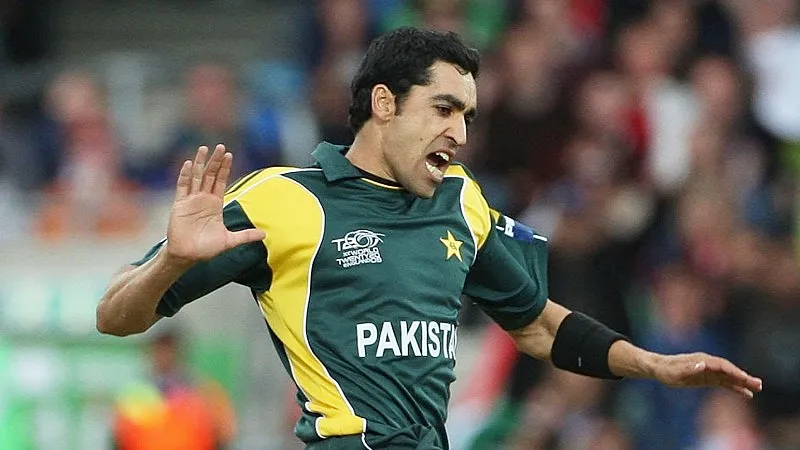 Umar Gul
Umar Gul’s 5 for 6 against New Zealand in 2009 wasn’t just dominance; it was a structural collapse. At The Oval, Gul turned the yorker into a psychological weapon. This was early T20 cricket, when batters still believed survival was possible against pace. Gul erased that illusion in 18 deliveries.
What made the spell exceptional wasn’t just economy; it was sequencing. Full, straight, fast, then slower. Each wicket arrived because the batter guessed wrong. Scott Styris and James Franklin weren’t tailenders; they were experienced internationals undone by precision.
Pakistan bundled New Zealand out for 99, and the chase was a formality. In many ways, Gul’s spell became the template for death bowling excellence, influencing a generation that followed from Starc to Bumrah.
Key Takeaway
Great T20 bowling isn’t about survival, it’s about controlled destruction.
FAQs
- What makes these the top 3 bowling spells in T20 World Cup history?
Their combination of wickets, economy, and match-defining impact sets them apart.
- Why haven’t these records been broken recently?
Flatter pitches, deeper batting lineups, and advanced analytics favor batters today.
- How can teams replicate such spells in 2026?
By attacking with clarity, trusting conditions, and prioritizing wicket-taking over damage control.