

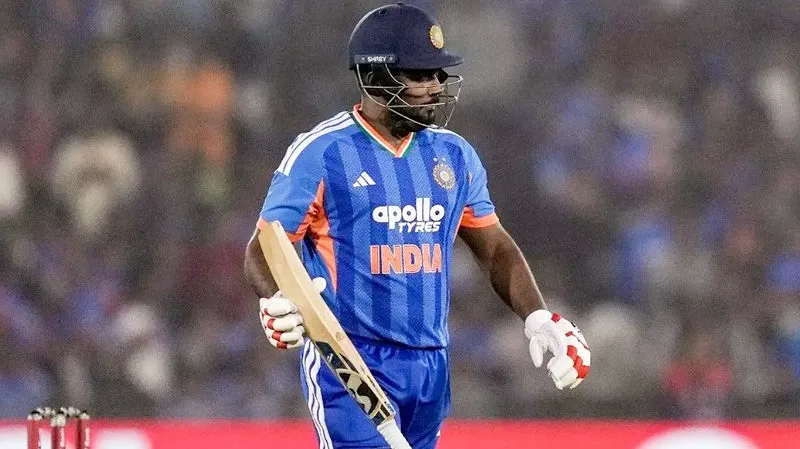

Sanju Samson is one of the few Indian cricketers who have been in a constant state of ‘almost’ for most of his cricket career. Each time he comes back into the team, he gets a chance to start again with the potential of a new season or series. But each time he fails, there’s always the risk of being judged even harder than before. With the 5th T20I vs New Zealand in 2026 on the horizon, Sanju Samson didn’t see this game as just another match but rather a test of how much time he has left to make the most of his career. The four consecutive games in which he failed were starting to create some thin ice under him. The expected comfort of a home crowd in front of an expectant crowd turned into the focus of a bright light. A run-a-ball six later, the worst finally came to pass.
When Low Scores Become a Pattern: India can accept blips but not patches
Modern India doesn’t punish intent they punish repetition. A duck here, a single-digit score there? Acceptable. A sequence of them? That’s when alarms ring. Samson’s long-standing issue has never been talent; it’s continuity. Even with a longer rope this time, the script hasn’t changed.
Contrast this with Abhishek Sharma or Ishan Kishan. Both failed multiple times against New Zealand, yet neither feels under threat. Why? Because their failures come with receipts, match-winning innings either before or immediately after. India’s T20 template is clear: attack early, accept risk, but reset quickly. Samson hasn’t.
Even Suryakumar Yadav endured a year-long slump, but his pedigree and captaincy bought him patience. Samson doesn’t have that institutional credit. In a batting order overflowing with form, persistent silence becomes louder than intent.
Selection Depth Leaves No Cushion: India is not short of options
This Indian side doesn’t need Sanju Samson right now, and that’s the harshest truth of all. India swept New Zealand comfortably without meaningful contributions from him. That’s not a knock on Samson; it’s a reflection of the team’s depth.
Abhishek Sharma is likely to have a big role for India in the future in T20Is. Sharma and Kishan look like they are going to be opening together, and there are many other good players looking to play next to or above him in the order. Players that fit into this category are Yashasvi Jaiswal, Priyansh Arya, Prabhsimran Singh, and Vaibhav Suryavanshi (who, at just 18, is one of the best young players in indian cricket).
In a format obsessed with ceilings, Samson currently looks like a pause button in fast-forward planning. India isn’t scrambling for solutions; they’re choosing between upgrades.
History shows India isn’t Sentimental: India has dropped players for less
If this feels harsh, history says otherwise. Indian selection has never been a charity program. Players with stronger numbers and shorter leashes have been moved aside simply due to timing or balance.
Samson played all five matches of this series despite minimal returns, a luxury few fringe players ever receive. Even accounting for his batting-order shuffle after Shubman Gill’s return, opportunity was not denied. Results were.
Meanwhile, players like Yashasvi Jaiswal or Shreyas Iyer struggle for a single opening, watching from the sidelines as chances evaporate. In Indian cricket, five consecutive auditions without impact is not patience, it’s indulgence. And indulgence eventually expires.
Key Takeaway
Sanju Samson isn’t out of talent; he’s out of timing in a team that no longer waits.
FAQs
- What went wrong for Sanju Samson in the NZ series?
A prolonged run of low scores, averaging just 9.20 across five innings, hurt his case.
- Why is Ishan Kishan preferred over Samson now?
Kishan delivered immediate impact and fits India’s aggressive top-order blueprint.
- How does this affect Samson’s T20 World Cup 2026 chances?
With limited games left, he currently sits outside India’s strongest XI unless form dramatically shifts.