

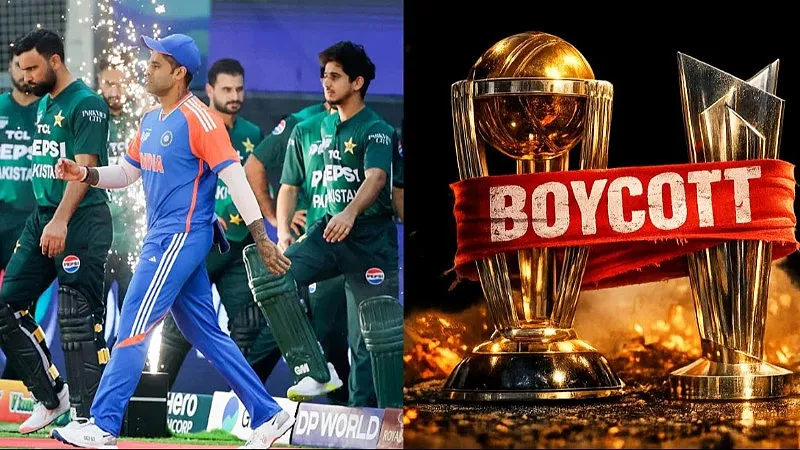

Teams boycotting matches in ICC World Cup history have directly altered group standings, qualification paths, and even semifinal lineups, despite such incidents being rare. Across multiple editions, forfeited matches in Cricket World Cups have occurred due to political reasons for cricket match boycotts and serious security concerns in ICC tournaments, forcing teams to refuse to take the field. When cricket teams withdraw from World Cup games, points are awarded without play, often reshaping the competitive balance of the tournament. Understanding these instances explains why match boycotts remain one of the most disruptive non-playing factors in ICC events.
Security-Driven Boycotts
Security risks were the most frequent reason that teams decided not to take the field for World Cup games. National boards of both the 1996 and 2003 ODIs, at the behest of their respective governments, did not allow players to travel when risk assessments determined the host venue was a threat to player safety. Therefore, these decisions were not made based on tactical cricket decisions but were made based on safety concerns at an institutional level, clearly showing how other off-the-field issues can negate the sport’s objective of competition even within ICC-managed events.
Political Decisions over Cricket
Historically Political reasons for cricket match boycotts have outweighed competitive pressures. The influence of government advisories, a breakdown in diplomacy, and internal unrest on cricket governing bodies was always an influential factor as to whether or not to withdraw from competing due to political tensions between nations. Therefore, it is evident that cricket authorities will comply with the directives of their respective governments, clearly demonstrating that World Cup participation is susceptible to geopolitical forces.
Points, Qualification, and Impact
Forfeited matches in Cricket World Cups have had measurable tournament consequences. When a team withdraws, opponents are awarded full points, often without net run rate implications. In past tournaments, this directly influenced:
- Group table positions
- Qualification cut-offs
- Elimination of teams that played all fixtures
These outcomes underline how a single boycott can swing an entire group’s competitive balance.
ICC Regulations and Enforcement
The ICC treats boycotts as forfeits unless extraordinary circumstances allow relocation. Requests to move matches have historically been denied when logistical or fairness concerns existed. As a result, cricket teams withdrawing from World Cup games have consistently lost points, reinforcing strict tournament integrity rules despite sympathy for safety or political concerns.
Historical Precedent Analysis
Historically, ICC tournaments have put a premium on schedule compliance over accommodations. The 1996 and 2003 ODI World Cup tournaments provide two parallel examples of when forfeitures were enforced in spite of high-profile international attention and controversy. In comparison to the modern T20 World Cups, which are governed by much stricter scheduling and commercial pressures, there is less opportunity for rescheduling than ever before. Many cricket historians and administrators view these tournaments as models of how the ICC can balance issues of player safety, neutrality, and competition. As such, these models will likely be used to support the notion that future boycotts will not be granted an exception unless they are unanimous among all stakeholders involved.
Cricket outcomes are influenced by many factors beyond on-field performance; past examples of teams boycotting matches in an ICC World Cup provide evidence that a variety of other factors can significantly influence the outcome of a cricket team’s campaign. As a result of stricter enforcement being adopted for future ICC events, withdrawing from competition will likely have a high cost in competitive terms. Therefore, in politically sensitive environments, World Cup campaigns may be as much about what happens off the field as what occurs on it.
Key Takeaway
World Cup match boycotts, though rare, have repeatedly reshaped ICC tournaments by awarding decisive points without play.
FAQs
What happens when a team forfeits a World Cup match?
The opposing team receives full points, with no match played and no run-rate impact.
Why do teams refuse to play World Cup matches?
Most refusals stem from security risks or political directives issued by governments.
How often have matches been boycotted in the WC?
They are extremely rare, limited to a few high-profile historical cases.
Can the ICC relocate a match after a boycott threat?
Only in exceptional cases; most requests have been denied due to fairness concerns.