


Each T20 World Cup comes with neatly stacked predictions and leaves with those predictions destroyed. The 2026 tournament will take place in India and Sri Lanka from February 7 to March 8 and will have a total of 20 teams competing over four different groups. Across nine previous editions, the Men’s T20 World Cup has repeatedly exposed the fragility of “big team certainty.” One loose PowerPlay, one underestimated associate side, one night of tactical hesitation, and giants fall. Australia, England, Sri Lanka, South Africa, Pakistan: all have scars. Some fresh, some permanent.
When Australia Met T20 Reality (2007)
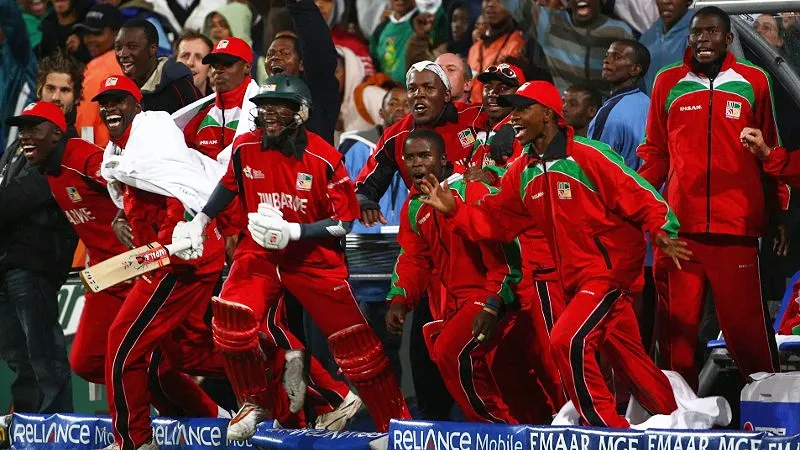
The inaugural 2007 T20 World Cup had all the markings of being a “home ground” for Australia; however, Zimbabwe turned it into an education. In a score of 138/9 at Cape Town, with Brad Hodge scoring 35*, and Andrew Symonds scoring 33, Australia looked like they were playing conservatively as opposed to aggressively. Zimbabwe’s Elton Chigumbura took 3/20 of the Australian batsmen, exposing Australia’s very rigid batting line-up.
Australia did not lose this game simply due to being “outplayed”; rather, the Aussies lost this contest as a result of underestimating the unpredictability of T20 cricket. T20 has now announced that even those with a long history of success will not be immune to its unpredictable nature.
Lord’s Learns a New Accent (2009)
England opening the World Cup at Lord’s was ceremonial until the Netherlands came to crash the party. The English had put on a good show with 162/5 off Luke Wright (71) and Ravi Bopara (46). There was no reason they couldn’t feel confident about their total. But Ryan ten Doeschate said otherwise.
Ten Doeschate went for 2/35 while taking out two big English batsmen, and then scored an undefeated 22 in the chase as the Dutch chased down the target off the last ball. It was not a lack of skill that caused the English to fail; it was a lack of tempo. The English had batted well, but not well enough to bat quickly.
Namibia’s Perfectly Timed Punch (2022)
The few opening match-ups that have shaken the cricket world as much as Namibia’s 55-run blowout of Sri Lanka in Geelong are rare indeed. The 163 runs for 7 by Namibia were not explosive; they were calculated. Frylinck contributed 44, and Smit added to the score at the end to create several runs that could be defended.
Namibia’s bowlers consistently rotated pace and angle to force Sri Lanka into a poor state of adaptation. In fact, four different Namibian bowlers took two wickets each against Sri Lanka. It was no accident; it was a model. Teams of associates around the world had developed methods to choke their favorite opponents methodically.
South Africa’s Familiar Nightmare (2022)
By 2022, South Africa’s World Cup nerves were almost lore. The Netherlands exploited them ruthlessly in Adelaide. A disciplined 158/4, led by Ackermann and Cooper, forced South Africa into a chase that never found rhythm.
No Proteas batter crossed 30. Brandon Glover’s 3/9 sliced through intent before it could form. The result knocked South Africa out and reinforced a brutal T20 truth: depth without clarity collapses under pressure. The Dutch weren’t spectacular; they were precise.
America’s Loudest Cricket Statement (2024)
When the USA beat Pakistan in Dallas via Super Over, it wasn’t just an upset; it was a geopolitical shift in cricket relevance. Pakistan’s 159/7 looked defendable. USA matched it with disciplined batting led by Monank Patel’s 50.
Then came the Super Over. Mohammad Amir leaked 18. Saurabh Netravalkar conceded just 13. Execution beat experience. This was no charity result; it was infrastructure, league exposure, and fearless cricket paying dividends. The T20 map had officially expanded westward.
Key Takeaway
In the T20 World Cup, reputation sets expectations, but preparation decides outcomes.
FAQs
- What makes T20 World Cup upsets so common?
Short formats magnify small mistakes and reward fearless execution.
- Why do associate teams perform better now?
Global leagues, analytics access, and improved infrastructure have closed gaps.
- How will this affect the 2026 T20 World Cup?
Expect fewer “easy groups” and far more tactical conservatism from favorites.
Disclaimer: This blog post reflects the author’s personal insights and analysis. Readers are encouraged to consider the perspectives shared and draw their own conclusions.
Step into the world of cricket with JeetBuzz News—where expert opinions, trending Blogs, and behind-the-scenes insights meet all your favorite topics. Stay informed, stay entertained, and never miss the stories shaping the cricketing world—only on JeetBuzz News!