

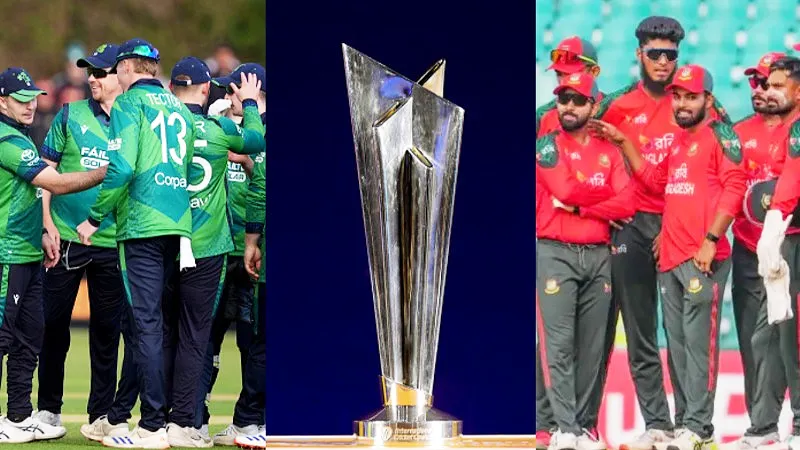

Beginning with a basic view of just scheduling, you can see that there is much more to this T20 World Cup story than that: The ICC has been trying to maintain a balance between the reality of providing secure venues, while maintaining the integrity of the T20 World Cup. Ireland has clearly been informed by the ICC that its group will not be changed at the upcoming ICC Men’s T20 World Cup, due to heavy pressure from Bangladesh on the issue of changing venues in the competition.
Beginning on 7th Feb with co-hosts India and Sri Lanka, Ireland’s entire itinerary for the group stage is confirmed: All group stage games will be played in Sri Lanka (Colombo & Kandy). However, as Bangladesh has been scheduled to play at least 3 out of their possible 4 group games in Kolkata and one in Mumbai, they are now considering pulling their team due to growing concerns about security in India.
What’s changed isn’t the cricketing logic but the geopolitical temperature. And once that rises, cricket administrators stop thinking about cover drives and start worrying about precedent, logistics, and credibility.
Security Concerns Meet Tournament Reality
Bangladesh’s reluctance to participate isn’t just theoretical; they have already made it clear that their interim government and the Board of Control for Cricket in Bangladesh (BCB) will not allow the national team to compete in World Cup matches held in India unless things change. This is also a rational position from a player welfare standpoint; no governing body wants to send its players into an uncertain environment.
But international tournaments are not bilateral series. They’re rigid ecosystems. Shift one brick, and the entire structure feels the tremor.
Why Ireland Became the Unmovable Piece
Ireland may look like a smaller cog in the global cricket machine, but their role here is critical. They’re placed in Group B, fully scheduled in Sri Lanka, and crucially already planning logistics, training bases, and preparation cycles accordingly.
The ICC’s assurance to Cricket Ireland sends a message: teams that complied early with tournament planning will not be collateral damage for late-stage changes elsewhere.
The Group Swap That Sounds Simple- but Isn’t
On paper, swapping Bangladesh (Group C) with Ireland (Group B) looks neat. Minimal venue changes, everyone plays in Sri Lanka, problem solved.
In practice? A nightmare. Group swaps impact broadcast schedules, ticket allocations, team travel, commercial commitments, and competitive balance. One alteration snowballs into dozens. That’s why the ICC remains hesitant even after discussions in Dhaka and a visit from Integrity Unit GM Andrew Ephgrave.
Logistics Trumps Emotion at ICC Headquarters
Sources suggest the ICC’s reluctance isn’t political, it’s procedural. The tournament schedule was pre-announced, contracts signed, and venues prepared. Changing group allocations at this stage risks undermining the very system that keeps multi-national tournaments functional.
For the ICC, this isn’t about choosing Ireland over Bangladesh. It’s about choosing order over chaos.
The ICC will not revise the teams in Ireland’s pool; it is not obstinate- it is governing. A Twenty20 World Cup is a complex logistical puzzle that, once assembled, if you remove one of the pieces, it can cause the entire puzzle to collapse.
Bangladesh has legitimate and serious issues regarding its position; however, those issues must be resolved with minimal disruption to all participants, not just Bangladesh. Ireland is not being punished for not doing anything wrong because it followed the rules to a “T”.
The real test now lies in whether the ICC can find Bangladesh a workable compromise without rewriting the tournament’s competitive map. Because once group integrity starts bending, the World Cup stops being a contest and becomes a negotiation table.
Key Takeaway
This isn’t Ireland vs Bangladesh, it’s structure vs instability in a global tournament.
FAQs
- What is the ICC’s decision regarding Ireland’s group?
The ICC has assured Ireland that its group and Sri Lanka-based schedule will remain unchanged.
- Why does Bangladesh want a venue change?
Due to security concerns, Bangladesh’s government and board prefer not to play World Cup matches in India.
- How likely is a group swap between Bangladesh and Ireland?
Unlikely, as the ICC is wary of logistical complications and competitive disruption.
Disclaimer: This blog post reflects the author’s personal insights and analysis. Readers are encouraged to consider the perspectives shared and draw their own conclusions.
Step into the world of cricket with JeetBuzz News—where expert opinions, trending Blogs, and behind-the-scenes insights meet all your favorite topics. Stay informed, stay entertained, and never miss the stories shaping the cricketing world—only on JeetBuzz News!