

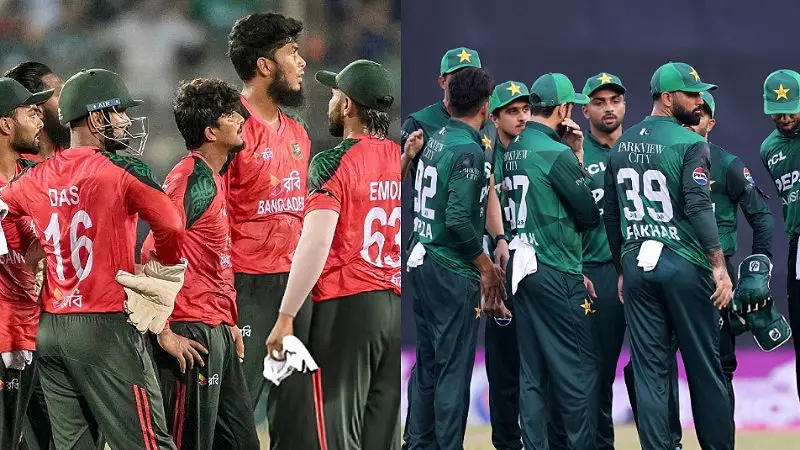

Bangladesh missed the T20 World Cup. The squad that returns to international cricket against Pakistan does so knowing that the next major target, the 2027 ODI World Cup, requires a completely different approach to the fifty-over format. This series isn’t a routine bilateral. It’s the first real test of whether Bangladesh’s ODI rebuild has a plan behind it or just good intentions. Shanto, Taskin, and a middle order still finding its shape will face a Pakistan side that has genuine pace and bowling discipline. What happens in the next three matches will tell Bangladesh’s selectors more than the last twelve months combined.
What the T20 Disappointment Changed
Missing the T20 World Cup forced a conversation inside Bangladesh cricket that had been avoided for too long, the gap between their white-ball ambition and their white-ball reality. Senior players acknowledged the setback publicly. Najmul Hossain Shanto, who leads the Test side and anchors the ODI batting unit, has spoken about the need for consistency and patience with the current group rather than reactive selection changes.
That philosophy is being tested immediately. Pakistan arrives with a structured pace attack and a batting lineup that has experience across conditions. Bangladesh’s response to disciplined bowling in the middle overs has been one of their most persistent weaknesses. The series creates an immediate opportunity to either address that weakness or confirm it.
Taskin Ahmed and the Pace Blueprint
Taskin Ahmed is the reference point for Bangladesh’s fast-bowling ambitions. His fitness, discipline, and ability to maintain intensity across multiple matches set the standard for a pace group that has historically struggled with workload management and injury disruption.
Bangladesh conditions, slower surfaces, variable bounce, spin-friendly later in matches, don’t reward pure pace as much as cutters, disciplined lengths, and variations. Taskin’s challenge in this series is to lead a bowling unit that can control scoring in overs eleven to forty while also creating wicket-taking opportunities on pitches that offer limited seam movement. His figures across the three matches will be the clearest indicator of whether Bangladesh’s pace depth is genuinely improving or still dependent on one bowler carrying the attack.
Why Bangladesh vs Pakistan Exposes the Middle-Overs Problem
This series in home conditions brings the middle-overs challenge into sharp focus. Pakistan’s bowling unit, disciplined, varied, and experienced in Asian conditions, will target exactly the phase where Bangladesh have been most vulnerable. Over eleven to forty have consistently been where Bangladesh either build competitive totals or lose matches they should control.
Historically, Shakib Al Hasan, Tamim Iqbal, Mushfiqur Rahim, and Mahmudullah managed this phase collectively, rotating strike, absorbing pressure, and identifying moments to accelerate. The current batting lineup is still learning to do this without those senior anchors in consistent form. Younger batters need to develop the tactical awareness to balance risk and tempo against quality opposition rather than against weaker bilateral opponents.
What Home Conditions Add to the Equation
Dhaka and Chattogram surfaces typically assist spin through the middle and later overs, which creates a specific tactical opportunity for Bangladesh. Their spin options and the slower-ball variations from their pace bowlers should theoretically be more effective here than in away series.
The question is whether Bangladesh can convert that home advantage into consistent middle-overs control rather than occasional individual performances. The 2027 World Cup qualification cycle is long. But patterns established in early bilateral series tend to define squad selection and tactical identity for years. What Bangladesh builds in the next three matches against Pakistan will echo further than the results alone suggest.
- Do you think this Bangladesh vs Pakistan series will reveal whether the 2027 World Cup squad is taking shape or still searching for answers? Drop your view in the comments and follow for Bangladesh cricket coverage.
FAQs
Why is the Pakistan ODI series important for Bangladesh’s World Cup preparation?
The series helps Bangladesh test their ODI strategy early in the qualification cycle while evaluating squad roles and tactical improvements.
How important is Najmul Hossain Shanto to Bangladesh’s ODI plans?
Shanto’s consistency in the top order can provide the stability Bangladesh needs to rebuild partnerships and control innings tempo.
What role will Taskin Ahmed play in the series?
Taskin Ahmed is expected to lead the fast-bowling unit and set the standard for fitness and discipline in Bangladesh’s pace attack.
What is the biggest tactical challenge for Bangladesh in ODIs right now?
Improving batting and bowling efficiency in the middle overs remains one of the team’s most pressing concerns.
Can the Pakistan tour of Bangladesh influence the 2027 World Cup squad?
Yes, strong performances in this series could help players establish themselves in Bangladesh’s long-term ODI plans.