

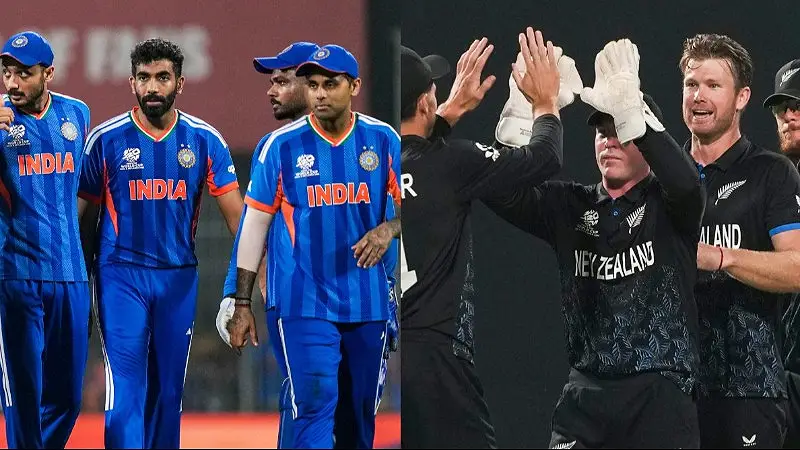

India’s batting order has a pattern that New Zealand’s coaching staff will have mapped in detail. Abhishek Sharma, Ishan Kishan, Tilak Varma, and Shivam Dube are four left-handers who could all bat in the top six. Offspin turns away from every one of them. Cole McConchie gives Mitchell Santner a weapon that doesn’t need to bowl a long spell to be effective. One well-timed over against the right batter could quietly shift the final’s momentum before India even realizes it has shifted.
Why Left-Handers Struggle Against Offspin
The geometry of the matchup is straightforward. Offspin turning away from a left-hander targets the outside edge and forces the batter to reach for deliveries that drift further from the hitting arc than they initially appear. Aggressive left-handers tend to favour the leg side, that’s where the power is. Offspin removes that option and replaces it with a thin outside edge to slip or a mistimed drive to cover.
In T20 cricket, where a batter has milliseconds to decide whether to attack, that uncertainty is enough to slow scoring even without taking wickets. Abhishek Sharma has shown specific vulnerability to offspin in the early overs of this tournament, and Tilak Varma has recorded lower strike rates against right-arm finger spin compared with his overall tournament average. Those patterns don’t happen by accident.
McConchie’s Role Is About Timing Not Overs
Cole McConchie is not expected to bowl four overs in the final. That’s not his function. His value to New Zealand is as a matchup bowler, one or two overs at precisely the moment a left-hander is new to the crease or India is trying to shift gears between overs 8 and 14.
Part-time spinners used tactically in T20 cricket often produce better economy rates than their reputation suggests, because batters facing an unfamiliar option in a pressure moment tend to play conservatively rather than attack. McConchie bowling the over after Santner has set an angle creates a different look from the same general direction, and that small difference is enough to disrupt a batter’s rhythm for three or four deliveries.
The T20 World Cup Final’s Quietest Tactical Battle
This T20 World Cup has repeatedly shown that India’s left-handers are aggressive enough to attack offspin when it arrives predictably but vulnerable when the introduction is timed well. The 2026 group stage saw three dismissals of Indian left-handers against offspin in the middle overs, not a crisis, but a clear enough signal for a Finals opponent to take seriously.
Santner will manage this personally. As both captain and the primary spin option, he decides when McConchie comes on, at what field setting, and against which batter. If Abhishek Sharma is set and attacking at the powerplay end, introducing McConchie immediately is a risk. If Tilak Varma arrives at the crease in the 11th over with India in full flow, that is exactly when an over of unfamiliar offspin can cost India eight runs instead of fourteen.
Why Ahmedabad’s Pitch Makes This Relevant
Narendra Modi Stadium’s surface doesn’t offer the sharp turn of a Wankhede pitch, but it provides enough grip in the middle overs for a finger spinner to control pace and extract awkward bounce. That’s all McConchie needs, not a big turn, just enough deviation to make the outside edge a genuine possibility.
The dry Ahmedabad surface also means the ball will grip more as the innings progress. An over from McConchie in the 13th or 14th over, when the surface is at its driest, could be significantly more effective than the same over in the powerplay. Santner will know this. The question is whether he gets the moment right.
- Do you think New Zealand’s offspin tactic can actually slow India’s batting in the final, or will India’s left-handers take McConchie apart? Drop your take in the comments and follow for T20WC Final live updates.
FAQs
How important could Cole McConchie be in the final?
Cole McConchie provides New Zealand with a tactical offspin option that can be used briefly against specific batters like Abhishek Sharma or Tilak Varma.
Can Abhishek Sharma counter offspin effectively?
Yes, Abhishek Sharma has shown the ability to attack spin in T20 cricket, but early overs against offspin have occasionally tested his approach.
Which Indian batters could face the biggest offspin challenge?
Left-handers such as Ishan Kishan, Tilak Varma, and Shivam Dube may encounter offspin matchups designed to limit their scoring options.
Is offspin usually effective in Indian conditions?
Spin bowlers can often find some grip on Indian pitches, especially during middle overs, which makes offspin a useful tactical option in T20 matches.