

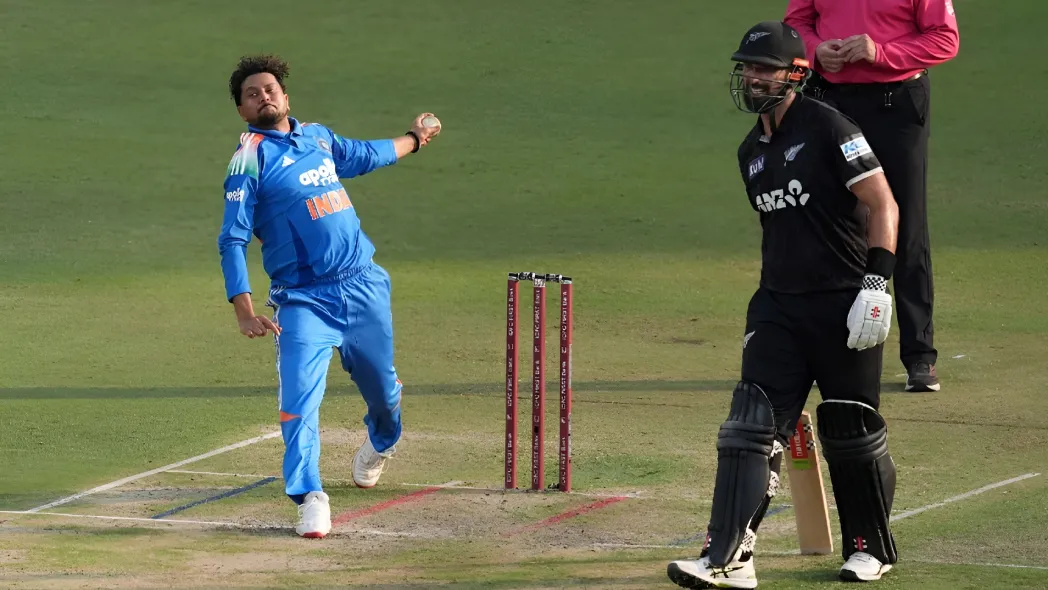

The Indian team’s ability to score 238 runs and also send a message with their batting is an example of modern T20 cricket at its best. Their 48-run victory over New Zealand in Nagpur on Wednesday night was more than just a first game for the teams in this series; they were making a small statement about their approach to the game by being more precise in their approach. Although there were some fireworks from the Indian batsmen, perhaps none of them were as noticeable as the absence of Kuldeep Yadav, who did not take part in the match.
Protecting Confidence Before Tournament Pressure
New Zealand didn’t just stop Kuldeep Yadav in the recent one-day international series; they showed the world what happens when his rhythm is lost. When he loses his rhythm, so does the magic. In three ODIs, Kuldeep took only three wickets for an average greater than 60 while conceding seven-plus runs per over on Indian pitches, numbers that are astounding by any standards. Even more concerning than those statistics were the visuals of Kuldeep bowling with less-than-usual revolutions per minute, bowling shorter lengths, and the opposing teams’ batters having their sights set on the ball from the very start.
Throwing him back against the same batters in a quick-turnaround T20I risked compounding damage. One more off-night and suddenly your World Cup X-factor enters the tournament mentally fragile. Resting him wasn’t punishment; it was risk management.
Team Balance Trumps Individual Brilliance
India’s blueprint for its T20 team is very clear and very harsh. The Indian team will bat until at least number eight and field bowlers capable of operating over all three phases of an innings. This has created a lot of pressure on the selectors when it comes to making choices. In reality, there are only two spots available to be filled by either Kuldeep Yadav or Arshdeep Singh, with Bumrah and Varun Chakaravarthy already being part of the squad. The choice is now limited to which of these two players provides more mystery in the middle order and which provides more variation as a powerplay and death overs bowler.
Arshdeep wins that duel on role clarity alone. His ability to strike early and close innings alongside Bumrah offers flexibility; Kuldeep simply doesn’t. Kuldeep remains a specialist middle-overs operator, brilliant at what he does, but narrower in utility. In modern T20s, versatility isn’t a bonus; it’s survival.
Recent Results Don’t Demand Change
Here’s the uncomfortable truth: India has been winning without Kuldeep. Since his standout Asia Cup 2025 performance in Dubai, Kuldeep has featured in just two of India’s last eight completed T20Is. India won five of the six matches without him, and split the two he played.
That’s not a coincidence, it’s confirmation. The bowling trio of Bumrah, Arshdeep, and Varun has quietly become the team’s default comfort zone. Continuity matters in T20s, especially heading into a global tournament. Until results force the rethink, stability will always beat sentiment.
Key Takeaway
Kuldeep’s absence wasn’t a downgrade; it was India choosing balance, timing, and tournament logic over nostalgia.
FAQs
1. What was India’s score in the first T20I vs New Zealand?
India posted a massive 238, setting up a 48-run win.
2. Why was Kuldeep Yadav left out despite his T20I record?
To protect his confidence, improve team balance, and maintain a winning combination.
3. How close is the 2026 T20 World Cup?
The tournament begins within two weeks, making selection stability crucial.
Disclaimer: This blog post reflects the author’s personal insights and analysis. Readers are encouraged to consider the perspectives shared and draw their own conclusions.
Step into the world of cricket with JeetBuzz News—where expert opinions, trending Blogs, and behind-the-scenes insights meet all your favorite topics. Stay informed, stay entertained, and never miss the stories shaping the cricketing world—only on JeetBuzz News!