

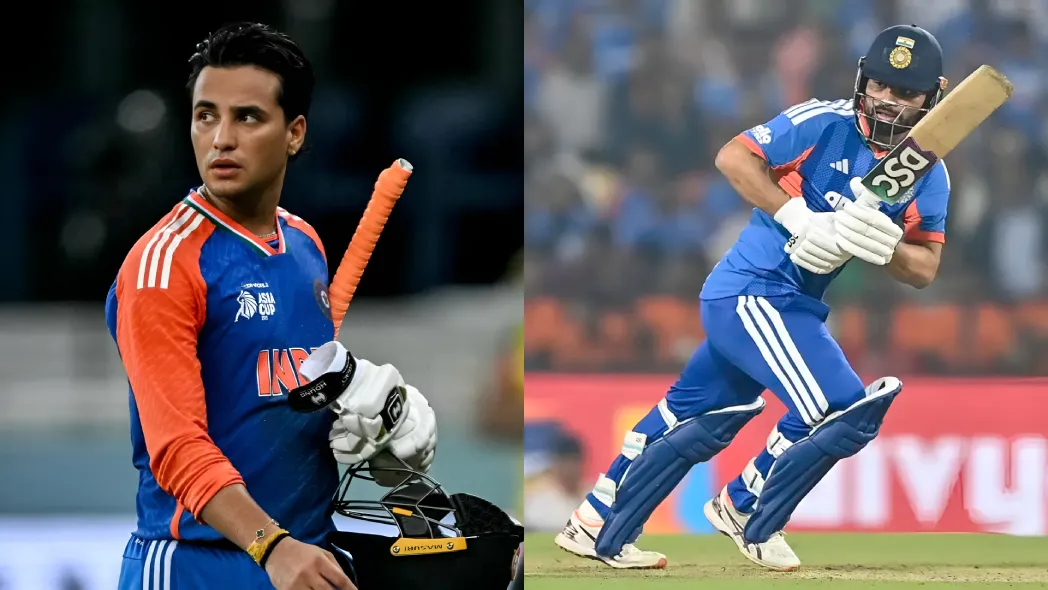

On a hot, sticky evening in Nagpur, India made easy work of New Zealand in a comfortable 48-run win, with little of the “Instagram shot” chaos that has come to define modern T20 batting, though there was still enough of an exciting finish to make for a fun contest. Rinku Singh went 44* off 20, while Abhishek Sharma went 84* off 35.
Here’s the irony: Abhishek’s T20I strike rate stands at 190.92, despite barely playing scoops or ramps. Rinku, whose strike rate sits at 165, scores just 1% of his T20I runs from those shots. In an era obsessed with innovation, India’s newest power axis is thriving on orthodoxy.
Power Without Gimmicks
Abhishek Sharma’s batting was familiar, and that is exactly what he wanted. Since his T20I debut in July of 2024, it seems as though the only way Sharma can contribute to his team is by displaying a combination of raw bat speed, clean swings of the bat, and aggressive play against fast bowlers. Sharma hit 84 runs for India and helped them reach 149 in 12 overs at an unbelievable clip for most teams, a tempo that many other teams seek to match through some sort of innovative wildness.
Instead, Abhishek leans into traditional strokes, lofted drives, pulls, and straight hits, trusting timing over deception. It’s old-school aggression executed at modern speed, and bowlers haven’t yet found a reliable antidote.
Calm Amid a Collapsing Middle
Rinku Singh walked in with India five down in 13.4 overs. The ultra-aggressive approach had produced runs but also chaos. Dew was expected later, so India needed more than par; they needed control.
Rinku didn’t panic. He began with 7 off 7 balls, consciously absorbing pressure. His first boundary wasn’t a scoop but a crisp off-drive. This wasn’t conservatism; it was situational intelligence, the kind MS Dhoni once preached and Rinku openly credits.
Calculated Acceleration, Not Blind Hitting
With three overs left, Rinku shifted gears against debutant Kristian Clarke, a pull for six, a guided four through covers. Both were percentage shots, exploiting length rather than inventing angles. He moved to 22 off 12, setting up the finish without gambling his wicket.
Then Axar Patel fell, leaving Rinku with the tail and 13 balls, the phase where his numbers turn absurd. In T20Is, Rinku strikes at 287.83 in the last two overs and 302.63 in the 20th alone. Among Full Member batters (minimum 20 balls), only Suryakumar Yadav scores faster in the final over, and SKY usually gets there set. Rinku doesn’t.
Forcing the Captain’s Hand
Mitchell Santner’s dilemma in the final over was real. His spinners Santner and Sodhi turn the ball into Rinku’s leg side, with a 66-metre square boundary waiting. Despite Rinku’s modest 113.79 strike rate against that angle, the risk felt too high.
Seam was the alternative. Glenn Phillips had already leaked 20. So Santner gambled on Daryl Mitchell, a part-time seamer, bowling his first over of the night against a batter who strikes at 180.30 against pace.
Key Takeaway
India’s T20 firepower isn’t about innovation; it’s about execution under pressure.
FAQs
1. What makes Rinku Singh such an elite finisher?
His ability to dominate seam bowling late while staying calm with limited support.
2. Why is Abhishek Sharma effective without fancy shots?
He relies on bat speed, timing, and clear intent rather than deception.
3. How does this impact India’s T20 World Cup plans?
It reinforces a proven blueprint: power up top, composure at the death.
Disclaimer: This blog post reflects the author’s personal insights and analysis. Readers are encouraged to consider the perspectives shared and draw their own conclusions.
Step into the world of cricket with JeetBuzz News—where expert opinions, trending Blogs, and behind-the-scenes insights meet all your favorite topics. Stay informed, stay entertained, and never miss the stories shaping the cricketing world—only on JeetBuzz News