

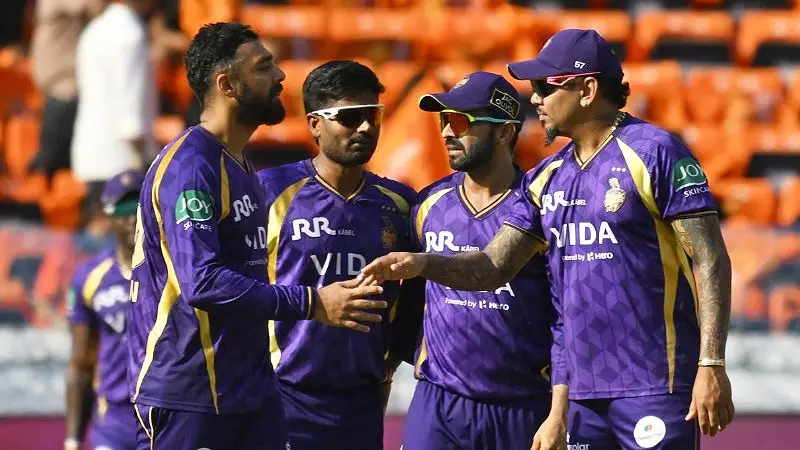

Kolkata Knight Riders arrive at Rajiv Gandhi Stadium still searching for their best opening combination mid-season. Sunrisers Hyderabad arrive knowing exactly who bats where, why they bat there, and what each position is expected to produce. That gap between settled structural clarity and ongoing experimental reshuffling is the central reason this match tilts toward SRH before the toss has been called. Afternoon heat and a slightly slower surface compound KKR’s problems rather than creating opportunities, because disciplined batting partnerships win this kind of match, and KKR haven’t found the combination capable of building them consistently.
KKR’s Top Order Finds No Rhythm
The power play is where KKR’s instability costs them most visibly and most expensively. Frequent changes to the opening combination have prevented any partnership from developing the rhythm that comes from consecutive matches together. Different openers bring different calling patterns between the wickets, different responses to pace and spin variations, and different approaches to field restriction exploitation. None of those adjustments develops across a single match.
They develop across ten consecutive ones, and KKR hasn’t given any combination enough time to reach that point. The uncertainty around overseas slots compounds the problem further. Choosing between an extra batter or an additional bowling option mid-season against a settled opponent means every selection carries the risk of weakening whichever department the choice deprioritises.
SRH Control Games Others Merely Survive
What separates SRH from KKR in this fixture isn’t individual talent. Both squads carry match-winners. What separates them is how each side responds when the match enters a difficult phase. SRH have defined roles across their batting lineup and bowling attack that function when conditions are favourable and when they’re not. Their top order knows the powerplay approach. Their middle order knows the transition phase.
Their bowlers know their specific overs. None of that requires in-game discussion or tactical improvisation because every player has executed their role enough times to make the decisions automatic under pressure. KKR’s ongoing combination experiments mean those automatic decisions don’t exist in the same way.
Hyderabad Pitch Punishes Inconsistent Batting Units
The Rajiv Gandhi Stadium surface under afternoon heat doesn’t flatten into the boundary-friendly track that evening conditions at this ground often produce. Temperatures approaching 40 degrees slow the pitch, reduce pace off the surface, and demand a batting approach built around placement and running rather than boundary frequency. Disciplined batting partnerships survive those conditions and accumulate totals that become competitive.
Batting lineups without settled combinations struggle because the reduced pace exposes technical uncertainties that faster surfaces paper over. KKR’s top-order experiments have produced inconsistent results on flatter pitches this season. On a surface that demands patience and judgment rather than aggressive intent from ball one, those inconsistencies become more pronounced rather than less.
IPL 2026 Form Gap Keeps Growing
2026 has consistently shown that the distance between settled combinations and experimental ones grows rather than shrinks as the season progresses. Teams that locked in their best XI early have improved across the season as partnerships matured and role clarity deepened. Teams still searching for answers at this stage of the tournament face a compounding problem: every experiment that doesn’t work costs match time and points simultaneously, and the remaining fixtures don’t provide enough opportunity to build the consistency that earlier matches would have created.
SRH’s winning run across different conditions reflects the compounded benefit of decisions made early in the season. KKR’s inconsistency reflects the compounded cost of decisions delayed too long. That gap doesn’t close in one match regardless of individual performances, and the structural imbalance entering this fixture at Hyderabad reflects everything both franchises have built or failed to build across the season so far.
- Does KKR’s top-order instability make this match impossible for them to win regardless of individual performances, or can one settled partnership at the top change the entire contest before SRH’s bowling attack settles its lines? Drop your pick in the comments and follow for IPL updates.
FAQs
Q: Why is KKR struggling with its batting lineup in IPL 2026?
Constant changes to the opening combination have prevented any partnership from developing the rhythm that consecutive matches together produce.
Q: How does the Rajiv Gandhi Stadium pitch affect SRH vs KKR in afternoon conditions?
Afternoon heat slows the surface, and rewards disciplined batting partnerships over aggressive boundary-hitting from ball one.
Q: Why does SRH have a structural advantage over KKR in this fixture?
SRH’s settled roles across all positions allow automatic decision-making under pressure that KKR’s experimental combinations can’t replicate.
Q: Does the toss matter in SRH vs KKR at Hyderabad?
The toss helps, but execution and batting stability matter more than first-innings or second-innings choice on this surface.