

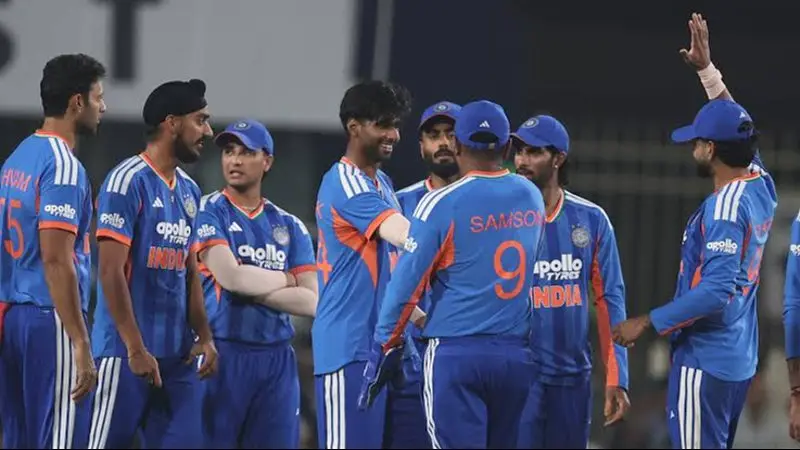

India’s bowlers were hit for 259/7 on 30 October at Eden Park, and the fourth match slipped away by 87 runs with the series already in the bag. Nitish Kumar Reddy, Axar Patel and Naman Dhir took the harshest punishment, yet the leak did not begin in Auckland. Heavy scoring had surfaced in Christchurch and Wellington as well, masked by a strong batting line-up, while constant changes to the attack made matters worse. Here is what went wrong, and what must change.
The Night Auckland Slipped Away
New Zealand piled up 259/7 in Auckland on 30 October, a record against India, and the visitors finished 87 short, on 172. The 3-0 lead meant the series was already safe, which softened the sting without changing the numbers. A target that large leaves almost no room for error. Glenn Phillips and Michael Bracewell supplied the muscle for the home side.
The sharpest damage came from three men. Reddy went for 64 across four overs, with Axar Patel taking 43 in three, and Dhir for 16 in his only over, which adds up to 123 runs from eight overs. The other bowlers shared 136 across 12 overs, so nobody escaped the pain, and the whole attack went at 12.95 an over.
Bowler | Overs | Runs | Wickets | Economy |
|---|---|---|---|---|
Nitish Kumar Reddy | 4 | 64 | 1 | 16.00 |
Axar Patel | 3 | 43 | 1 | 14.33 |
Naman Dhir | 1 | 16 | 0 | 16.00 |
Other bowlers (combined) | 12 | 136 | 5 | 11.33 |
Total | 20 | 259 | 7 | 12.95 |
India tour of New Zealand 2026 T20I bowling
The warning signs came earlier. At Christchurch, five of India’s bowlers went for at least 40, an unprecedented spread in men’s T20I cricket, with Axar conceding 51, Bhuvneshwar Kumar 49 and Arshdeep 45. New Zealand raced to 65/1 after the powerplay and plundered 67 more across the closing five overs.
Wellington showed the same pattern. Nitish finished with 1/38 there and Prince Yadav leaked 44, yet India won all three of the opening games because their batters hunted down every target. Abhishek Sharma struck 113 from just 38 deliveries in the third. Eden Park’s average opening-innings score is about 170 across 28 T20Is, though that figure may be dated, which puts 259 roughly 90 clear of it.
Rotation and the Cost of Experiments
Consistency was missing from the attack all series. Bhuvneshwar played the first three matches, then missed the fourth as Mayank Yadav came into the side. Prince was used in games two to four, while Mayank appeared in the first and the fourth, so the line-up kept shifting around a handful of regulars. Each change asked a new bowler to learn the conditions and the batters in real time.
With the rubber already won, the management had room to try combinations, so rotation deserves some of the blame. It cannot take all of it, because the first three matches had already revealed an attack that gave away runs in bunches. Changing bowlers did not create that weakness. It simply stopped anyone from building a rhythm to fix it.
Phillips and Seifert Hurt the Visitors
Phillips was the series’ constant menace. He smashed an unbeaten 82 from 40 deliveries in Christchurch and joined Bracewell in the Auckland onslaught. In Wellington he scored 17 off 14 balls before falling to a return catch from Axar. How his numbers split between spin and pace remains unverified, so a firm verdict would be pure guesswork.
Seifert’s series was just as uneven. Mayank removed him for 24 in Christchurch, Arshdeep got him in Wellington, and he mustered just 3 in Auckland, then produced 93 in Hamilton. That swing between failure and a near-century shows why planning against him was so hard, and why a thin attack struggled to keep the top order quiet.
Fixes Needed After Hamilton
Hamilton has since been played, and it brought another loss as New Zealand chased down the fifth match with seven wickets in hand. India still took the series 3-2, which flatters them slightly. The scoreline cannot hide that the weakness was visible from the first match onwards.
The India tour of New Zealand 2026 T20I bowling lessons are plain: pick a core and stick with it, keep a death-overs specialist available, and stop giving part-time overs to Dhir while a set pair is at the crease.
Which was the bigger mistake: constant rotation or a lack of death-over specialists? Share your view in the comments.
Frequently Asked Questions (FAQs)
Why did India lose the fourth T20I in Auckland?
The hosts made 259/7, and India ended 87 runs behind. Reddy, Axar Patel and Naman Dhir leaked 123 runs between them from eight overs, which made the chase unrealistic.
What did New Zealand score at Eden Park?
The hosts posted 259/7 on 30 October. That was a record total against India and sat roughly 90 above the ground’s typical first-innings figure of about 170.
Who bowled for India in the fourth T20I?
The full XI is unconfirmed, but Mayank Yadav replaced Bhuvneshwar Kumar. Nitish, Axar and Dhir are the bowlers with confirmed figures, while the remaining bowlers conceded 136 in 12 overs between them.
How did India’s batters hide the bowling flaws early in the series?
They chased every target in the first three games. Abhishek Sharma’s 113 from 38 deliveries in the third match was the standout, which kept the leaky attack from costing a result.
What was the final result of the series?
India won the series 3-2. They took the first three games and lost the last two, with New Zealand winning the fifth T20I in Hamilton by seven wickets.