

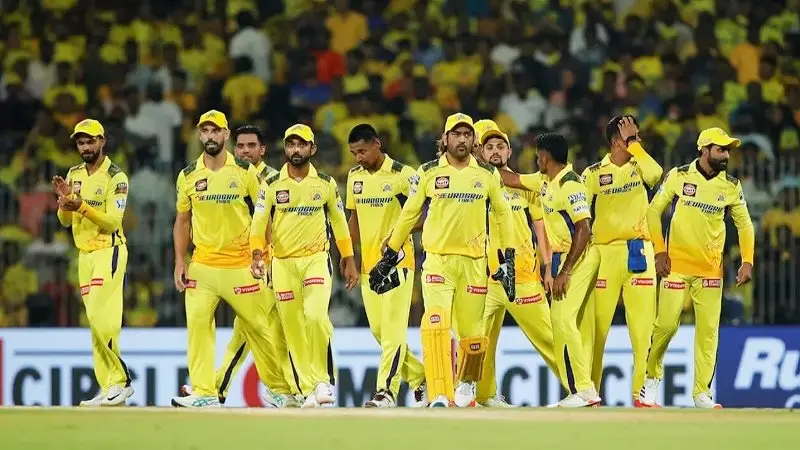

Chennai Super Kings built five IPL titles on one thing: knowing exactly who does what and when. Fixed roles. Predictable outputs. Experienced players who had been in every pressure situation before and knew how to handle it. That system is gone. Sanju Samson is in the top order, adding the aggression they lacked. Young players are in positions that veterans used to occupy. MS Dhoni has been pushed further down the order. It might work. It might produce the worst CSK season in years. There’s no middle ground when a franchise this structured decides to experiment.
CSK’s Old System Won Five Titles
The reason CSK kept winning wasn’t talent; it was clarity. Every player knew their role before the toss. Openers set the platform. The middle order accelerated at a specific rate. Death over bowlers knew their overs. Nothing was reactive. Everything was planned. That system made average players perform above their level because the structure removed uncertainty. When MS Dhoni was managing the innings from eight, the top order knew what platform they needed to give him. When Dwayne Bravo was bowling the 19th over, everyone knew what was coming. Removing that clarity is a bigger risk than any individual selection decision.
Samson Must Fix the Powerplay Alone
CSK’s powerplay numbers last season were among the worst in the competition. That’s the specific problem Sanju Samson was assigned to solve. His aggressive intent against pace in the first six overs is exactly what CSK needed at the top. The concern is spin. On slower Chennai surfaces where spin dominates from over four onwards, his record against turning deliveries introduces a question that the squad selection doesn’t fully answer. If Samson fires on flat tracks, CSK’s powerplay problem is solved. If he struggles against spin at Chepauk, they’ve added volatility to the position that needed stability most.
CSK’s IPL 2026 Strategy Exposes Bowling Uncertainty
The batting shift gets the headlines. The bowling is the real concern for IPL 2026. CSK’s death over bowling last season had defined roles and still leaked runs. This season, those roles are less defined, not more. Multiple options for the final phase, no single bowler who owns overs eighteen to twenty, unlike the way previous CSK attacks had a closer. In close matches, which CSK regularly play, that uncertainty runs. Not ten runs. Two or three. Enough to turn a win into a loss at venues where the margin between competing and watching the playoffs from home is exactly that narrow.
Young Players Under Old Franchise Pressure
Trusting young players is admirable. Trusting them at CSK, where the fanbase expects finals appearances and the franchise’s identity is built on delivering them, is a different kind of pressure. Domestic cricket doesn’t prepare you for what it feels like to bat for CSK in a must-win match with 40,000 people who have followed this club for seventeen years. Some young players thrive in that environment. Most take time to adjust. CSK doesn’t have time. The IPL group stage gives you fourteen matches to qualify. Integrating multiple untested players while fixing a power-play problem simultaneously is asking a lot from one pre-season.
Dhoni Finishes What Others Must Start
The plan for Dhoni makes sense on paper. Short burst finisher. Seven to twelve balls. Maximum impact in the phase where his composure under pressure is unmatched. It worked brilliantly in seasons where the top order gave him a platform. It collapsed in the ones where they didn’t, and he arrived at the crease needing twenty balls to do what he could only do in ten. This CSK squad is more volatile at the top than previous ones. The probability of Dhoni being asked to do more than his current role is higher than it was last season. Whether he can still do it is the question nobody wants to ask.
- Is CSK’s new approach a bold evolution or unnecessary risk, and does abandoning their traditional system cost them in IPL 2026? Drop your take and follow for IPL 2026 updates.
FAQs
What is the CSK’s IPL 2026 Strategy?
It focuses on improving powerplay batting and integrating younger players while moving away from fixed roles.
How important is Sanju Samson for CSK?
He is crucial in fixing top-order issues and setting the tempo early in the innings.
Why is CSK’s bowling a concern?
There is no clearly defined death-overs specialist, creating uncertainty in crucial phases.
Is Chennai Super Kings rebuilding for the future?
Partly yes, as their strategy suggests a transition toward a younger, more adaptable squad.