

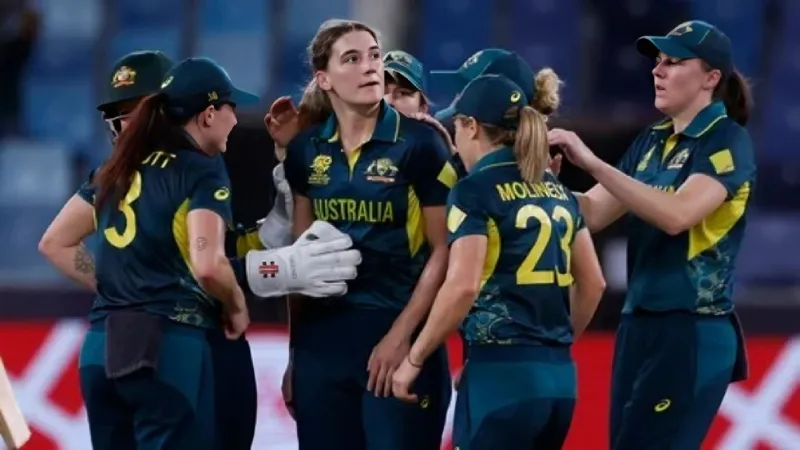

Australia’s core group is settled. The debates sitting around the edges of that core will determine whether they arrive in England and Wales with the right tactical balance or the right names. Grace Harris, Alana King, and Lucy Hamilton represent three completely different answers to the same question: what does this squad need most when English conditions shift mid-tournament unexpectedly? Which answer selectors choose reveals exactly how Australia plans to approach the competition.
Squad Balance Creates the Hardest Decisions
Annabel Sutherland’s expected return tightens competition across every position category simultaneously. Australia’s strength has always been squad depth, producing difficult selection calls rather than obvious gaps requiring obvious solutions. That depth is now working against the straightforward approach.
English conditions in June create a specific problem for squad construction. Morning matches produce swing and seam movement that favours pace bowlers. Afternoon and evening fixtures on drying pitches assist spin. A squad built entirely around one approach risks tactical exposure before the group stage concludes. Selectors appear focused on players offering multiple options rather than specialists locked into one defined role. That philosophy narrows the final spots significantly and explains why the Harris-Hamilton-King debate has become more tactical than statistical.
Women’s T20 World Cup 2026 Spin Question
Alana King’s five wickets at an economy rate of 5.5 in the Caribbean series, including effective powerplay bowling, made her Women’s T20 World Cup 2026 selection increasingly difficult to argue against. She offers attacking leg-spin that creates a different dimension from the orthodox options Sophie Molineux, Ashleigh Gardner, and Georgia Wareham collectively provide.
Her middle-over wicket-taking capability is the specific quality that matters in knockout matches where momentum shifts require bowling changes to produce immediate results rather than gradual pressure. The counter-argument is straightforward: four frontline spin options in English conditions is a luxury that pace-friendly morning pitches could make expensive. Australia’s recent ICC success has repeatedly come from adaptable spin combinations that control pressure moments regardless of surface. King fits that pattern.
Harris Brings Power Nobody Else Has
Grace Harris occupies a position in Australia’s middle order that no other current squad member fills in the same way. Pure power-hitting that changes match momentum within three overs is a specific skill that stability-focused players like Beth Mooney, Ellyse Perry, and Tahlia McGrath don’t provide, regardless of their broader value.
Knockout matches where momentum shifts rapidly are the environment Harris was built for. Australia already possesses structural stability across its batting order. What occasionally goes missing is the explosive innings that converts a competitive total into an unreachable one or turns a difficult chase into a straightforward one. The selection debate isn’t whether Harris is good enough. It’s whether her batting impact outweighs the bowling option her squad spot replaces. In shorter ICC tournaments where conditions change rapidly, that trade-off is the hardest calculation selectors face.
Hamilton and the Backup Keeper Debate
Lucy Hamilton’s left-arm pace creates the specific angle English conditions amplify through swing movement that troubles experienced batters regardless of how well they’ve prepared against right-arm alternatives. Australian domestic cricket rarely produces this skillset at the international level, which makes her case harder to dismiss on experience grounds alone.
Her calmness at the international level, despite limited caps, has strengthened the case more than raw wicket-taking numbers. Selecting Hamilton signals Australia prioritises bowling flexibility and condition-specific tactics over batting depth. Choosing Harris signals the opposite. Phoebe Litchfield’s reported wicketkeeper development adds a third variable: if she provides emergency cover for Beth Mooney without occupying a specialist spot, Australia gains flexibility that allows the Harris-Hamilton debate to be resolved on pure tactical merit rather than squad management constraints.
- Does Australia’s best squad for England include Harris’s power, King’s leg-spin, or Hamilton’s left-arm threat, or can they find room for all three? Drop your pick in the comments and follow for cricket updates.
FAQs
Q: When and where is the women’s cricket World Cup being held in 2026?
The tournament is scheduled to take place in England and Wales.
Q: What is Australia’s biggest selection debate for the tournament?
The key debate involves choosing between Grace Harris’s batting power, Alana King’s leg-spin, and Lucy Hamilton’s left-arm pace for the final squad spots.
Q: Why is Alana King important for Australia’s plans in England?
King offers attacking leg-spin and middle-over wicket-taking that creates a different dimension from Australia’s existing orthodox spin options.
Q: Who could cover wicketkeeping for Australia if Beth Mooney is unavailable?
Phoebe Litchfield has reportedly developed her wicketkeeping skills and could provide emergency cover without using a specialist squad spot.
Q: Why do English conditions matter so much for Australia’s squad construction?
English pitches produce morning swing, favouring pace, and afternoon turn, favouring spin, making tactical flexibility essential throughout the competition.
Disclaimer: This blog post reflects the author’s personal insights and analysis. Readers are encouraged to consider the perspectives shared and draw their own conclusions.