

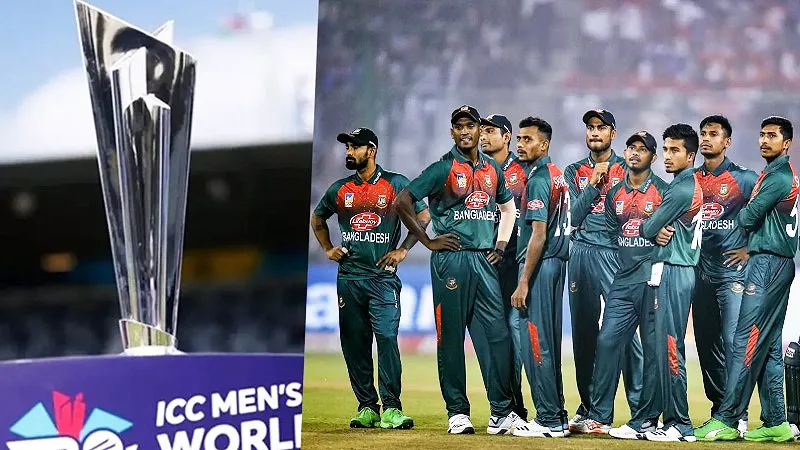

Cricket has always claimed moral high ground, the “gentleman’s game” run by consensus, fairness, and a shared respect for national realities. That illusion cracked the moment Bangladesh was expelled from the Men’s T20 World Cup for refusing to travel to India over security concerns. Not fined. Not rescheduled. Expelled.
This wasn’t a minor associate nation being brushed aside. This was Bangladesh, a Full Member, a team that has played every T20 World Cup since 2007, suddenly replaced by Scotland weeks before a February 7 tournament start. The irony? Just months earlier, the ICC bent over backwards to accommodate India’s refusal to travel to Pakistan for the Champions Trophy, relocating matches, including a final, to Dubai.
So the question isn’t whether logistics are hard. They always are. The real question is simpler and far more uncomfortable: when did “feasibility” become selective?
Neutral Venues When Power Demands
The ICC’s explanation leaned heavily on timing, that moving Bangladesh’s matches to Sri Lanka was “not feasible” so close to the tournament. Yet history laughs at that reasoning. India’s Champions Trophy fixtures were shifted to a neutral venue with similar time constraints because their government declined travel to Pakistan. The precedent is recent, visible, and impossible to ignore.
This isn’t about comparing India and Bangladesh politically. It’s about comparing administrative responses. When a powerful board says no, solutions appear. When a smaller board resists, consequences follow.
Security Concerns Aren’t Negotiable Tokens
Bangladesh’s stance wasn’t theatrical posturing. It was rooted in player safety, the one issue cricket’s leadership should never trivialize. The World Cricketers’ Association echoed this concern, warning that agreements not being honoured and players not being consulted signal a deeper governance failure.
Cricket has relocated tours, series, and entire tournaments over security concerns before, from Pakistan’s long exile after 2009 to Sri Lanka’s security recalibrations. Treating Bangladesh’s concerns as expendable undermines the very risk frameworks the ICC claims to uphold.
Replacing Members Weakens Global Trust
Scotland’s inclusion is not the problem; they earned their pathway. The problem is the message sent by replacing a Full Member through administrative force. As Tom Moffat noted, this isn’t just a “sad moment,” it’s a warning sign for the sport’s operating model.
Once exclusion becomes easier than negotiation, trust evaporates. And cricket, unlike franchise leagues, still survives on bilateral goodwill.
Pakistan’s Reaction Signals Wider Fallout
Pakistan’s response turned this from a Bangladesh issue into a systemic one. PCB chief Mohsin Naqvi openly called it “injustice,” hinting that Pakistan’s participation itself could be reconsidered depending on government instruction.
That matters. Because when multiple boards begin questioning ICC neutrality, governance stops being authority-driven and starts becoming fragile diplomacy. Shahid Afridi’s blunt line, “build bridges, not burn them,” landed because it felt painfully accurate.
Bangladesh’s removal from the T20 World Cup isn’t just a scheduling dispute; it’s a credibility crisis. The ICC didn’t merely enforce a rule; it exposed a hierarchy. One where security concerns are negotiable depending on who raises them.
Cricket’s future depends on competitive balance, but also moral balance. If fairness becomes flexible and consistency optional, the ICC risks becoming less “international” and more transactional. The saddest part? This controversy was avoidable. Dialogue, compromise, and neutral venues have saved cricket before. They could have saved it again.
Key Takeaway
This wasn’t about feasibility; it was about flexibility, selectively applied.
FAQs
- What triggered Bangladesh’s T20 World Cup expulsion?
Their refusal to travel to India due to security concerns and the ICC’s rejection of venue relocation.
- Why is the ICC accused of double standards?
Because India’s matches were moved to a neutral venue for similar reasons, while Bangladesh was removed entirely.
- How could this decision affect global cricket governance?
It risks eroding trust, increasing political standoffs, and weakening the ICC’s claim of neutrality.
Disclaimer: This blog post reflects the author’s personal insights and analysis. Readers are encouraged to consider the perspectives shared and draw their own conclusions.
Step into the world of cricket with JeetBuzz News—where expert opinions, trending Blogs, and behind-the-scenes insights meet all your favorite topics. Stay informed, stay entertained, and never miss the stories shaping the cricketing world—only on JeetBuzz News!