

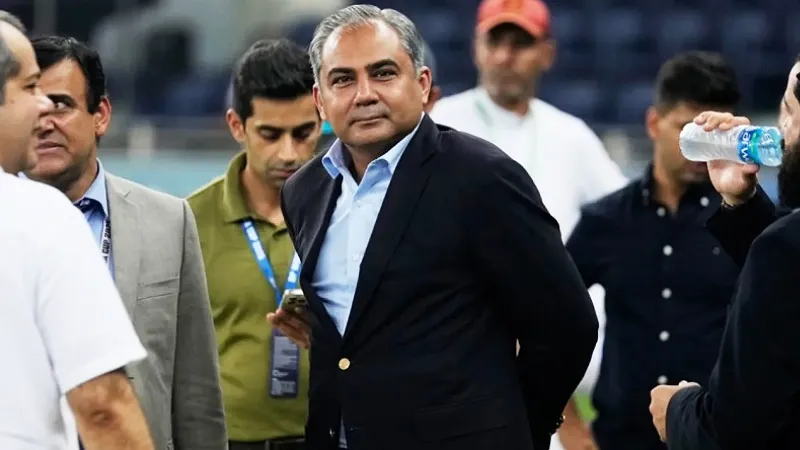

Cricket has always claimed to be a gentleman’s game, but global tournaments are increasingly run like high-stakes boardroom dramas. Just two weeks before the Men’s T20 World Cup 2026 opener, Pakistan’s participation hangs in limbo not because of form, fitness, or squad balance, but politics and principle. PCB chairman Mohsin Naqvi has drawn a hard line: Pakistan will follow government instruction, not ICC pressure.
The trigger? Bangladesh’s shock removal from the tournament after refusing to play their matches in India over security concerns. The ICC’s ultimatum was blunt: accept the schedule or exit. Bangladesh chose the latter. Pakistan, the lone board to back them at ICC meetings, now finds itself at a moral crossroads.
Ironically, Pakistan is already scheduled to play all its matches in Sri Lanka under a previously agreed hybrid model. Yet the issue here isn’t logistics, it’s precedent. And in cricket history, precedents have a habit of haunting administrators longer than any lost final.
When Neutrality Stops Being Neutral
The ICC insists it applies uniform rules, but Bangladesh’s case challenges that narrative. India and Pakistan have avoided bilateral cricket on security grounds for over a decade, formalized through the ICC-approved hybrid model for 2024–27 events. Bangladesh asked for something similar to neutral venues, but was denied. That contradiction is the heart of Pakistan’s protest. Neutral venues are acceptable for some disputes, it seems, but not for others.
Diplomacy Replacing Selection Meetings
Naqvi’s insistence that the final call rests with Pakistan’s government is telling. Traditionally, World Cup participation has been a board-level administrative matter. Escalating it to state leadership signals that cricket diplomacy has crossed into foreign policy territory. When prime ministers decide fixtures, the ICC’s authority quietly erodes.
Bangladesh’s Exit, Scotland’s Entry
Although the entry of Scotland does little to alter the overall balance of the tournament from an economic perspective, it changes the nature of the tournament considerably in a competitive sense. Scotland does not possess the same level of broadcast appeal as Bangladesh in South Asia, nor do they have the same level of consistency at the World Cup. However, Scotland’s entry into the competition is well-deserved based on its merit-based pathway into the tournament; however, the fact that sporting qualification for entry has been supplanted by political compliance raises serious concerns regarding this tournament.
Pakistan’s Uncomfortable Moral High Ground
Pakistan’s stance is not without irony. They will play India on February 15 in Colombo and open the tournament against the Netherlands on February 7, also in Sri Lanka. Their own security concerns are already accommodated. Yet by standing with Bangladesh, Pakistan positions itself as cricket’s ethical dissenter, willing to risk isolation to challenge what it views as structural favoritism.
Pakistan’s potential withdrawal isn’t about solidarity optics alone; it’s about drawing a line in cricket’s administrative sand. The ICC may proceed regardless, even hinting at expanding the tournament field if Pakistan pulls out. But each such workaround chips away at the credibility of global governance.
Key Takeaway
This isn’t a scheduling dispute; it’s a stress test of who truly runs world cricket.
FAQs
- What caused Bangladesh’s removal from the T20 World Cup 2026?
Their refusal to play matches in India due to security concerns after the ICC rejected neutral-venue requests.
- Why is Pakistan’s participation uncertain?
The PCB says it will follow government instructions, potentially withdrawing in solidarity with Bangladesh.
- How does this affect the tournament structure?
Bangladesh has been replaced by Scotland, and Pakistan’s exit could force further ICC adjustments.
Disclaimer: This blog post reflects the author’s personal insights and analysis. Readers are encouraged to consider the perspectives shared and draw their own conclusions.
Step into the world of cricket with JeetBuzz News—where expert opinions, trending Blogs, and behind-the-scenes insights meet all your favorite topics. Stay informed, stay entertained, and never miss the stories shaping the cricketing world—only on JeetBuzz News!