

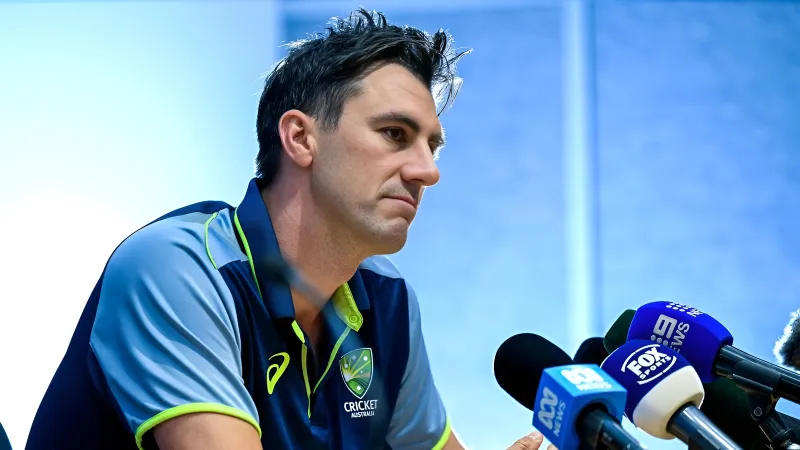

Cummins didn’t just defend Test cricket. He warned that the loyalty holding it together has limits. An Australian captain admitting players are already turning down franchise deals to honour national duty, but that this sacrifice may not last, is a different kind of statement than the usual honour-and-legacy defence. Cummins isn’t predicting a crisis. He’s describing the conditions that create one. The 150th anniversary Test keeps the best players committed right now. The question Cricket Australia needs to answer is what happens when the financial gap gets wide enough that legacy stops being a sufficient argument.
The Financial Gap Players Cannot Ignore
Pat Cummins earns close to AU$3 million annually from his Cricket Australia contract. That’s an elite figure by international cricket standards, and it reflects his status as one of the best players in the world. It also doesn’t come close to what several weeks in the IPL, The Hundred, or SA20 would generate on top of that base. For players on lower central contracts, the ones not named Cummins, Smith, or Warner, the calculation is starker.
A few weeks in a global franchise tournament can match or exceed several months of international commitment. When the financial gap reaches that scale, framing the choice as loyalty versus money isn’t accurate. It’s financial security versus financial security, with one option simply paying more.
Workload Is the Argument Players Use
Australia schedules around ten Test matches annually. Add ICC events, bilateral white-ball series, and the BBL, and the full-year schedule leaves little meaningful recovery time for players across multiple formats. Cummins has managed his workload carefully throughout his career, selecting which franchise tournaments he participates in, managing his pace-bowling load across formats, and being transparent about the physical cost of sustained international cricket. That management is a privilege his central contract status affords him.
Players without the same leverage can’t negotiate selectively. They either commit to everything and accept the physical toll or reduce their international availability to protect their long-term earning capacity. Workload isn’t an excuse for choosing franchises. It’s the legitimate structural problem that makes the choice feel rational.
Pat Cummins Admitted What Others Won’t
The specific thing Cummins said that landed differently from the standard debate framing was his acknowledgement that player sacrifices have limits. Most administrators respond to franchise-versus-international tensions by emphasising the honour and legacy of Test cricket, which is real and genuinely motivating for most players.
Cummins added something those responses typically omit, the acknowledgement that the current model depends on players consistently choosing honour over income, and that this dependence is a structural vulnerability rather than a permanent foundation. That’s a more honest description of the situation than anything Cricket Australia’s official communications have produced. It’s also a more useful one, because solutions to structural vulnerabilities require acknowledging that they exist.
BBL Cannot Win This Financial Battle
The Big Bash League’s central problem is not scheduling or format. It’s that newer leagues in newer markets have more money to distribute and can offer higher contracts without the constraints that come with being embedded in a national cricket structure. SA20’s first-year salary offers exceeded BBL top contracts despite being a newer competition with a smaller domestic audience.
The Hundred’s short-format structure compresses earnings into a smaller window, making the per-week return significantly higher than an equivalent BBL commitment. Cricket Australia’s exploration of privatisation models for the BBL reflects an acknowledgement that the current structure can’t compete financially. Without structural change, the BBL loses its position as the domestic competition that complements rather than competes with the international calendar.
Australia hasn’t reached a crisis yet. The conditions that produce one are becoming more visible every season.
- Does Cricket Australia have enough time to fix the financial structure before top players start choosing franchise earnings over Test commitments or is Cummins’ warning already too late? Drop your take and follow for cricket updates.
FAQs
Why are Australian players considering skipping international matches?
Short franchise tournaments often offer significantly higher earnings in less time.
How does the 150th anniversary Test impact player priorities?
It represents legacy and prestige, making it a key event players are unlikely to skip.
Which leagues compete most with Australia’s schedule?
The IPL, The Hundred, and SA20 frequently clash with international fixtures.
Can the BBL compete with global franchise leagues financially?
Currently, it struggles to match the salaries offered by newer and richer leagues.
Disclaimer: This blog post reflects the author’s personal insights and analysis. Readers are encouraged to consider the perspectives shared and draw their own conclusions.