

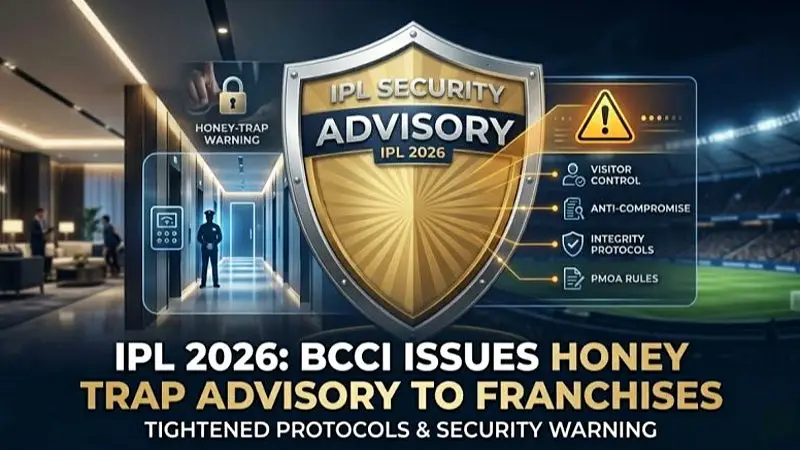

The BCCI has issued an eight-page directive covering unauthorized hotel access, owner-player interaction during live matches, and vaping in team environments. All ten franchises received strict instructions. The advisory doesn’t treat these as separate issues. It treats them as connected symptoms of the same problem: franchise cricket operating at a massive commercial scale without consistently enforced operational discipline. The directive signals that off-field conduct is now a tournament-wide governance concern, not a matter individual teams manage internally.
BCCI Targets Hotel Access Controls
The most operationally significant part of the directive involves written authorization requirements before any guest can access player or support staff hotel rooms. This isn’t a general recommendation. Franchises must enforce documented approval procedures.
The reasoning is direct. Long tournaments involving continuous hotel stays, city travel, and private meetings create security vulnerabilities that physical on-field monitoring doesn’t cover. High-profile athletes become identifiable targets when routine access to restricted areas goes unmonitored. Team managers were reportedly unaware of outside visitors in certain cases, which confirms the gap the BCCI is closing rather than preventing.
Modern franchise cricket’s commercial scale means player visibility extends well beyond stadiums. Digital surveillance, unrestricted social access, and long tournament schedules create off-field risk environments that earlier cricket administrations never encountered at this scale.
Protocol Violations Carry Real Penalties
The advisory doesn’t just describe new standards. It attaches consequences. Repeated violations can result in financial penalties, suspensions, or disqualification for players and team officials. That enforcement language changes the nature of the directive from guidance into regulation.
One specific concern involves franchise owners entering restricted match zones or interacting with players during live games. The BCCI wants a clear separation between ownership and playing operations during matches. From a tactical perspective, this directly reduces the possibility of external interference in dressing-room decisions, dugout communication, and in-match strategy. Teams that have operated with informal access arrangements between owners and playing staff now face a formalized boundary that applies equally across every franchise, regardless of individual relationships.
The vaping issue added a public dimension. Visuals circulating online from team environments prompted the Board to reinforce existing prohibitions explicitly. E-cigarettes and vaping products remain illegal under Indian law and tournament regulations. The BCCI’s position is that every team environment, from hotel rooms to practice facilities, falls within the scope of conduct standards the directive enforces.
IPL 2026 Security Systems Get Stricter
IPL 2026 operates across ten franchises, traveling continuously across cities for nearly two months. That scale creates operational complexity that no single team’s internal protocols can fully manage without Board-level standardization.
The directive extends existing structures rather than replacing them. Team Integrity Officers, Security Liaison Officers, and restricted access protocols already exist inside the tournament’s operational framework. The new advisory adds movement reporting requirements, tighter authorization systems, and a clearer enforcement hierarchy above franchise management. Anti-corruption monitoring has also expanded beyond the traditional focus on suspicious betting activity and match-fixing communication. Behavioral monitoring off the field, including irregular hotel movements and unauthorized visitor access, now falls within the same integrity framework.
Lessons From Cricket’s Darker History
The 2013 spot-fixing controversy reshaped Indian cricket’s anti-corruption infrastructure permanently. Restricted zones, communication monitoring, and integrity officer appointments all followed from that period. The current directive fits that long-term pattern rather than representing a sudden reaction to isolated incidents.
ICC tournaments and major T20 leagues globally have adopted progressively stricter operational procedures since 2013. What distinguishes the current advisory is its scope. Extending conduct standards from match venues to hotels, practice facilities, and dugouts signals that the BCCI now treats the entire tournament environment as a managed integrity zone rather than treating stadiums as the only controlled space. For players and franchise staff, compliance with tighter operational standards is becoming as essential as tactical preparation.
- Does the BCCI’s eight-page directive signal that franchise cricket finally takes off-field integrity as seriously as on-field performance? Drop your pick in the comments and follow for the latest updates.
FAQs
Q: What is the BCCI IPL honey trap warning about?
The warning addresses unauthorized hotel room access and security risks connecting high-profile athletes to potential compromise situations during the tournament.
Q: Why did the BCCI issue an eight-page IPL directive to all franchises?
Repeated operational breaches across hotel access, owner interaction, and player conduct created reputational and integrity risks requiring standardised enforcement.
Q: Is vaping banned in IPL dressing rooms and team hotels?
Yes, the advisory confirms vaping, and e-cigarettes are prohibited across all IPL venues, hotels, practice facilities, and team environments under Indian law.
Q: Can IPL franchise owners interact with players during live matches?
The directive restricts owners from entering sensitive areas, including dugouts and dressing rooms, during live matches to protect tactical decision-making.