

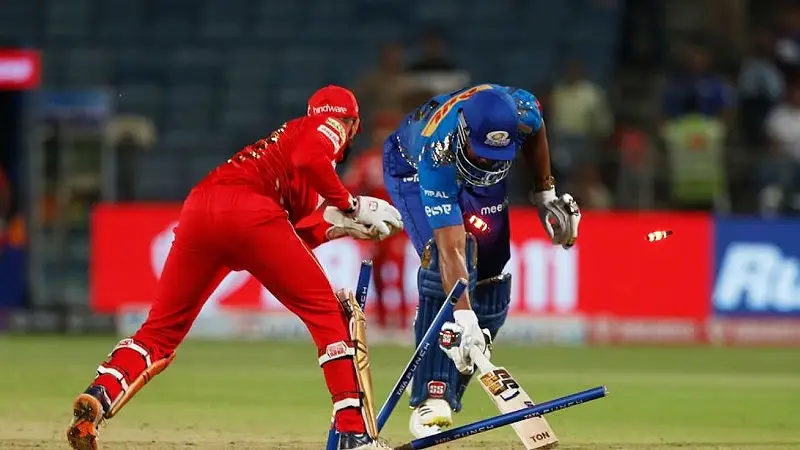

Mumbai Indians lost to Royal Challengers Bengaluru, and their playoff hopes disappeared with it. Five titles. The most successful franchise in IPL history. Out before the knockouts. Jasprit Bumrah managed three wickets across 11 matches. Hardik Pandya produced a disappointing campaign with both bat and ball. Suryakumar Yadav never found the explosive consistency that made him one of T20 cricket’s most feared batters. Three of their biggest names underperformed simultaneously, and no amount of Tilak Varma brilliance or Allah Ghazanfar breakthroughs could absorb all three failures across a 14-match season.
Star Batters Fail Their Reputation
The most damaging pattern across MI’s campaign wasn’t one big collapse. It was the consistent inability of their experienced batters to dominate when domination was required. Suryakumar entered the season as one of T20 cricket’s most dangerous hitters and left it without producing the innings his reputation promised against quality attacks.
Hardik’s dual role as captain and all-rounder amplified every individual failure. When his batting contributions fell short, the team couldn’t redistribute the pressure efficiently because his bowling wasn’t producing breakthroughs to compensate. The burden shifted onto Tilak Varma and Ryan Rickelton repeatedly, which isn’t a sustainable batting structure for a franchise expecting to reach the playoffs. Middle-over wickets compounded the problem consistently. MI lost batters after the powerplay across multiple matches, forcing their finishers into rebuilding situations instead of attacking ones.
Bumrah Disappears When MI Needed Him
Three wickets from Jasprit Bumrah across 11 matches is the single most surprising statistic any MI supporter will carry from this campaign. He is the best death bowler in the world when fully fit and operating within a functioning bowling attack. Neither condition fully held this season.
His execution of yorkers and slower deliveries lacked the precision that normally makes him almost impossible to attack in the final four overs. Trent Boult and Deepak Chahar couldn’t compensate across the matches Bumrah was below his best. The death-over phase that MI usually defends through Bumrah’s accuracy became exploitable, and opposition batting sides recognised that early enough to plan specifically around it.
Ghazanfar produced important breakthroughs throughout the season and showed genuine talent. But relying on an emerging spinner to carry a bowling attack built around the world’s best death bowler is a structural imbalance no franchise can sustain across 14 matches. The bowling unit never operated collectively, and on batting-friendly surfaces where control across 20 overs decides results, that collective failure was fatal.
IPL 2026 Exposed MI’s Tactical Rigidity
Bowling changes arrived late. Field placements lacked the aggression that creates pressure rather than containing it. The batting order was rarely adjusted according to match conditions, meaning MI approached a slow Chepauk pitch with the same structure they’d used on a flat Wankhede track. Successful franchise sides shift their combination within matches as the situation demands. MI’s tactical responses frequently lagged a phase behind where the match had already moved.
Confidence Collapsed Before the Season Did
The technical failures explain what happened in individual matches. The confidence collapse explains why the recovery never came. MI have historically drawn on their title-winning culture to reset after poor runs. That culture didn’t reassert itself this season in the way it has across previous campaigns.
A franchise with five titles doesn’t rebuild culture in one off-season. But this campaign exposed a gap between MI’s reputation and its current collective standards that the next auction cycle must address directly. Bumrah returning to full effectiveness solves the bowling problem. Hardik finding form with both bat and ball in his dual role solves the leadership problem. Suryakumar rediscovering his peak output solves the batting problem. All three recovering simultaneously is possible. Counting on it without structural reinforcement is the mistake MI can’t afford to repeat.
- Does MI’s double elimination alongside LSG demand a complete squad overhaul, or can Bumrah and Hardik returning to form fix everything next season? Drop your pick in the comments and follow for the latest updates.
FAQs
Q: Why were the Mumbai Indians eliminated?
MI were eliminated because Bumrah took only three wickets in 11 matches, senior batters underperformed, and the team showed tactical rigidity across key fixtures.
Q: How many wickets did Jasprit Bumrah take in IPL 2026?
Bumrah managed only three wickets across 11 matches, a dramatically below-par return for the world’s best death bowler.
Q: What was Hardik Pandya’s biggest failure as MI captain?
His dual-role underperformance with both bat and ball prevented the team from redistributing pressure when either department needed support.