

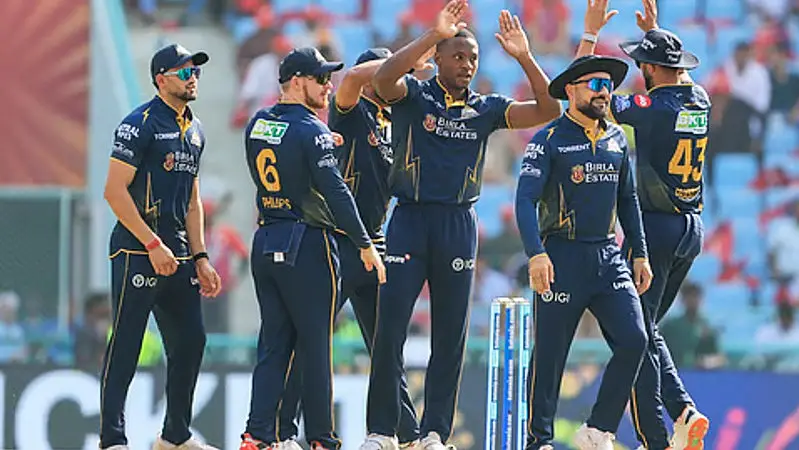

Rashid Khan entered the RR vs GT match with 15 wickets from 11 innings and left with three more, all bowled. Kagiso Rabada has taken 14 wickets from seven matches while sustaining speeds above 145kph across an entire tournament. Together they give Gujarat Titans a bowling structure that removes batting sides in the powerplay through pace and dismantles middle orders through spin before any partnership can establish itself. Most franchise sides build around batting depth and hope the bowling holds. GT are doing the opposite, and it’s working.
Rashid Attacks Stumps Again
The most significant change in Rashid Khan‘s approach this season isn’t a new delivery or a technical adjustment. It’s intent. Over the previous two IPL editions, his default setting shifted toward containment. He restricted runs rather than hunting wickets, which produced quieter spells and less impact at the moments GT needed breakthroughs most.
Against Rajasthan Royals, the attacking length returned. Three bowled dismissals in a single spell don’t happen through defensive bowling. He attacked the stumps, forced batters to play against his spin, and targeted left-handers from over the wicket with the angle and variation their technique struggles with most. His middle-over control doesn’t just take wickets. It prevents any settled batter from finding the phase of freedom that transforms a competitive total into an unreachable one. When Rashid is in this mode, opposition captains can’t send a batter out and expect them to dominate six consecutive overs uninterrupted.
Rabada Brings Pace Nobody Expects
Kagiso Rabada at 145kph-plus across a full IPL campaign is genuinely unusual. Maintaining that physical output through weeks of continuous travel and back-to-back matches is something most overseas fast bowlers can’t sustain. Rabada has done it this season while also producing wickets with the new ball and in attacking middle-over spells.
His tactical adjustment to Indian pitches has been equally impressive. Rather than depending on swing that conditions don’t always offer, he focused on seam movement and uncomfortable bounce that night-match carry rewards. The combination produces a bowler who doesn’t need a green surface to threaten. He brings his own conditions through raw pace and precise seam position. Against Rajasthan’s top order, his early damage made Rashid’s job considerably easier.
IPL 2026 Proves Bowling Wins Matches
GT built their squad around the opposite principle. When Rabada removes top-order batters before they settle and Rashid tightens the middle overs without conceding freely, opposition totals don’t reach the 200 range that negates careful batting plans. The RR vs GT match demonstrated exactly that structure in practice. Rajasthan never found a phase free from bowling pressure. Rabada attacked early. Rashid attacked the middle. No scoring window opened long enough for RR’s batting to impose itself. Franchise cricket normally rewards firepower. GT is proving that denying firepower is an equally valid path to the same destination.
Numbers Confirm GT’s Bowling Dominance
Rashid’s 15 wickets from 11 innings at improved control reflect a bowler who has recovered both his rhythm and his attacking intent simultaneously. Rabada’s 14 wickets from seven matches show a strike rate that most fast bowlers across the tournament can’t match across the same workload.
What the numbers don’t fully capture is the timing of their impact. Rashid takes wickets during the middle overs when batting sides are accelerating, and every breakthrough carries double value. Rabada removes top-order batters before they can establish the platforms those accelerations depend on. That sequencing means GT’s bowling attack attacks in both the phase that sets up totals and the phase that dismantles chases simultaneously. Very few franchise bowling units own that capability at both ends of the innings.
- Does Rashid and Rabada bowling together already make GT the team no side wants to face in the playoffs? Drop your pick in the comments and follow for the latest updates.
FAQs
Q: Why is Rashid Khan more dangerous for GT this season than in recent years?
He returned to attacking the stumps aggressively rather than bowling defensively, producing three bowled dismissals in a single spell against RR.
Q: What makes Kagiso Rabada so effective on Indian IPL surfaces?
He generates seam movement and uncomfortable bounce through raw pace above 145kph rather than depending on swing conditions.
Q: How do Rashid and Rabada complement each other for the Gujarat Titans?
Rabada removes top-order batters early with pace while Rashid dismantles middle orders through spin, denying batting sides any scoring phase free from pressure.
Q: Can GT’s bowling attack carry them deep into the playoffs?
Their ability to control all 20 overs through two elite bowlers in distinct phases gives GT a structural bowling advantage most franchise sides currently cannot match.