

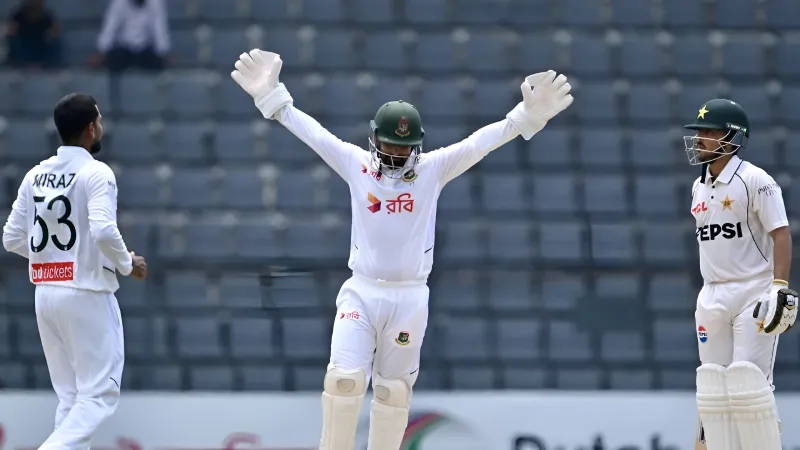

Litton Das ended the drawn Test with nine dismissals behind the stumps, a Bangladesh record that moves past Khaled Mashud’s seven. Eight of them were catches, and one was a stumping, shared across both Afghanistan innings. The haul still sits two short of the world mark of 11, but it places the wicketkeeper among the most productive glovemen the format has seen. The ninth only arrived on day five, so the record was settled late. Here is how the count was built and where it ranks.
Eight Catches and One Stumping
Afghanistan’s first innings gave Litton five of his nine, four catches plus a stumping that removed Shahidi off the bowling of Mehidy. Five dismissals in a single innings is already a strong shift for any keeper, so the second innings only had to finish the job. It added four more catches, and the last of them sent back Alikhil off Ebadot. That final grab came on day five, which is why the count stood at eight when day four finished.
The split of eight catches and one stumping gives the record a steady shape, with no frantic spell behind it. A stumping demands quick hands and clean footwork, and it was the only one on the card. Producing that many clean takes across a draw requires focus through long fielding sessions, especially when Afghanistan batted 142 overs in the closing innings. Spread across two innings, the haul rewards consistency more than a single hot streak.
Bangladesh vs Afghanistan Test: Litton Das dismissals against the record book
Seven stood as the national best for two decades, set by Khaled Mashud against Zimbabwe in 2004. Litton has lifted that figure by two, and no other Bangladeshi keeper appears in the leading list below. Beating a mark that old is notable by itself, even before the wider world list enters the picture. Few keepers see that many edges in one Test, so the achievement also owes something to sustained pressure from the bowlers.
The global ceiling is 11, all of them catches. Jack Russell reached it for England against South Africa in 1995, AB de Villiers matched it for South Africa against Pakistan in 2013, and Rishabh Pant did the same for India at Adelaide against Australia in 2018. Denis Lindsay’s eight against Australia in 1966 arrived in a match where he also made 69 and 182, which shows how rare a big keeping haul and big batting scores together have been.
Wicketkeeper | Team | Dismissals | Opponent | Year |
Jack Russell | England | 11 | South Africa | 1995 |
AB de Villiers | South Africa | 11 | Pakistan | 2013 |
Rishabh Pant | India | 11 | Australia | 2018 |
Litton Das | Bangladesh | 9 | Afghanistan | 2026 |
Denis Lindsay | South Africa | 8 | Australia | 1966 |
Khaled Mashud | Bangladesh | 7 | Zimbabwe | 2004 |
Day Five Ends in a Draw
Bangladesh scored 346 in the first innings and declared the second on 372/7, which set Afghanistan a target of 479. The visitors had made only 240 in their own first turn at the crease, so surviving the chase demanded a far steadier effort than anything they had shown earlier in the match. A declaration that big gave the bowlers a full day to attack. It set up a tidy contrast between a declaration built to win and a defence built to survive.
Afghanistan did survive. They lasted 142 overs and finished on 346/8, with Atal making 111 and Qais unbeaten on 49. That resistance denied Bangladesh a win, yet it also kept the match alive long enough for the ninth dismissal to arrive, so the draw carries a record inside it.
Next Assignments for the Gloveman
West Indies visit next, with the first Test in Mirpur from 28 October to 1 November and the second in Sylhet from 5 to 9 November. England follow in February 2027 for two Tests, although the dates are yet to be confirmed. That gives Litton four more chances to add to his tally before the winter ends.
Bangladesh will want the gloves to stay in the same safe hands. The Bangladesh vs Afghanistan Test Litton Das dismissals haul of nine now sets the bar for every Bangladeshi keeper who follows, and the West Indies series offers the first chance to extend it. Eleven is far off, but nine already rewrites the story.
Disclaimer: This blog post reflects the author’s personal insights and analysis. Readers are encouraged to consider the perspectives shared and draw their own conclusions.