

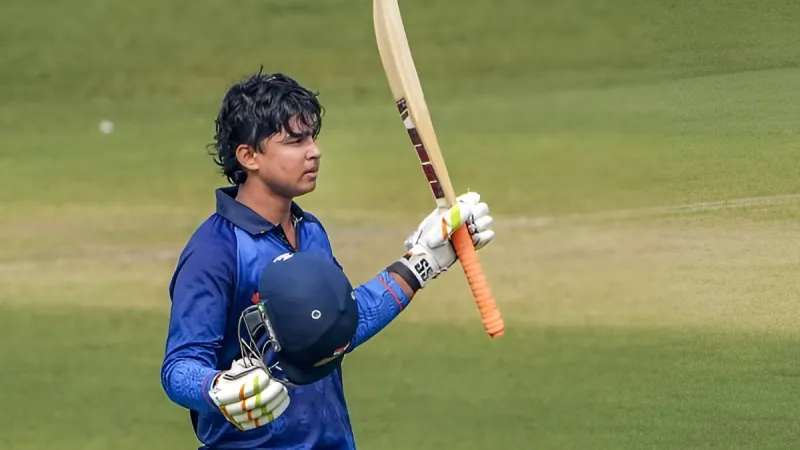

Sooryavanshi doesn’t need to double his IPL numbers to succeed in first-class cricket; he needs to trust an entirely different skill. His IPL 2026 strike rate of 237.30 built him a reputation as a destroyer. His first-class average of 17.25 across eight matches shows exactly why that reputation doesn’t transfer automatically. The Duleep Trophy is where that gap gets tested against genuinely quick, patient bowling attacks. Restraint, not raw power, decides whether his 93 becomes a habit or stays a one-off memory from a rare good day.
The Gap Between T20 Power and Patience
In T20, a batter scoring at 237 creates value by destroying bowling plans before they settle. In red-ball cricket, that same instinct becomes a liability, since new-ball seamers build pressure across long spells, probing the same channel for twenty consecutive deliveries.
Batter | IPL Career SR | First-Class Average | Key Adjustment |
Vaibhav Sooryavanshi | 237.30 (IPL 2026) | 17.25 (8 matches) | New ball restraint, longer partnerships, four-day durability |
Yuvraj Singh (Historical) | 129.72 | 44.16 | Balanced power with patience across formats |
Prithvi Shaw (Comparison) | 147.47 | 46.30 | Red-ball form suffered as aggressive shot-making began to dominate |
The batter who triggers on every attackable ball leaks wickets to the one he misreads. The margin for error that a 237 strike rate absorbs in T20 disappears entirely across four days of cricket, where bowlers can simply wait. History offers a mixed verdict on this exact transition. Yuvraj Singh managed it by pairing his power with genuine patience once the situation demanded it, while others never found that gear at all.
Vaibhav Sooryavanshi Duleep Trophy 2026 Red Ball
East Zone opens its group stage against North Zone and West Zone from August 23. Arshdeep Singh leads North Zone’s attack with left-arm swing built to probe an inexperienced batter early in an innings.
The pitches at the BCCI Centre of Excellence in Bengaluru carry more pace than Bihar’s Ranji circuit, meaning sharper seam bowling than his average has faced so far in his young career. None of this is intended to write off his chances before a ball is bowled. It simply means the technical margin for error in Bengaluru will be far smaller than anything the IPL ever asked of him.
His IPL Numbers Tell a Different Story
His powerplay strike rate of 231.18 and 72 sixes in IPL 2026 describe a batter who attacks from the first delivery without hesitation. His 360-degree scoring arc, driving through cover and pulling freely, is exactly the profile experienced first-class bowlers plan to shut down over four days.
Harsha Bhogle summed it up on July 30, noting twelve innings for 207 runs at 17.25 represents a learning curve, and that Sooryavanshi is currently at the bottom of it in red-ball cricket. None of that is meant as criticism for its own sake. It is simply the clearest data point available on where his game currently stands relative to the format he is now being asked to master.
Lessons From Prithvi Shaw’s Technical Decline
Shaw is the most directly comparable case. His strong early first-class form was overtaken by an IPL-dominant shot-making profile once T20 patterns became ingrained over four-day discipline built earlier in his career.
East Zone made Sooryavanshi vice-captain specifically to accelerate his red-ball leadership experience, a decision that only makes sense if the technical adjustment actually happens on the field rather than in theory. Shaw’s example matters here specifically because it shows talent alone does not guarantee the switch happens automatically. Application and repetition over multiple seasons, not one standout franchise campaign, are what actually rewire a young batter’s instincts.
Defining Success in Four-Day Cricket
A 40-plus average across East Zone’s group matches would matter, not because 17.25 needs to double overnight, but because getting there requires exactly what these matches test: seeing off the new ball, building a partnership, rotating strike instead of clearing the rope every time. There is no shortcut available here. Grinding out ugly, unglamorous fifties against disciplined attacks matters more right now than another highlight-reel six in a format that has already made its point.
His best first-class score is 93, and this Vaibhav Sooryavanshi Duleep Trophy 2026 red-ball examination will decide whether that innings was a one-off or the shape of what comes next in his career.
Can Sooryavanshi’s raw IPL power translate into a genuine four-day game by the time India needs him in whites? Drop your prediction below.
Frequently Asked Questions (FAQs)
What is Vaibhav Sooryavanshi’s first-class batting record?
Sooryavanshi has played 8 first-class matches for 207 runs at an average of 17.25, with a best score of 93. That record comes from 12 innings through July 2026.
Has Vaibhav Sooryavanshi played red-ball cricket before?
Yes, he made his Ranji Trophy debut for Bihar in January 2024 at age 12. He has featured in 8 first-class matches in total since making that debut for his home state.
Who else struggled adapting from T20 hitting to red-ball batting?
Prithvi Shaw is the closest comparison, with strong early first-class form that declined as his IPL shot-making patterns took over. His trajectory is now treated as a cautionary case for young power-hitters.
What is Vaibhav Sooryavanshi’s IPL strike rate?
Sooryavanshi struck at 237.30 in IPL 2026, scoring 776 runs including 72 sixes. His powerplay strike rate for the season alone was even higher, sitting at 231.18 across sixteen matches.
When does East Zone begin its Duleep Trophy campaign?
East Zone opens its group stage on August 23, 2026, at the BCCI Centre of Excellence in Bengaluru. Their opponents include North Zone, led by Arshdeep Singh, and West Zone.
Disclaimer: This blog post reflects the author’s personal insights and analysis. Readers are encouraged to consider the perspectives shared and draw their own conclusions.