

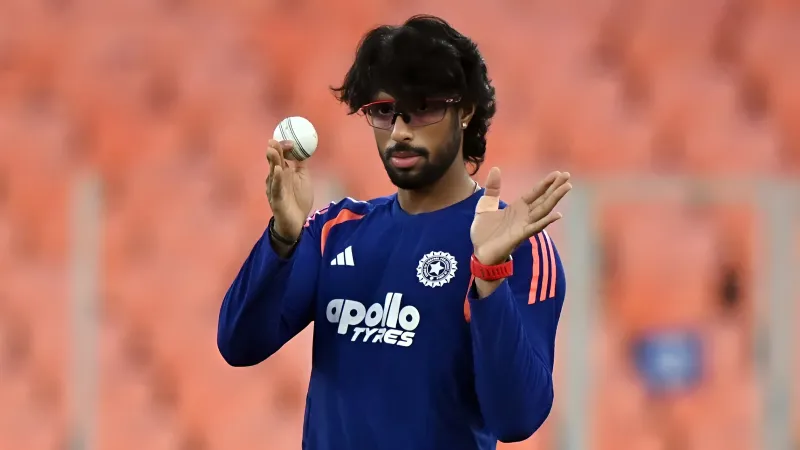

The Tilak Varma dropping from India’s playing XI is being discussed seriously because his current output does not meet the tactical and statistical demands of India’s top order in the T20WC 2026. Despite India playing at home and facing varied bowling attacks from South Africa, West Indies, and Zimbabwe, Tilak Varma’s strike-rate trends, struggles against spin, and limited impact at No.3 have raised selection concerns. For the Indian Cricket Team, the issue is no longer talent but fit, role clarity, and match-up efficiency in a high-pressure tournament.
Current Form Fails No.3 Role
India’s No.3 batter in T20 cricket is expected to either stabilize early collapses or accelerate immediately after the powerplay. In the ongoing T20 World Cup 2026 India squad setup, Tilak Varma has done neither consistently.
Batting mostly at first-change, he has failed to convert starts into impactful innings. His dismissals have often come while attempting premature aggression rather than controlled rotation, an issue magnified against quality pace and bounce, as seen against South Africa Cricket. For a team that already has explosive options lower down, this inefficiency at No.3 disrupts batting flow rather than enabling it.
T20 World Cup Spin Matchups Creating Tactical Issues
A major reason behind the Tilak Varma drop from the India playing XI debate is his match-up inefficiency against spin, particularly off-spin.
Opposition teams, including West Indies Cricket and Zimbabwe Cricket have leaned into spin-heavy middle overs against India’s left-handed top order. Tilak’s scoring rate against spin has dipped across recent tournaments, allowing bowlers to dictate fields and tempo. On slower surfaces, especially in Indian conditions, this inability to force errors from spinners places pressure on batters at the other end and restricts India’s run acceleration window.
Home Conditions Not Maximized
While his average remains respectable, his strike rate at home has declined since 2024 problematic in a tournament where India must consistently push totals beyond par. With venues offering grip and variable bounce, the Indian Cricket Team needs batters who can clear infield spinners or manipulate gaps at will. Tilak’s current approach has leaned too heavily toward accumulation, reducing his tactical value in must-win Super Eight fixtures.
Team Balance Over Individual Talent
With multiple left-handers in India’s top order, teams like South Africa Cricket have exploited predictable match-ups early. Dropping Tilak Varma would allow India to either introduce a right-handed option or reshuffle the middle order for better spin-neutralization. In this context, the debate is less about punishment and more about maximizing strategic flexibility during the business end of the tournament.
Tilak Varma’s drop from India’s playing XI conversation is not reactionary; it is rooted in role mismatch, spin inefficiency, and declining strike-rate impact in home conditions. While Tilak Varma remains a long-term asset for the Indian Cricket Team and boasts a promising domestic and IPL trajectory, the immediate demands of the T20WC 2026 require adaptability and tactical sharpness. Unless his approach against spin improves rapidly, India may opt for a reshuffle to protect momentum in the Super Eights.
Key Takeaway
India’s dilemma with Tilak Varma is not about talent, but whether his current skill set fits the tactical demands of the T20WC 2026.
FAQs
Why is Tilak Varma struggling in the T20WC 2026?
His issues stem from reduced strike rotation against spin and difficulty accelerating in the middle overs.
Can Tilak Varma still make a comeback in the tournament?
Yes, a strong performance against spin-heavy attacks could quickly change the selection narrative.
How does Tilak Varma’s IPL career impact his India selection?
His IPL success shows potential, but international T20 demands sharper matchup execution.
Which teams expose Tilak Varma’s weaknesses the most?
Sides with strong off-spin options, such as the West Indies cricket team, pose the biggest challenge.
Is India likely to change their batting order instead of dropping him?
A reshuffle is possible, but it depends on maintaining left-right balance and powerplay intent.
Disclaimer: This blog post reflects the author’s personal insights and analysis. Readers are encouraged to consider the perspectives shared and draw their own conclusions.