

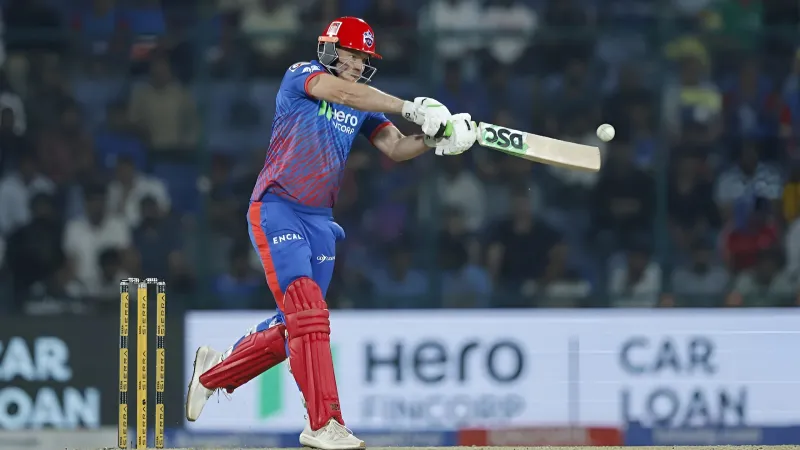

Two runs from two balls. Miller is on strike. The non-striker is not a recognised boundary hitter. The equation was simple, and the decision was genuinely difficult. A single on ball five guaranteed a Super Over, another chance, another twenty balls, another opportunity for Miller himself to win it in an extended format. Not taking that single meant believing one clean boundary was more achievable than winning a Super Over. Miller believed it. He faced the next delivery. A slower ball arrived outside off stump, not in the slot, not at the pace his bat swing was loaded for. He missed it. The desperate final-ball run attempt ended with Buttler’s direct hit. DC lost by one run. The decision wasn’t reckless. The execution wasn’t good enough. Both things are true simultaneously.
Two Runs Needed Two Paths Available
The specific match state that created Miller’s decision presented two legitimate options rather than one obvious correct choice. Path one: take the single, level the scores, force a Super Over where DC retained Miller as their best scoring option in a fresh format. Path two: stay on strike, trust the boundary-hitting ability that makes Miller one of T20’s most reliable finishers, and win the match immediately without the uncertainty that a Super Over introduces. Both paths had merit. Path one guarantees survival with Super Over uncertainty. Path two guaranteed certainty in one direction, either a DC win or a DC defeat. Miller chose certainty.
Strike Retention Versus Super Over Safety
The tactical debate at the centre of this decision is the finisher’s eternal dilemma: is the best shot at winning a match the aggressive direct attempt or the conservative approach that keeps the best option available across more deliveries? Miller’s instinct as a T20 finisher is built around the first principle: trust your ability to hit the delivery that wins the match. His career is defined by doing exactly that in exactly these situations. The alternative, accepting the Super Over, required trusting that a format reset would produce the same outcome more reliably.
IPL 2026 Slower Ball Ended DC’s Chase
The specific delivery that decided the DC vs GT match in this IPL 2026 fixture wasn’t a yorker or a boundary-preventing block hole ball. It was a slower bouncer outside off stump that arrived at a pace Miller’s loading wasn’t calibrated for. He had loaded for full pace. The ball arrived at significantly reduced speed from a height that removed the straight-hitting option he was committed to. Missing the shot changed the situation from a two-run-from-two-balls equation to a one-run-needed-from-one-ball-with-a-desperate-run-required situation. Buttler’s direct hit was a clinical execution of a run-out opportunity that the missed shot created.
Miller Backed Instinct Over Percentage Play
The fundamental question that this match raises about T20 finishing is whether the best decision is the one that gives the team the highest probability of winning or the one that gives the best player the best opportunity to win it. Miller’s instinct as a finisher is the second option; the situation where he trusts himself to produce the boundary that ends the match is the situation his entire career has prepared him for. Probability models might have suggested the Super Over was the higher expected-value choice.
Miller’s lived experience as a T20 finisher told him the boundary was achievable. The slower ball proved the model more accurate than the instinct in this specific delivery. A different delivery, fuller, at full pace, in the slot, would have proved the opposite.
- Does the DC vs GT one-run result change how Miller approaches the same decision next time, or does the finisher’s instinct to back himself over the percentage play remain unchanged regardless of how many times the slower ball proves the model right? Drop your take and follow for IPL updates.
FAQs
What was the situation when Miller made the decision?
Delhi Capitals needed two runs from two balls against Gujarat Titans, with Miller on strike in a tense finish.
Why didn’t David Miller take a single in the final over?
He chose to stay on strike and attempt a match-winning boundary instead of risking the non-striker facing the last ball.
Was Miller’s decision tactically wrong?
It was a high-risk choice; a single would have ensured a Super Over, making it a safer alternative.
How do teams usually approach final over chases in the IPL?
Teams often balance risk by securing ties when possible, especially if lower-order batters are involved.
Can such decisions impact the Delhi Capitals’ future strategy?
Yes, teams like Delhi Capitals may increasingly rely on data and situational awareness in similar high-pressure finishes.
Disclaimer: This blog post reflects the author’s personal insights and analysis. Readers are encouraged to consider the perspectives shared and draw their own conclusions.