

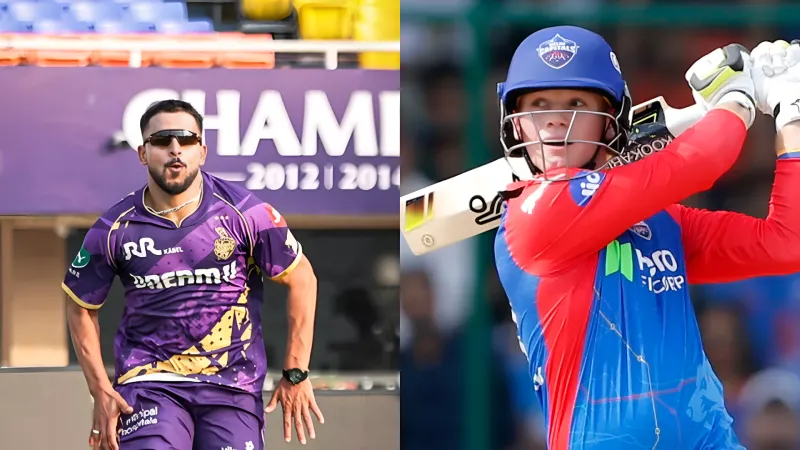

Umran Malik is bowling at 150 kilometres per hour and taking 22 wickets. Jake Fraser-McGurk is scoring 330 runs at a strike rate above 230. Mayank Markande dismissed MS Dhoni in his debut season. All three produced the kind of first-season impact that generates headlines, auction price increases, and the specific expectation that the career has arrived rather than merely begun. All three discovered what every IPL breakout star eventually discovers: the opposition analyst team spends the entire off-season watching footage, identifying patterns, and building the specific bowling or batting plan that the debut season didn’t require because nobody had enough information to build one. The second season is always harder. For many debut sensations, it becomes the season that never recovers.
Umran Malik’s speed wasn’t Enough Alone
The specific problem that ended Umran Malik’s debut season effectiveness isn’t controversial to identify in retrospect; it’s visible in his bowling profile. A bowler who operates above 150 kilometres per hour consistently gives batting teams one advantage that compensates for the difficulty of facing that pace: predictability. The length that generates an extreme pace is a narrow range.
The line that sustains extreme pace is another narrow range. Batters who face enough deliveries from those lengths and lines, whether in the match or on video, build the specific trigger movement and shot selection that converts previously intimidating pace into targeted aggression. When Malik’s pace stopped being a surprise and became an anticipated length, his wicket-taking dropped, and his economy climbed.
Fraser McGurk’s Aggression Became His Enemy
Jake Fraser-McGurk’s 330 debut runs at a 230-plus strike rate was the most dramatic single-season batting debut the IPL had produced in years. It was also the most extensive footage library any opposition analyst could have requested. Every delivery that produced a boundary, every shot that found the gap, every bowling type that he attacked most aggressively, all of it was visible across an entire season of appearances.
The specific adjustments that followed in subsequent seasons weren’t accidental: slower balls outside off stump, wide lines that invited the aerial shot to the larger boundary, off-pace deliveries in his preferred hitting zones. His high-risk approach doesn’t change when the conditions change around it. That rigidity is the specific weakness that footage identifies and that season-two bowlers target systematically.
Three Players, Same Story, Same Ending
Swapnil Asnodkar’s outside-off-stump vulnerability. Manpreet Gony’s readable lengths. Mayank Markande’s identifiable variations. Three different players from three different IPL eras producing three identical career arcs. Debut season success was built on an advantage that opponents haven’t yet countered. The second season’s struggle was built on opponents having specifically identified and countered the advantage.
Third season uncertainty built on whether the player can find a new advantage or modify the existing one before the window closes. The pattern is consistent enough across decades and player types to confirm it as a structural feature of the IPL rather than individual bad fortune. The debut season is always played with more information than the opposition has available. The second season reverses that information gap completely.
IPL Debut Stars Who Never Recovered
The pattern that defines IPL debut stars who disappear after their breakthrough season is consistent enough across decades to confirm it as structural rather than coincidental. Swapnil Asnodkar’s outside-off-stump vulnerability was identified and targeted before his second season began. Manpreet Gony’s readable lengths produced the same declining wicket-taking returns once batting lineups had processed his preferred delivery patterns. Mayank Markande’s variations became less effective once experienced batters had sufficient footage to anticipate the release point differences between his leg break and googly.
All three arrived at their second seasons facing opponents whose preparation specifically targeted the weakness the debut season had revealed. None found the modification that would have made that preparation insufficient.
- Does the analytical evolution of IPL 2026 make the second-season decline inevitable for every debut sensation or does the occasional player arrive at their second season already one step ahead of what the opposition footage reveals? Drop your take and follow for IPL 2026 updates.
FAQs
What causes IPL players to fail after a strong debut season?
Opposition teams analyze weaknesses and adjust strategies, making it harder for players to repeat success.
Why did Jake Fraser-McGurk struggle after IPL 2024?
His aggressive style was countered by smarter bowling tactics and slower pitch conditions.
How important is adaptability in IPL 2026?
Extremely important, as teams rely heavily on data and match-specific strategies.
Which teams are known for exposing player weaknesses in IPL?
Teams like the Mumbai Indians and Delhi Capitals are strong in tactical planning.
Can players like Mayank Markande make a comeback?
Yes, but only if they improve variations and adapt to evolving match situations.
Disclaimer: This blog post reflects the author’s personal insights and analysis. Readers are encouraged to consider the perspectives shared and draw their own conclusions.