

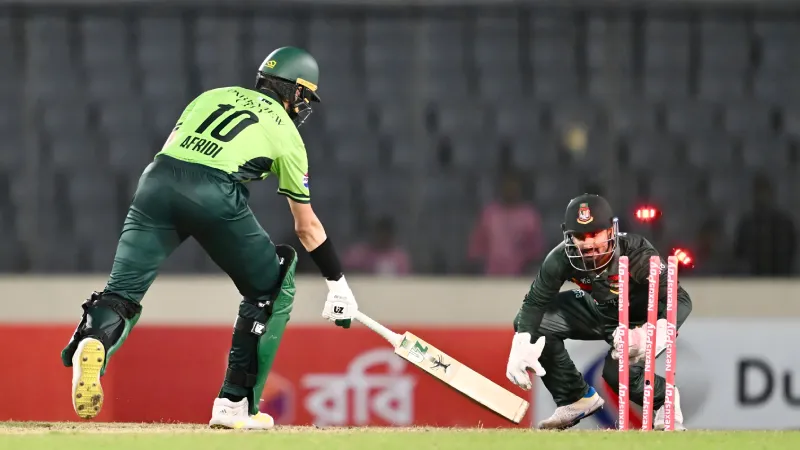

Bangladesh won by 11 runs. Pakistan were 9 wickets down, needing 12 from the final two balls, with Shaheen Afridi on strike. Rishad Hossain bowled down the leg side. Umpire Kumar Dharmasena signalled a wide. Bangladesh appealed for LBW simultaneously. The review went upstairs. UltraEdge showed a spike. The wide was overturned. Shaheen was stumped off the final ball. Bangladesh won their first ODI series against Pakistan in more than a decade, and Pakistan immediately raised a formal complaint about whether the review was requested within the permitted timeframe or after Bangladesh had seen the stadium screen replay. One review, one spike on a screen, one series decider.
What Actually Happened in the Final Over
The sequence that triggered Pakistan’s complaint lasted approximately ten seconds. Rishad’s delivery went down the leg side. Dharmasena’s wide signal went up. Bangladesh’s fielders appealed for LBW in the same moment, an appeal that sent the decision to the third umpire regardless of the wide call. The DRS process reviewed both the wide and the LBW simultaneously. The LBW was not out. But UltraEdge detected a spike as the ball passed the bat, which removed the wide under the protocol that contact with the bat cancels a leg-side wide.
Pakistan’s specific objection was not to the UltraEdge reading but to the timing of Bangladesh’s decision to appeal. Teams have a limited window to initiate a review, typically a few seconds after the on-field decision. Pakistan’s management believed Bangladesh waited until the stadium screen showed the replay before committing to the appeal, which would breach the protocol requiring decisions to be made without assistance from broadcast technology.
Why the Timing Question Is Technically Difficult to Resolve
The review timing controversy is structurally difficult to adjudicate because no visible countdown appeared on the broadcast feed, and the crowd noise during the final over of a series decider creates an environment where precise second-by-second reconstruction from external observation is genuinely unreliable.
Match referees assessing timing complaints rely on multiple broadcast angles and communications records rather than public broadcast footage. Pakistan’s formal complaint to the match referee was the correct procedural response. Raising the concern through official channels rather than public statements allows the evidence to be assessed against the actual protocol rather than viewer interpretation.
Why Bangladesh vs Pakistan 3rd ODI DRS Moment Changed Cricket’s Final Over
The Bangladesh vs Pakistan 3rd ODI result confirmed something beyond the controversy: Bangladesh’s ability to close out a series decider under maximum pressure with 9 wickets against them and a chase that required perfection from every delivery. The 2-1 series win is their first ODI series victory over Pakistan in more than a decade, a result that stands regardless of the review dispute.
The DRS controversy does not change the result. The UltraEdge spike was real. The LBW was not out. The verdict was overturned by the available evidence. Pakistan’s complaint questions the process rather than the technology outcome, a meaningful distinction that the match referee’s review was designed to assess.
What Cricket Authorities Should Take From the Incident
The absence of a visible countdown timer on the broadcast is the single most practical change ICC authorities could implement to prevent similar controversies. If viewers, players, and analysts can see the remaining review window in real time, the timing question becomes objectively answerable rather than disputed. Historical DRS controversies, including several at ICC tournaments where similar timing questions arose, consistently recommend visible timers as the most straightforward procedural improvement available.
Pakistan’s complaint reflects genuine frustration at a moment that directly affected a series result. Bangladesh responds that the review was valid. Both positions are coherent. A visible timer would eliminate the gap between them.
- Do you think Pakistan’s DRS complaint was justified, or was Bangladesh’s review within the rules regardless of the timing debate? Drop your view in the comments and follow for the BAN vs PAK ODI series coverage.
FAQs
What triggered the Pakistan complaint over the Bangladesh DRS review
Pakistan believed Bangladesh requested the review after seeing the replay on the big screen, which they felt could violate the allowed decision window.
Why was the wide call overturned in the final over
UltraEdge showed a spike near Shaheen Afridi’s bat, indicating a possible edge and therefore cancelling the wide call.
Can teams review a wide decision in ODI cricket?
A wide cannot be directly reviewed, but an LBW appeal on the same delivery can send the decision upstairs, which may indirectly affect the wide ruling.
What happened in the BAN vs PAK third ODI controversy
The controversy arose from the timing of a Bangladesh review during the final over, which Pakistan later raised with the match referee.
Disclaimer: This blog post reflects the author’s personal insights and analysis. Readers are encouraged to consider the perspectives shared and draw their own conclusions.