

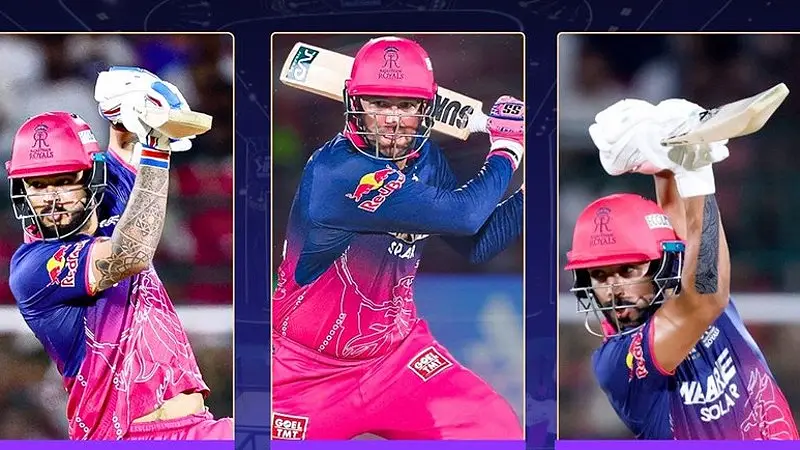

Rajasthan Royals have posted 220-plus totals and still lost matches this season. That number should make a total safe. In modern IPL cricket, it doesn’t, and the reason sits entirely within the phase between overs seven and fifteen rather than in the death overs or powerplay, where most batting analysis focuses. RR slows down when every top franchise accelerates. They consolidate when the match demands relentless scoring. Dhruv Jurel and Donovan Ferreira are talented enough to win matches individually. Neither is talented enough to compensate for a philosophical approach to middle-order batting that the tournament has already left behind.
Middle Overs Where RR Lose Control
The phase between overs seven and fifteen is where IPL matches are genuinely constructed or surrendered. Teams that maintain scoring intent through this phase build totals that their death-over specialists then extend into genuinely unreachable territory. Teams that consolidate through this phase arrive at the 16th over needing their finishers to compensate for fifteen overs of underperformance rather than extend an already strong platform. Rajasthan Royals consistently fall into the second category. Their power play scoring creates the impression of a batting unit with aggressive intent. The middle overs reveal something structurally different: a team that treats the phase as a survival exercise rather than a scoring opportunity.
Jurel’s Role Is Structurally Wrong
Dhruv Jurel’s strike rate of just above 150 at No. 3 reads competently in isolation. In the context of what modern IPL franchises require from their top three, it describes a batter operating below the threshold that makes a No. 3 position match-winning rather than merely functional. Top-order batters across the leading IPL sides push beyond 160 to 170 in this position because the No. 3 role is no longer a stabilising function. It is an aggression-continuation function.
The job is to maintain the power play’s scoring momentum rather than allow it to dissipate while partnerships are being protected. Jurel’s approach is technically correct for a format that no longer exists at this level of T20 cricket. His anchor instinct disrupts exactly the flow that Rajasthan Royals’ powerplay batting creates, and that disruption arrives at the worst possible moment.
Ferreira Arrives Too Late Every Time
Donovan Ferreira’s match-finishing ability is genuine and well-documented. The problem isn’t his quality. It’s the specific overs RR asks him to impact. Holding a high-strike-rate middle-order batter for the death overs assumes the innings will reach the death overs in a position where his natural game can function freely. When the middle overs have already produced a scoring dip, the death overs carry a required rate inflated by fifteen overs of underperformance.
Ferreira arriving in the 17th over against a bowling attack that has had six overs of rhythm and confidence isn’t the same as Ferreira arriving in the 12th over against spinners operating in conditions that suit his hitting. The RR model delays the impact player until the phase where impact is hardest to generate, then treats the result as a death-over problem rather than a middle-over structural failure.
IPL 2026 Punishes Phased Aggression Models
IPL 2026 has confirmed across multiple franchises that the teams finishing inside the playoff positions share one identifiable characteristic: they attack from both ends consistently rather than protecting one end while the other scores. The phased aggression model, where different batters carry specific phase responsibilities with natural consolidation periods between them, produced results in earlier IPL seasons when bowling attacks were less varied and middle-over spinners less precise.
The current tournament’s bowling quality has removed the margin that phased aggression previously exploited. Rajasthan Royals’ philosophy made tactical sense in a different version of this competition. In this version, posting 220 and losing is the logical result of a batting approach that leaves fifteen overs of scoring opportunity partially unexploited every time it operates exactly as designed.
- Does RR’s middle-over consolidation model make their 220-plus totals structurally insufficient against modern IPL attacks, or can promoting Ferreira earlier solve the problem without rebuilding the entire batting philosophy? Drop your pick in the comments and follow for IPL updates.
FAQs
Q: Why do the Rajasthan Royals keep losing despite scoring 220-plus runs?
Their middle-over consolidation leaves runs unused between overs seven and fifteen, making even large totals insufficient against modern aggressive chasing lineups.
Q: What is wrong with Dhruv Jurel’s batting role for RR?
His stabilising approach at No. 3 disrupts powerplay momentum when modern T20 demands the position maintains aggressive intent through the transition phase.
Q: Why is Donovan Ferreira’s entry timing a problem for the Rajasthan Royals?
Delaying him until the death overs means he compensates for middle-over underperformance rather than extending an already competitive platform.
Q: Is Rajasthan Royals’ batting strategy outdated?
Yes, their phased aggression model requires consolidation windows that modern bowling attacks exploit to reclaim control between overs seven and fifteen.