

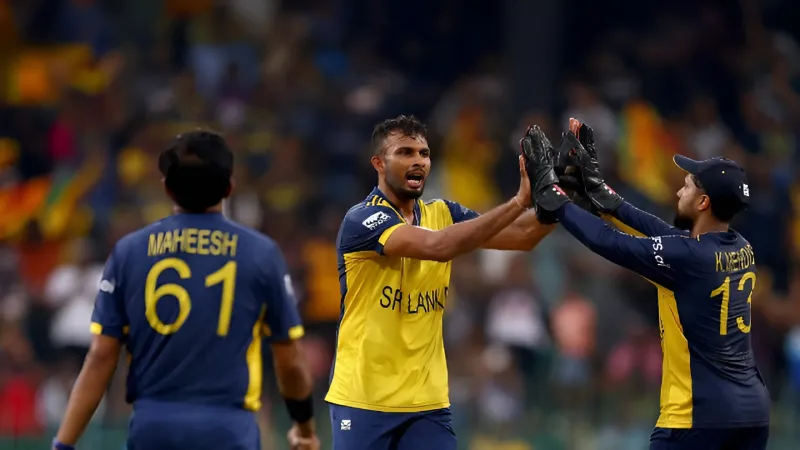

Dasun Shanaka’s World Cup exit comments made it clear that Sri Lanka’s early elimination was not just about one bad tournament, but about deeper structural issues. Speaking after the exit, Dasun Shanaka directly pointed to fitness concerns, recurring injuries, and short-term planning as the core reasons Sri Lanka failed to compete consistently. His remarks reframed the loss as a systemic problem rather than a single poor performance. For anyone searching to understand why Sri Lanka exited the World Cup and what Shanaka actually meant, the answer lies in preparation standards, player availability, and how the team plans for major tournaments.
Sri Lanka’s World Cup Exit: Fitness Standards Under Scrutiny
Shanaka’s strongest message focused on fitness being “non-negotiable.” Sri Lanka entered the tournament missing or managing key players, reducing balance and flexibility. At the elite international level, repeated injury absences affect selection continuity, bowling combinations, and batting depth. Unlike teams with deeper fit reserves, Sri Lanka often relies heavily on a small core, making fitness lapses disproportionately damaging.
Short-Term Planning Cycles Hurt Consistency
The main theme from Shanaka’s comments is no long-term planning. In contrast to nations with squads built over several years with defined roles that are able to develop through World Cup cycles, Sri Lanka has tended to take a reactive style of approach, which has involved changing player combinations very late in the lead-up to tournaments, instead of committing to an early combination. This negatively impacts the tactical cohesion of the team and leaves the players under-prepared for moments of pressure.
Conditions Misread, Tactics Exposed
Sri Lanka had a batting squad in mind that they expected to do well on better pitches, especially at home venues. But when the pitches turned out to be slower, it exposed many limitations within the team. Power hitting was important, but it was not the difference-maker on slower surfaces. Instead, players who used the sweep shot, reverse sweep, and placed the ball were far more successful, which exposed the discrepancy between how the players had been selected to play and their actual conditions.
Where the Numbers Quietly Matter
While no official figures were cited, Shanaka referenced injury patterns across multiple World Cups. The key data point is availability rather than averages: missing frontline bowlers and all-rounders force role changes and increase workload on remaining players. Over long tournaments, this compounds performance decline, especially in spin-heavy, physically demanding conditions.
World Cup Déjà Vu for Sri Lanka
Sri Lanka has faced similar issues in past global tournaments, where injuries and last-minute changes disrupted balance. Previous campaigns also featured debates around fitness benchmarks and squad clarity. In contrast, consistently successful teams tend to enter tournaments with stable cores and clearly defined tactical identities.
The significance of Dasun Shanaka’s World Cup exit comments lies in their honesty. Rather than blaming conditions or bad luck, Shanaka identified fitness standards, planning cycles, and tactical alignment as Sri Lanka’s real weaknesses. These issues explain not just this exit, but a pattern seen across multiple tournaments. If Sri Lanka responds with a genuine reset, enforcing fitness benchmarks, committing to long-term squad planning, and selecting teams suited to conditions, future World Cups could look very different. If not, similar conversations will follow every major exit.
Key Takeaway
Sri Lanka’s World Cup exit was less about form and more about fitness, planning, and preparation, exactly what Shanaka warned about.
FAQs
Why did Dasun Shanaka criticize fitness after the World Cup?
Repeated injuries reduced player availability and disrupted team balance throughout the tournament.
How did fitness concerns affect Sri Lanka’s performance?
Key players are missing or limited forced tactical compromises, especially in bowling combinations.
What did Shanaka mean by long-term planning?
Building squads over multiple years with defined roles instead of short-term tournament fixes.
Is power hitting Sri Lanka’s biggest problem?
No. Shanaka suggested that adapting to conditions is more important than relying only on power.
Can Sri Lanka fix these issues before the next World Cup?
Yes, but only if fitness standards and planning structures are enforced consistently.
Disclaimer: This blog post reflects the author’s personal insights and analysis. Readers are encouraged to consider the perspectives shared and draw their own conclusions.