

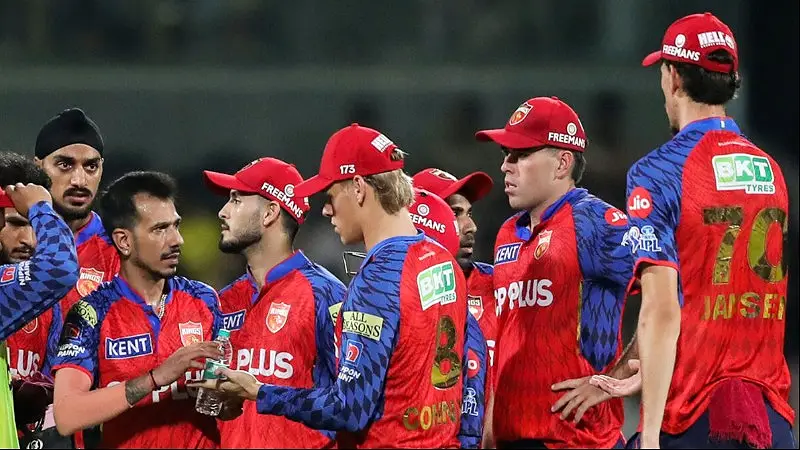

Punjab Kings chased 200 plus. Then they chased 200 plus again. A near-century opening partnership inside seven overs. Priyansh Arya is hitting clean from ball one. Prabhsimran Singh is extending his shot range. Shreyas Iyer is reading variations in the middle overs and targeting specific bowlers rather than rotating strike against everyone. The required rate hasn’t climbed out of control in these chases because the powerplay phase has been so dominant that the required rate has never genuinely threatened to become unmanageable.
Arya and Prabhsimran Own the Powerplay
The specific dynamic that makes PBKS’s powerplay so effective in their 200-plus chases is the simultaneous presence of two genuinely different attacking profiles from the same opening partnership. Priyansh Arya’s clean ball striking, the ability to generate the pace that takes deliveries to the boundary from his compact swing, creates the boundary pressure that forces bowlers off their preferred lengths inside the first three overs. Prabhsimran Singh’s improved shot range adds the second scoring zone that prevents bowling captains from settling on one restrictive length, because the delivery that contains Arya can be attacked by Prabhsimran through a different angle.
Iyer Controls Without Slowing the Chase
Shreyas Iyer’s middle-overs function in PBKS chases isn’t conventional anchoring; it’s tempo maintenance through reading rather than resistance. An anchor who slows the scoring rate while preserving wickets trades one type of pressure for another; the runs saved by the anchor are offset by the acceleration required from subsequent batters to compensate for the slower phase. Iyer reads variations before committing to shots, identifies the specific bowlers whose deliveries arrive in his preferred hitting zones within each over, and maintains a strike rate that keeps the required rate stable rather than allowing it to drift upward.
IPL 2026 PBKS 200 Chase Stats Speak
The statistics behind PBKS’s 200-plus chase successes reveal the specific structural reason these chases look routine rather than dramatic; their powerplay performance consistently brings the required rate under control before the middle-over pressure phase can develop. A team chasing 205 that scores 65 in the powerplay needs 140 from 84 balls, a rate of ten per over that their batting depth can sustain.
The same team scoring 45 in the power play needs 160 from 84, a rate of 11.4, which requires exceptional death-overs hitting from multiple batters. PBKS’s near-century opening stands in multiple chases have specifically been generating the 65-plus powerplay scores that make the post-powerplay calculation sustainable rather than desperate. The routine appearance of their chases is the consequence of the powerplay numbers that produce routinely manageable post-powerplay equations.
Aggression With Awareness Not Pure Recklessness
The specific quality that prevents PBKS’s aggressive chasing approach from collapsing on pitches that don’t fully support boundary hitting is the awareness that underpins the aggression. Iyer’s ability to read pitch pace early and adjust his shot selection is the specific stabilising mechanism that makes PBKS’s system adaptable rather than dependent on specific conditions. On batting-friendly surfaces, the aggression operates at its ceiling, and powerplay boundaries arrive from the deliveries that the pitch assists. On slightly slower surfaces, Iyer’s adjusted shot selection identifies which deliveries can still be attacked and which must be rotated.
Maintaining the scoring rate that keeps the required rate manageable without the boundary frequency that flat surfaces provide automatically. That adaptability is what makes the system a genuine chasing blueprint rather than a fair-weather approach.
- Does PBKS’s 200-plus chasing system maintain its effectiveness as the tournament progresses and bowling attacks specifically prepare for Arya’s powerplay aggression and Iyer’s middle-over tempo control, or does the blueprint prove adaptable enough to produce the same results against adjusted plans? Drop your take and follow for IPL updates.
FAQs
What makes PBKS so successful in 200+ chases?
Their aggressive starts and clear batting roles reduce pressure early, allowing controlled finishing.
How important is Shreyas Iyer in PBKS chases?
He anchors momentum in the middle overs by reading bowlers and maintaining scoring flow.
Why are Priyansh Arya and Prabhsimran Singh key to PBKS strategy?
Their attacking power-play batting sets the foundation for manageable run chases.
Can PBKS maintain this strategy on slow pitches?
It will be challenging, but adaptability in shot selection can help sustain their approach.
Is PBKS the best chasing team in IPL 2026?
Based on recent performances, they are among the most effective teams in high-scoring chases.