

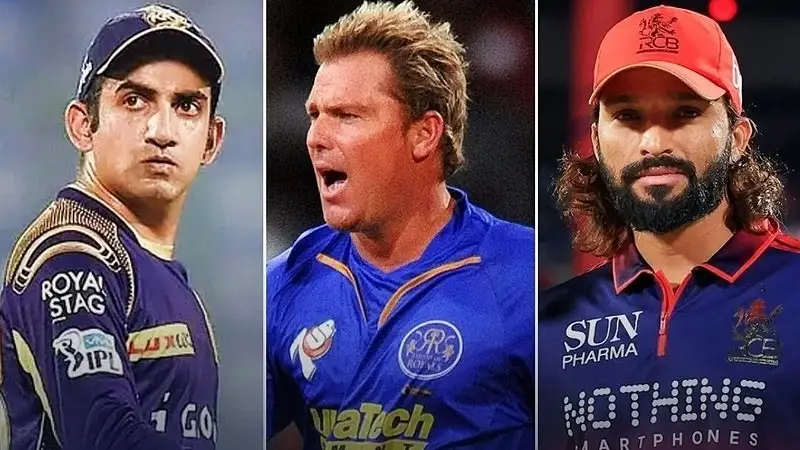

Ten consecutive wins. Gautam Gambhir. KKR. Across IPL 2014 and 2015. That number has stood while every modern captain with genuine tactical quality has attempted to approach it and stopped at eight. Rajat Patidar stopped at eight across IPL 2025 and 2026. Shane Warne stopped at eight in IPL 2008. Shreyas Iyer stopped at eight across two franchises and two seasons. MS Dhoni’s best consecutive run reached seven. The gap between ten and eight is two matches, which sounds small until you consider that three separate captains across sixteen years of the tournament have all hit the same ceiling.
Gambhir Ten Wins Control Over Aggression
The specific tactical foundation of Gambhir’s ten-match winning streak was the deliberate prioritisation of controlled stability over explosive aggression, a philosophy that ran against the T20 conventional wisdom of his era and produced results that validated the unconventional approach. KKR’s batting core during that period scored at rates that were competitive without being exceptional, which meant their middle-overs bowling attack, built around disciplined spin at Eden Gardens, operated with the advantage of defending totals that were achievable rather than spectacular.
Warne, Patidar, and Iyer: Eight Wins, Same Wall
The specific reason three genuinely excellent captains, Warne, Patidar, and Iyer, have all stopped at eight wins rather than approaching ten is what the ninth consecutive match demands from a bowling attack that the opposition has now specifically prepared for. A team that wins eight consecutive matches has provided eight matches of footage for the ninth opponent’s analysts, who arrive with the most comprehensive possible preparation.
The captain who has won eight in a row must win the ninth against an opponent who has watched every bowling variation, every batting trigger movement, and every captaincy pattern across the entire streak. The ninth match is qualitatively harder than the first eight because the information available to the opposition about how to defeat the streaking team has never been more complete. Gambhir found the answer twice. No one else has found it once.
IPL Winning Streak Patterns Reveal Everything
The IPL winning streak analysis across all five captains confirms three structural constants that appear regardless of era, squad composition, or surface conditions. Stable batting cores that produce consistent totals rather than wildly variable ones, which means the bowling attack always knows what it needs to defend. Adaptable bowling strategies that adjust based on opposition matchups rather than executing the same plan regardless of the batting lineup, which means each opponent faces a specifically designed bowling approach rather than the same attack every match.
Dhoni Seven Wins Through Match Control
MS Dhoni’s seven-consecutive-win IPL 2013 run is the clearest example of a streak built entirely on the third constant, captaincy clarity, while the batting and bowling constants were less dominant than in the longer streaks. CSK’s batting core in 2013 was experienced and reliable without being explosive. Their bowling attack was disciplined without being exceptional. What Dhoni provided was the specific in-game decision quality that converted adequate resources into consistently winning results. Seven wins from captaincy intelligence compensating for the squad depth that Gambhir’s KKR squad exceeded.
Will 2026 Finally Break the Record
A squad that produces stable totals across batting-friendly and spin-friendly surfaces simultaneously, which eliminates the surface-dependency that limits most streaks. A bowling attack with genuine matchup-based adaptability that can deploy different primary weapons against different opposition batting profiles, which prevents the footage accumulation problem that stops most streaks at eight. A captain whose in-match decision quality is consistent enough that the ninth and tenth matches receive the same quality of tactical response as the first four. Those three conditions in combination are what produced ten. Without all three simultaneously, the ceiling stays at eight.
- Does any captain produce the stable batting, adaptable bowling, and consistent in-match decision quality simultaneously across ten consecutive matches that Gambhir’s record requires, or does the eight-win ceiling that Warne, Patidar, and Iyer have all hit prove as durable as the ten-win record above it? Drop your take and follow for IPL 2026 updates.
FAQs
What is the longest winning streak by a captain in IPL history?
Gautam Gambhir holds the record with 10 consecutive wins as captain.
Who is closest to breaking the IPL streak record in recent seasons?
Rajat Patidar came close with an eight-match winning streak across IPL 2025–2026.
Why is it hard to maintain winning streaks in IPL?
Frequent matches, travel, and balanced team strengths make consistency difficult.
Which team has multiple long streak captains in IPL?
Kolkata Knight Riders have featured in multiple long streaks under different captains.
Can IPL 2026 produce a new streak record?
It’s possible, but requires exceptional consistency across both batting and bowling units.