

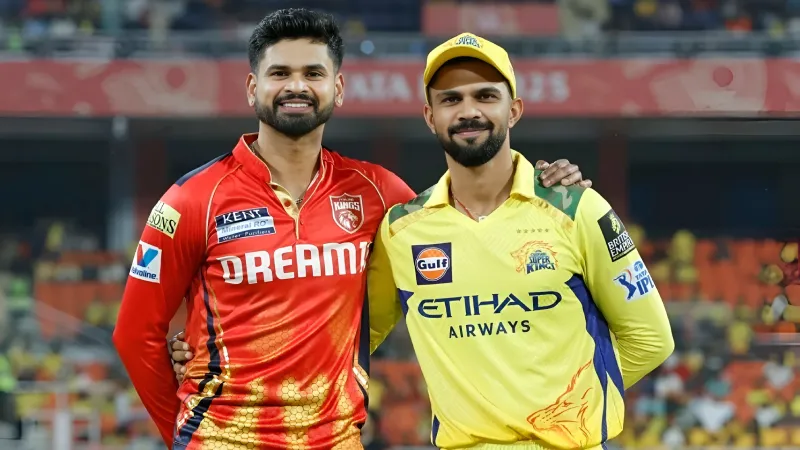

Both captains. Both in their early seasons of T20 leadership. But the comparison stops there. Shreyas Iyer’s Punjab Kings look like a team that has been briefed on every scenario before the toss. Ruturaj Gaikwad’s CSK looks like a team discovering what their plan should have been in real time. The difference isn’t experience; Gaikwad has captained CSK before. It’s execution under pressure. Iyer makes bowling changes before the phase gets away. Gaikwad makes them after. In T20 cricket, that timing difference is the match. CSK’s early results are what reactive captaincy looks like when the opposition’s batting plan is working.
CSK’s Tactics Are Reactive, Not Proactive
The specific criticism of Gaikwad’s captaincy isn’t that his decisions are wrong after analysis; it’s that they arrive too late to matter. Field placements that prevent boundaries should be set before the batter has scored two consecutive fours to the same area, not after. Bowling changes that break partnerships should happen when the partnership reaches 30, not 55. Every T20 captain makes reactive decisions occasionally; the match situation creates them. What separates good from average captaincy is the ratio of proactive decisions that prevent problems from the reactive ones that manage them. CSK’s ratio in early IPL 2026 matches has been too heavily weighted toward the latter.
The Losing Pattern Tells the Story
It’s not just that CSK have lost, it’s how they’ve lost. Matches haven’t slipped in the final over through exceptional opposition cricket. They’ve drifted through phases where CSK failed to assert control at the moment control was available. A bowling combination that doesn’t create early pressure allows the opposition’s batting to settle and accelerate. An opening pair that doesn’t maximise the powerplay puts the middle order into recovery mode rather than extension mode. These are structural patterns that repeat across matches rather than isolated bad decisions. Structural patterns in T20 cricket almost always reflect captaincy and coaching choices rather than individual player failures.
IPL 2026 Exposes the Captaincy Contrast
The first week established the captaincy comparison that everyone is now making. Shreyas Iyer’s Punjab Kings have defined roles for every player from ball one. Young players know their function. Overseas options are deployed for specific matchups rather than default selections. PBKS under Iyer look like a team executing a plan. CSK under Gaikwad looks like a team adapting to whatever the match becomes. Both approaches can work, but adapting to circumstances requires faster in-match decision-making than executing a pre-designed plan. Gaikwad’s in-match adjustments haven’t been fast enough when the match has demanded them.
Chepauk Should Help CSK and Isn’t
Playing at home with a partisan crowd, a surface the team knows deeply, and conditions that favour the spin bowling CSK have historically deployed with precision, Chepauk should be an advantage. The fact that it hasn’t produced the expected uplift in CSK’s performances is the detail that amplifies the captaincy criticism. A captain who can’t leverage home conditions to narrow the performance gap between his team’s current form and their potential is leaving an advantage unused. Iyer reads surfaces quickly and adjusts before the match has revealed what the pitch is doing. Gaikwad’s surface reading under match pressure hasn’t reflected the same speed of adjustment.
The criticism of Gaikwad’s captaincy is legitimate and worth taking seriously. It’s also early, two or three matches into a fourteen-match campaign. What Gaikwad cannot afford is for the pattern to continue through matches five and six, because by that point, a structural problem becomes a campaign-defining one.
- Does Ruturaj Gaikwad answer his captaincy critics against PBKS, or does Shreyas Iyer make the comparison look even more unflattering by the end of Match 7? Drop your take and follow for IPL updates.
FAQs
What is the main reason behind Ruturaj Gaikwad’s captaincy criticism?
It stems from inconsistent results, conservative tactics, and a lack of control in key match phases.
How does Shreyas Iyer compare to Ruturaj Gaikwad as a captain?
Iyer has shown clearer tactical planning and team structure, especially with the Punjab Kings.
What is the CSK vs PBKS head-to-head record trend?
Historically competitive, but recent form suggests Punjab Kings may have momentum.
Is Ruturaj Gaikwad a long-term captaincy option for CSK?
He has potential, but his leadership evolution will depend on how quickly he adapts at this level.
Disclaimer: This blog post reflects the author’s personal insights and analysis. Readers are encouraged to consider the perspectives shared and draw their own conclusions.