

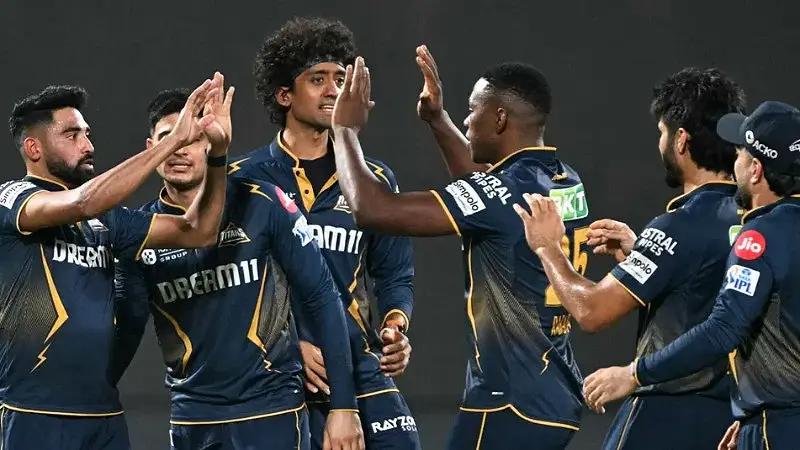

The pattern has already appeared once this season, and it will appear again. Gujarat Titans build a dominant position, the top order fires, the powerplay produces, and the total feels set. Then the middle order arrives and the innings contract. The 45 they should add becomes 25. The 185 becomes 165. The match that felt controlled becomes tight. Against the Punjab Kings, it happened, and GT lost a match that their first ten overs had earned them. The structural problem isn’t form, it’s architecture. GT is built around Shubman Gill doing the work that six batters should collectively be doing. When he does it, GT wins. When he doesn’t, nobody else knows whose job it becomes.
When Gill Goes Early GT Collapse
The specific failure mode that haunts GT’s tournament isn’t losing by 50 runs. It’s the match where Gill gets out in over eight with the total at 55 for 2, and the next four batters produce a combined 40 from 30 balls instead of the platform that should follow a settled top-order partnership. Rashid Khan, Heinrich Klaasen, and the available batting options below Gill aren’t poor players. They’re players without a defined function in the specific scenario where GT’s platform has collapsed before they’ve arrived. Role clarity, knowing what the innings needs from you before you take guard, is what’s missing in those moments.
Middle Order Has No Clear Identity
The middle order problem isn’t a personnel problem, it’s a role problem. GT has batters who can anchor, batters who can accelerate, and batters who can do both in isolation. What they don’t have is a batter who arrives at four or five in a collapsing situation and immediately knows: my job for the next fifteen balls is to rebuild before I attack. That specific function, absorbing pressure while maintaining a run rate that doesn’t require explosiveness to compensate for later, is the gap Sherfane Rutherford’s departure created, and no current selection has filled it with the same reliability.
GT’s IPL 2026 Middle Problem Exposed
The PBKS match provided the clearest evidence of what this middle order problem looks like in match conditions. From a dominant position with strong powerplay numbers, the innings contracted through the middle overs rather than extending. Punjab Kings’ bowling, good without being exceptional, produced a below-par total from GT because the batters arriving in overs eight to fourteen didn’t have a defined plan for the phase they were batting in. Shreyas Iyer’s PBKS handled the same scenarios differently, with a clearer function for each batter based on match situation rather than a general expectation that talent produces results regardless of context.
The Fixes GT Need Right Now
The fix is structural rather than selection-based. GT need to define specific match-situation functions for their middle order batters before the toss rather than expecting the players to improvise based on general T20 instincts. Klaasen accelerates in overs fourteen to seventeen with the field spread. Washington Sundar stabilises in over ten if the wickets have fallen and the rate is still manageable. Rahul Tewatia takes the final-over death-batting function. These aren’t tactical restrictions; they’re role clarifications that allow batters to play with the confidence that comes from knowing what’s expected rather than the anxiety that comes from guessing what the innings needs.
GT is good enough to reach the playoffs. They’re not currently good enough to win close matches consistently because their middle order response to pressure is improvised rather than planned. That’s the difference between a top-four finish and a title run.
- Does Shubman Gill carry GT through the group stage, or does their middle-order architecture problem cost them the close matches that decide playoff qualification? Drop your take and follow for IPL updates.
FAQs
What are the Gujarat Titans’ title chances based on their current form?
They look competitive for the playoffs but lack the balance needed to consistently win high-pressure matches.
Why is the Gujarat Titans’ middle order considered weak?
They struggle to maintain momentum after the power play and lack a consistent finisher or stabilizer.
How important is Shubman Gill to the Gujarat Titans?
He is crucial as both captain and top-order anchor, but team success depends on collective batting output.
How does Shreyas Iyer impact the Punjab Kings’ strength?
Shreyas Iyer adds stability and control, making PBKS more adaptable in pressure situations.
Can the Gujarat Titans still improve during IPL 2026?
Yes, if they fix middle-order roles and improve tactical flexibility, they can become stronger contenders.