

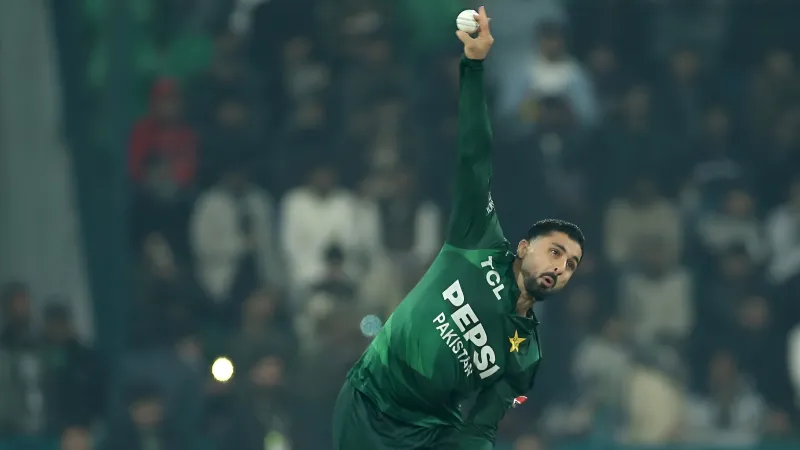

Pakistan should play Abrar Ahmed against England, because the current balance of the side is skewed too heavily towards batting depth at the cost of wicket-taking threat. Pakistan selection debate ultimately comes down to impact, not comfort. Against an aggressive England lineup, Pakistan needs strike bowlers more than extra runs from number nine. This directly affects the Pakistan playing XI against England, fuels the ongoing inclusion debate, and ties into wider questions like whether he should play for Pakistan given the visible Pakistan all-rounders problem.
England demands wicket-taking spin
England’s batting approach against Pakistan is built on pressure, tempo, and dismantling defensive bowling. Containment spinners rarely survive long spells against them. Abrar offers something different because he attacks the stumps, uses pace variation, and is willing to concede runs in exchange for wickets. In the Pakistan vs England context, this risk profile matters. England is far more likely to be slowed by losing wickets than by facing a longer tail. Selecting him is less about replacing a player and more about restoring a clear bowling identity.
Batting depth has crossed its limit
Pakistan’s recent team combinations show an overcorrection after collapses, leading to batting depth stretching to number nine. Modern white-ball cricket does not reward this approach if it compromises bowling strength. The Pakistan all-rounders’ problem becomes evident when multiple players are selected for partial skills rather than excellence in one. Against England, this balance tilts dangerously. Adding him means accepting a shorter batting lineup but gaining a specialist threat capable of changing the match within a spell.
Shadab’s role under scrutiny
The Shadab Khan replacement discussion is uncomfortable but unavoidable. Shadab’s value has traditionally come from control, athletic fielding, and lower-order batting. However, when bowling impact drops, Pakistan must reassess roles rather than reputations. Abrar Ahmed does not replicate Shadab’s all-round package, but he compensates by offering something Pakistan otherwise lacks in the middle overs: unpredictability. This is a tactical substitution, not a personal indictment.
Conditions favor attacking bowlers
Pakistan pitches used against England in recent years have rewarded bowlers who attack rather than defend. Flat surfaces with short boundaries punish conservative lines but still allow wicket-takers to influence the game through variation and deception. Abrar’s bowling style aligns with these conditions far more naturally than defensive spin. When England pushes the tempo, a bowler who invites mistakes is more valuable than one who merely delays them.
Numbers without exaggeration
While exact figures vary by format and venue, Ahmed’s reputation has been built on consistent wicket-taking rather than economy-rate bowling. Pakistan’s recent struggles have not stemmed from a lack of runs alone but from failure to break partnerships. Even without overstating statistics, the logic is clear: England lose momentum only when wickets fall, and heis among Pakistan’s most natural wicket-taking spin options.
Ahmed’s selection debate should not revolve around fear of batting collapses but confidence in bowling impact. Pakistan already possesses hitters deep enough to survive without batting till nine. What they lack, especially against England, is a middle-overs bowler who can force errors rather than wait for them. Playing him addresses that imbalance directly. The likely outcome of his inclusion is not just more wickets, but clearer intent in team selection. If Pakistan wants to compete with England’s aggression, it must meet it with bravery rather than insurance.
Key Takeaway
Pakistan is stronger against England when they choose wicket-taking intent over excessive batting depth, making Ahmed a logical selection.
FAQs
Should Abrar play for Pakistan against England?
Yes, because England’s aggressive batting rewards teams that prioritize wicket-taking over containment.
What is Pakistan’s all-rounder’s problem?
Pakistan often selects too many players with partial skills, weakening both bowling impact and role clarity.
How does Abrar Ahmed help against England?
He attacks the stumps and invites mistakes, which is more effective against high-tempo batting lineups.
Is Shadab Khan likely to be dropped?
Selection debates suggest role reassessment is possible, though final decisions depend on balance rather than form alone.
Which pitch conditions suit Abrar Ahmed most?
Flat pitches where batters attack aggressively often suit wicket-taking spinners willing to take risks.
Disclaimer: This blog post reflects the author’s personal insights and analysis. Readers are encouraged to consider the perspectives shared and draw their own conclusions.