

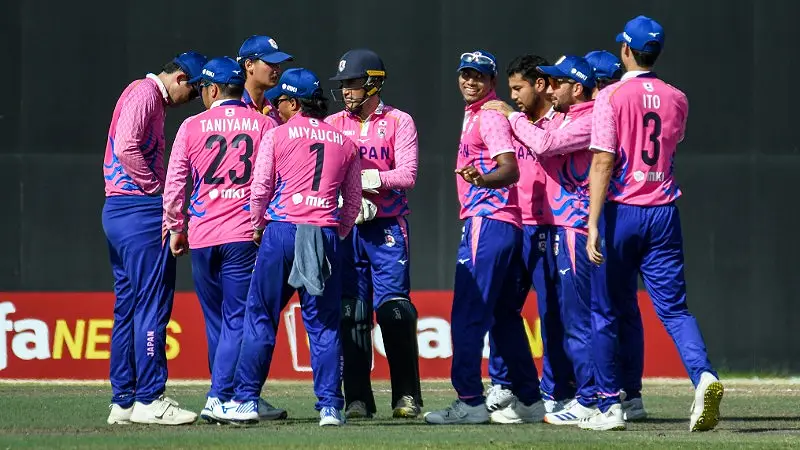

Japan doesn’t have professional cricket. It doesn’t have Test status, a major domestic structure, or a history of producing players the world has heard of. What it has is a functioning T20 league at the Sano International Cricket Ground, a draft system, retained players, and in 2026, a format compact enough to concentrate genuine competitive cricket into three days. The Japan Premier League is not the IPL. It’s not trying to be. What it is trying to do is create the conditions where Japanese cricketers face better opposition than they would otherwise encounter and use that exposure to develop faster than grassroots cricket alone allows.
Japan Premier League Format and Structure
The Japan Premier League started with scattered venues and inconsistent organisation. The 2026 edition has moved to a centralised format, all matches at Sano, condensed into a short tournament window, with a draft system providing each team a structure that creates genuine competition rather than mismatched rosters. The retained player element builds familiarity and loyalty between players and franchises across editions. None of this is fully professional yet. There are no salaries. The infrastructure is modest. But the format itself, concentrated, competitive, with defined team identities, gives the tournament the shape that eventually supports growth when funding arrives.
Foreign Players Raise the Quality Floor
The inclusion of one overseas professional per team is the single most impactful change the Japan Premier League has made. A Japanese batter who spends a week bowling against a professional T20 cricketer in the same net session learns something in that week that years of domestic competition can’t provide. The foreign player isn’t there to dominate the tournament; they’re there to demonstrate the standard the local players are aspiring toward. In non-traditional cricket markets, this matters enormously.
JPL 2026 Sano Conditions Test Adaptability
The Sano International Cricket Ground doesn’t produce the extreme conditions that define traditional cricketing nations. Pitches offer balanced rather than decisive assistance, neither dramatically pace-friendly nor spin-friendly. That sounds like a limitation. For a development tournament, it’s actually an advantage. Players who learn to bat and bowl on neutral surfaces develop the technical foundations that allow adaptation to extreme conditions later. Specialist skills on predictable surfaces produce specialists. Adaptable skills on balanced surfaces produce versatile cricketers.
Development Is the Whole Point Here
The Japan Premier League’s commercial model is currently held together by goodwill and limited sponsorship rather than sustainable revenue. That makes it fragile in the short term and potentially transformative in the long term if the right investment arrives. The development pathway it creates, junior programmes feeding into JPL squads feeding into national team selection, is exactly the funnel that established cricket nations built decades ago before their domestic structures became self-sustaining. Japan is building that funnel now in compressed time with limited resources.
Where JPL Goes After This Season
Expansion options for the Japan Premier League are straightforward in theory: more teams, longer tournament, higher-profile overseas players, and complicated in practice because all three require money the league doesn’t currently have. Sponsorship in a non-traditional cricket market is a harder sell than in established ones. Infrastructure investment requires confidence that cricket’s footprint in Japan will grow to justify the cost. The 2026 edition, consolidating its centralised format and maintaining competitive standards, is the necessary precondition for any of those expansion conversations to become realistic.
Japan isn’t cricket’s future in the way India or England is cricket’s present. It’s cricket’s possibility in a market where nobody expected the sport to take hold. JPL 2026 is evidence that the possibility is becoming something more concrete.
- Does the Japan Premier League’s development model represent cricket’s best path into non-traditional markets, or is the investment required too significant for the return it produces? Drop your take and follow for cricket updates.
FAQs
What is the Japan Premier League 2026 format?
It is a short T20 tournament played over a few days with multiple teams competing in a centralized venue format.
Why are foreign players important in the JPL T20 tournament in Japan?
They raise the competition level and help local players gain exposure to higher-quality cricket.
How does the Japan Premier League help the development of cricket in Japan?
It connects grassroots programs with competitive cricket and supports player progression toward the national level.
Which venue hosts Sano International Cricket Ground matches in JPL?
All matches are played at the Sano International Cricket Ground to ensure consistency and better organization.