

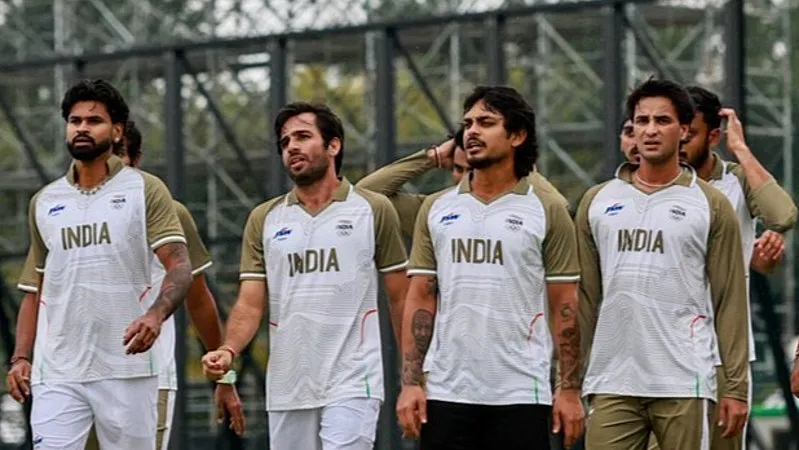

The format, not form, is the obstacle, and it was stacked against India before the tournament began. India were seeded straight into the quarter-finals, so their batters get three matches at most, and the opener against Afghanistan was washed out without a ball bowled. Associate Nation batters, meanwhile, banked group-stage innings before India’s campaign even started. Predictions naming Sharma as the likely top scorer overlook that structure, and every rain delay in Aichi tilts the numbers further away from India’s top order.
Three Matches Is India’s Ceiling
Ten teams contest the men’s competition, but only six play a group stage. India, Pakistan, Sri Lanka and Bangladesh were seeded directly into the quarter-finals and skipped the round-robin entirely. That seeding sets a hard limit. The absolute maximum for any India batter, Sharma included, is three innings: a quarter-final, a semi-final and a final, and only if India win every match they play and the weather holds for all three.
Associate sides can bank two group games plus three knockout matches, five innings in total. That two-innings head start exists before a single India batter walks out. In a race decided by aggregates, extra innings matter more than anything else.
Associates Banked Their Numbers Early
While India waited for their bye to take effect, Group A and Group B were already producing scores. Nepal beat Afghanistan by five wickets on September 25 to top Group A. A day earlier, Malaysia beat Hong Kong by eight wickets to top Group B. Muhamad Syahadat (36*) and Virandeep Singh (32*) shared an unbeaten 70-run stand in that chase.
Both teams reached the quarter-finals with a completed innings already on the board. No India batter can match that under this format, regardless of reputation or IPL pedigree. The runs may look small, but they are real, and they count.
Batter | Team | Matches Played | Runs | Strike Rate |
|---|---|---|---|---|
Muhamad Syahadat | Malaysia | 1 | 36* | Not out (chase) |
Virandeep Singh | Malaysia | 1 | 32* | Not out (chase) |
Abhishek Sharma | India | 0 | Yet to bat | – |
Shreyas Iyer | India | 0 | Yet to bat | – |
Asian Games 2026 Highest Run Scorer
Right now, the leaderboard belongs to the associate nations who have already batted. Malaysia’s openers and Nepal’s top order have real numbers logged, however modest, while India’s contenders have nothing at all. For now, the most fancied batters in the draw sit at the bottom of the chart, level with players who haven’t even been picked.
That gap will only close if India reach the final and their two remaining matches produce big individual scores. A single failure in the semi-final would effectively end any Indian batter’s chance. There is also a trap in the opposite direction. If India bat second and chase a modest target quickly, even a set batter might finish unbeaten on a low score, which keeps the total small.
Sharma Starts From Zero
Abhishek Sharma is still in India’s squad and remains a plausible contender on raw striking ability. The calendar, though, is working directly against him. India’s first game was the quarter-final against Afghanistan at Korogi Sports Park in Nisshin on September 28. It was washed out completely, and India advanced purely on their higher ICC ranking.
That leaves Sharma, like every India batter, with zero runs and zero balls faced heading into the semi-final. He has already lost one of the three scoring chances the format allowed him. For an opener built on fast starts, two innings is a tiny sample to top a leaderboard.
Rain Could Settle the Whole Race
Rain has shaped this tournament once already, washing out the India-Afghanistan quarter-final and a Malaysia-Oman group match. Forecasts around the Aichi venues suggest more disruption is possible through the knockout rounds.
Another washout in the semi-final or final would cap India’s batters at two innings, or even one, for the whole competition. Surviving associate sides with a clean run would keep adding to totals they’ve already banked. The weather, not bowling attacks, may end up deciding who finishes on top.
India have shown a short campaign can still produce a standout, with Yashasvi Jaiswal’s 49-ball hundred against Nepal in the 2023 quarter-final. Unless the skies clear and India’s batters score heavily twice, the Asian Games 2026 highest run scorer will most likely come from a team that played the group stage.
Can Abhishek Sharma overturn a two-innings deficit, or does an associate batter take this title? Tell us who you’re backing.
Frequently Asked Questions (FAQs)
Who has the most runs in Asian Games cricket so far?
Malaysia’s Muhamad Syahadat leads the confirmed scorers with 36 not out. Teammate Virandeep Singh has 32 not out, while every India batter is yet to face a ball after the washout.
How many matches will India play at the Asian Games?
India will play a maximum of three matches. They were seeded directly into the quarter-finals, so their only possible games are the quarter-final, semi-final and final, and the first was already washed out.
Is Abhishek Sharma playing in the Asian Games?
Yes, Abhishek Sharma is part of India’s squad for the tournament. He has not faced a ball yet because India’s quarter-final against Afghanistan at Korogi Sports Park in Nisshin was washed out on September 28.
When is the Asian Games cricket final?
The men’s final takes place in early October 2026 at the Aichi venues in Japan. India’s semi-final opponent will come from the Nepal vs Sri Lanka and Bangladesh vs Malaysia quarter-finals on September 29.
Who won cricket gold at the last Asian Games?
India won the men’s cricket gold at the 2023 Asian Games in Hangzhou. Yashasvi Jaiswal lit up that campaign with a 49-ball hundred against Nepal in the quarter-final.