

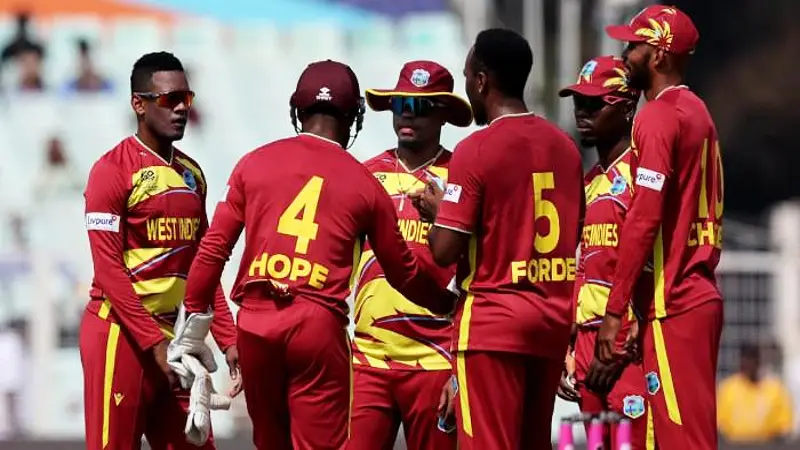

West Indies spin bowling in the T20WC 2026 has become the defining factor behind their success because their slower bowlers control the middle overs, compensate for seam limitations, and create matchup advantages. This West Indies bowling attack relies heavily on the duo of Akeal Hosein and Gudakesh Motie, whose consistency has reshaped their strengths and weaknesses in the campaign. More importantly, their impact has changed the West Indies seam vs spin performance analysis, making spin, not pace, their primary wicket-taking threat.
Spin Controls Middle Overs
The West Indies bowling attack’s biggest strength is middle-over control. Modern T20 matches are often decided between overs 7 and 15, and this is where their spinners dominate.
Hosein’s accuracy limits scoring opportunities, while Motie’s variations force batters into risky shots. Their ability to slow the run rate creates pressure, leading to mistakes even without express pace.
This strategy is especially effective on dry surfaces, where the ball grips and turns more. In these conditions, the West Indies don’t need high pace; they need discipline and consistency, which their spin unit provides.
T20 World Cup: Seam Attack Plays Supporting Role
Pre-tournament expectations suggested seam bowling could be a weakness. However, instead of leading the attack, seamers like Shamar Joseph now play a supporting role.
This adjustment has improved overall balance.
In the West Indies seam vs spin performance analysis, seamers focus on:
- Early powerplay pressure
- Hard lengths instead of wicket-hunting
- Creating pressure for spinners to exploit
This tactical shift reflects a clear strategy: seam starts the pressure, spin finishes it.
Key Threat Against Zimbabwe Batting
The West Indies vs Zimbabwe spin bowling threat is particularly important because Zimbabwe traditionally handles pace better than quality spin.
Zimbabwe’s batters prefer pace coming onto the bat, but disciplined left-arm spin disrupts timing and forces horizontal bat shots.
Players like Roston Chase add further flexibility by providing control and bounce, making it difficult for batters to attack consistently. This gives the West Indies a clear tactical advantage in spin-friendly conditions.
Historical Legacy of West Indies Spin
West Indies’ reliance on spin is not new; it follows a proven historical model. During their championship victories in 2012 and 2016, players like Sunil Narine and Samuel Badree controlled games through economy and breakthroughs. That formula allowed their power-hitters to operate without scoreboard pressure.
The current team mirrors that blueprint. Instead of depending only on fast bowling, they are using spin as a defensive and attacking weapon. This continuity strengthens their tournament credibility and reinforces their tactical identity.
West Indies spin bowling in the T20 WC is not just a strength; it is their primary match-winning weapon. By shifting focus away from pace and building their strategy around spin control, they have created a balanced and adaptable bowling attack. This approach allows them to defend totals, control momentum, and exploit conditions effectively.
However, their success will depend on maintaining consistency against stronger batting lineups that can attack spin aggressively. If their spinners continue performing at this level, the West Indies have a genuine chance to progress deep into the tournament and challenge stronger teams. Spin is no longer their support system; it is their foundation.
Key Takeaway
West Indies’ World Cup success depends heavily on their spinners controlling the middle overs and compensating for pace limitations.
FAQs
What makes West Indies spin bowling so effective in the T20 World Cup 2026?
Their spinners control run rate, build pressure, and exploit spin-friendly conditions better than their seamers.
Why do the West Indies rely more on spin than pace now?
Their current bowling attack lacks consistent high-pace wicket-takers, making spin a more reliable option.
How do Akeal Hosein and Motie impact match results?
They slow scoring and force risky shots, creating wicket opportunities through pressure.
Can West Indies win the T20WC with a spin-heavy attack?
Yes, if conditions support spin and their batters provide competitive totals.
Which teams are most vulnerable to West Indies spin bowling?
Teams that struggle against left-arm spin and rely heavily on aggressive middle-over batting are most vulnerable.