

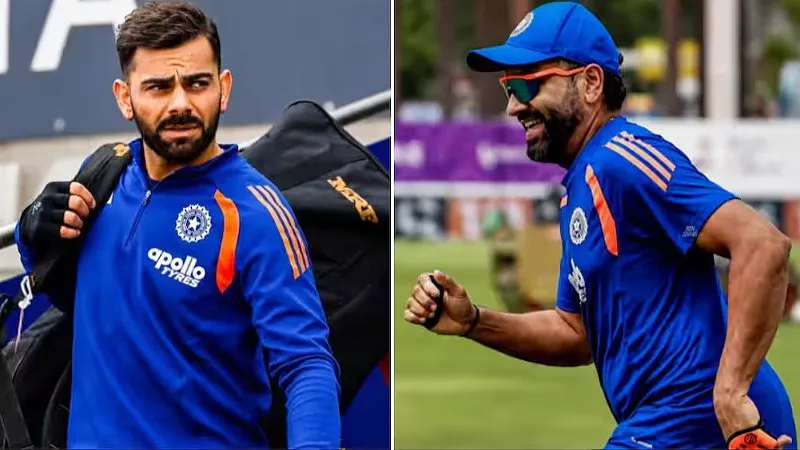

Because Kohli and Rohit no longer have another format to fall back on, and India’s team management is now asking them to sit out ODIs anyway. Gautam Gambhir’s coaching staff wants a structured rest plan through bilateral series before the 2027 World Cup, giving fringe players real game time without ever dropping the senior trio outright. KL Rahul sits in the same conversation, facing an identical squeeze. The debate now shapes every squad meeting on the road to South Africa, starting with this week’s series opener against England.
Gambhir’s Selectors Face a Delicate Trust Test
India’s ODI series against England got underway on July 14, 2026, but the bigger story is unfolding away from the middle. Team management and selectors are in active discussion with Virat Kohli, Rohit Sharma and KL Rahul about a structured rotation plan that runs through bilateral series ahead of the 2027 World Cup in South Africa.
The idea is not to drop anyone. It is to rest each player periodically, spacing out their ODI workload while handing fringe players enough matches to be genuinely ready if called upon. Gambhir’s group wants that depth tested and settled long before the tournament starts, not discovered in a crisis.
Kohli Rohit India ODI 2026 rotation policy
The plan itself is simple to describe and hard to execute. Selectors want each senior player rested for select bilateral fixtures rather than entire series, so no single batting position goes untested for too long. A player skipping a leg of the England series, for instance, would return for the next assignment rather than disappearing from the format altogether.
That distinction matters. Team management keeps insisting this is about workload, not form or age. Whether Kohli, Rohit and Rahul see it the same way is a separate question, and one nobody inside the camp has answered publicly yet.
The Case for Managing Their Workload
The reasoning is straightforward. Nobody wants a senior player breaking down mid-series with no one else carrying enough recent game time to slot straight in. India have roughly 15 confirmed ODIs through the 2026 calendar year, plus further bilateral fixtures in 2027 before the World Cup begins, which is not a wide window to identify and settle on backup options.
Waiting until injury forces a change has burned teams before. Gambhir’s management would rather test three or four alternates now, across low-stakes bilateral cricket, than hand a debutant his first cap in a World Cup knockout.
The Catch: No Other Format Left
Here is where the plan runs into resistance. Kohli and Rohit retired from T20 Internationals in June 2024, days after winning the T20 World Cup. Kohli then retired from Test cricket in May 2025, and Rohit followed him out of the format later that year. Rahul, too, plays little white-ball cricket beyond ODIs.
For all three, ODIs are the only international cricket left on the calendar. Resting them from a bilateral series does not free up energy for another format. It simply means sitting out entirely for that window, which is a harder ask than the framing suggests.
Player | Format Status | ODIs Played | Age (2026) |
|---|---|---|---|
Virat Kohli | ODIs only | ~9 ODIs since May 2025 Test retirement | 38 |
Rohit Sharma | ODIs only | ~12 ODIs since 2025 Test retirement | 39 |
The Fringe Players Set to Benefit
The upside, at least on paper, is clear. India need proven alternatives at the top of the order and in the middle overs before landing in South Africa, and bilateral cricket against England is exactly where that depth gets built without World Cup pressure attached.
Shubman Gill has already backed the thinking, revealing he discussed squad combinations with Kohli at the nets before this series. Neither Kohli nor Rohit has addressed the rotation plan directly. Rohit said in 2025 that he fully intends to be playing when the 2027 tournament arrives, calling it the one title he wants most. Kohli remains involved in 2027 squad conversations, and Gill has called both players an integral part of his ODI side, their composure under pressure impossible to fully replace.
Until either man speaks on it directly, the Kohli Rohit India ODI 2026 rotation policy stays a management idea rather than a settled selection call, and the next few bilateral series will show how much say the players actually get.
Should Gambhir rest a fit Kohli or Rohit against England this week, or is uninterrupted game time non-negotiable at 38 and 39? Drop your verdict in the comments.
Frequently Asked Questions (FAQs)
Why is India considering rotation for Kohli and Rohit in ODIs?
Team management wants tested backup batters ready before the 2027 World Cup. Resting players periodically across bilateral series lets fringe options build game time without any senior player losing his place.
Do Kohli and Rohit still play T20Is or Tests?
No, both have already retired from those two formats. Kohli and Rohit quit T20Is in June 2024 and Test cricket in 2025, leaving ODIs as their only international format now.
Is KL Rahul included in India’s ODI rotation plans too?
Yes, Rahul is part of the same rotation conversation as Kohli and Rohit. Like the other two, he plays little white-ball cricket outside ODIs, making workload management just as relevant for him.
When does India’s ODI rotation plan actually start?
There is no confirmed start date for the rotation plan yet. The England series beginning July 14, 2026 is the first assignment being discussed as an early test case for the idea.
How many ODIs does India have before the 2027 World Cup?
India have about 15 confirmed ODIs across the 2026 calendar year. Additional bilateral fixtures follow in 2027 before the tournament in South Africa gets underway.