

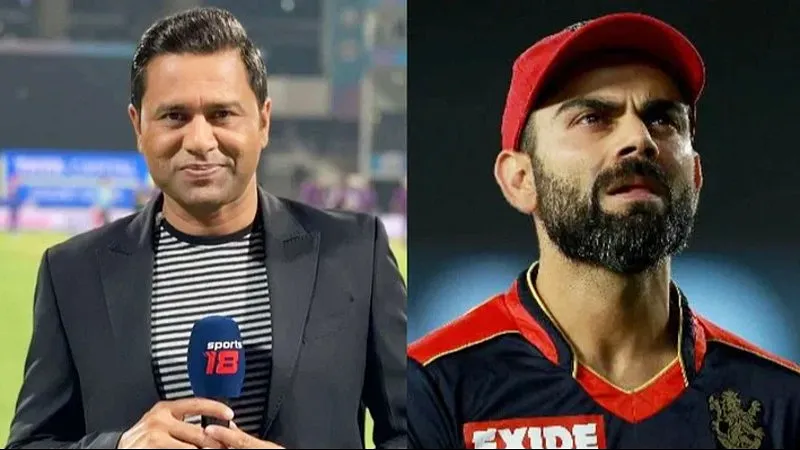

When Kohli announced his Test retirement on May 12, 2025, the tributes came quickly. Aakash Chopra was different. On his YouTube channel, Chopra did not just mourn the end of an era: he issued a structural warning. “He played Test cricket with the intensity of T20s,” Chopra said. “He ran a marathon at the speed of a sprint and kept running, and that is absolutely insane.” That is not a eulogy. It is a diagnosis.
What Chopra Actually Said About Kohli’s Exit
In his YouTube video after Kohli’s retirement, Chopra went beyond statistics to explain why the exit may have come when it did. “This is mad intensity. It’s one of its kind. We won’t get to see such intensity again, nor did we find it before him,” he said. He then cited VVS Laxman’s longstanding concern that Kohli’s intensity might one day burn him out, adding that the retirement may have been a mental decision rather than a physical one. Kohli played 123 Tests, scoring 9,230 runs at 46.85, while running across the outfield for every boundary and carrying the crowd’s emotional temperature for 14 years. That level of sustained output, Chopra argues, made him irreplaceable and ultimately unsustainable.
Virat Kohli’s Retirement Lesson: India Batters Intensity
Player | Career Era | Tests by ~Age 27 | Formats Active | Workload Note |
Virat Kohli | 2011-2025 | ~65 Tests | Tests, ODIs, and T20Is simultaneously | Ran a marathon at the speed of a sprint for 16 years. Laxman warned that intensity might burn out |
Shubman Gill | 2021-present | ~38-41 Tests (by 26) | Tests, ODIs, T20Is (all three active) | BCCI managing load; missed T20 Asia Cup 2025 after England Tests |
Yashasvi Jaiswal | 2023-present | ~28 Tests (by 24) | Tests, limited T20Is; ODIs beginning | Deliberately kept out of T20I squads to protect red-ball workload |
The Scheduling Reality for Gill and Jaiswal
Shubman Gill, now 26, is simultaneously India’s Test captain, ODI captain, and a T20I squad member. He has played 41 Tests and 61 ODIs, an all-format load already rivalling Kohli’s at the same career stage. After a gruelling five-Test England tour in 2025, where he averaged 75.40, Gill was named in India’s T20 Asia Cup squad. Suryakumar Yadav acknowledged the pressure, noting that Gill had been unavailable for T20Is because he was busy playing Test cricket and the Champions Trophy. Jaiswal, now 24 with 28 Tests, has been deliberately kept out of T20I squads to protect his red-ball load. That is the BCCI implicitly accepting Chopra’s argument: not every young batter can sustain Kohli’s emotional voltage across every format simultaneously.
Can the Next Generation Afford Kohli’s Model?
The modern international calendar is heavier than the one Kohli inherited in 2011. The WTC cycle, expanded ODI schedules, and the continuing pressure to play IPL alongside international cricket mean Gill and Jaiswal face a higher volume of competitive cricket than any previous Indian generation.
The question Chopra’s observation raises is not whether they are talented enough to play all formats, both clearly are, but whether sustaining Kohli’s emotional intensity across a 15-year career is survivable. Both batters still carry Kohli’s competitive fire as their explicit model. Neither has publicly framed their career in terms of managing that fire. The data from Kohli’s exit suggests the framing may matter more than either has acknowledged.
What This Lesson Demands in Practice
India’s selectors appear to be learning the lesson in practice before articulating it in theory. Jaiswal is being protected from T20I overload. Gill’s T20I appearances are being rationed against his Test and ODI captaincy demands. The challenge is that both players are products of a system that worshipped Kohli’s intensity as the gold standard, not a risk profile to manage. Chopra’s tribute reframes the question: the fire itself is not the problem. The Virat Kohli retirement lesson India batters intensity debate forces is whether running that fire at sprint pace across every format, every match, for fifteen years, is a model worth replicating or a warning India’s next generation cannot afford to ignore.
Does India need to protect Gill and Jaiswal from the Kohli intensity trap, or is that fire non-negotiable? Drop your take in the comments.
FAQs
Why did Virat Kohli retire from Test cricket?
Kohli announced his Test retirement on May 12, 2025, after 123 Tests and 9,230 runs at an average of 46.85. Aakash Chopra cited potential mental burnout, noting that Kohli’s relentless emotional intensity across five-day cricket was ultimately unsustainable at the level he maintained it.
What did Aakash Chopra say about Virat Kohli’s retirement?
On his YouTube channel in May 2025, Chopra said Kohli “played Test cricket with the intensity of T20s” and “ran a marathon at the speed of a sprint.” He also referenced VVS Laxman’s earlier warning that Kohli’s intensity might one day burn out.
Who will replace Virat Kohli in India’s Test team?
Shubman Gill was appointed India’s Test captain following Kohli and Rohit Sharma’s 2025 retirements, with Yashasvi Jaiswal as the starting opening batter. Gill averaged 75.40 in the 2025 England series; Jaiswal has 28 Tests at an average of 49.
How many Tests did Virat Kohli play in his career?
Kohli played 123 Tests for India across a 14-year career from 2011 to 2025, scoring 9,230 runs at 46.85 with 30 centuries. That is the fourth-highest century total by an Indian batter in Test history.