

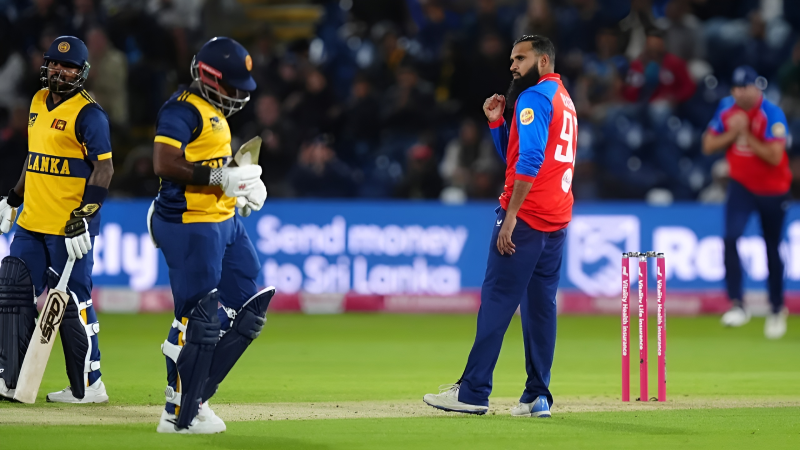

England’s bowlers exposed the real gap in the first T20I at Southampton, bowling Sri Lanka out for 135 in a 119-run defeat, England’s 13th straight win in the fixture. That scoreline is a symptom. The actual cause sits in structure: five Lanka Premier League franchises playing 24 matches a season against eighteen English counties running the Blast and the Hundred at the same time, each pushing new players into international cricket at the top of the world game, a gap that shows up every time these two sides meet.
A Top-Heavy Batting Order in Numbers
Sri Lanka have ranked eighth among the ten major T20I nations in overall run rate since the start of 2024, a pattern that has held for more than a decade. Between 2015 and 2019, they were tenth. Since 2020, they have sat eighth, unable to move despite changes in personnel and coaching staff.
The middle overs are where the numbers hurt most. Wanindu Hasaranga identified the exact weakness after a series defeat to Australia, pointing to the lower-middle and lower order as the soft spot in the batting unit. The issue is not just talent; it is repetition: batters facing high-quality bowling in only 24 domestic matches a season, on pitches built to favour spin over stroke play.
Pace Bowling Keeps Finding the Same Gaps
Sri Lanka’s domestic pitches, at venues like the R Premadasa and across the first-class circuit, have historically been set up for spin, which depresses middle-over scoring and sharpens the island’s spin bowlers rather than its batters against pace. When the side runs into genuine pace in unfamiliar conditions, the same collapse tends to follow.
They were bowled out for 95 against England in the T20 World Cup Super Eight in February, a 51-run defeat, and for 135 in Southampton in September. In both games, England’s seam and off-spin removed the top order quickly, leaving a lower order that could not rebuild. With only five franchises and 24 matches a season, a fringe batter might face just 30 or 40 deliveries of genuine domestic T20 cricket in an entire year, a fraction of what an English county player sees across a single Blast campaign.
The Hundred and Blast Pathway Explained
England’s system operates at a scale with no real parallel. The 2026 Vitality Blast ran across all eighteen first-class counties in three regional groups, producing 115 group and knockout matches. The Hundred ran alongside it through July and August with eight franchises and squads of sixteen to eighteen players each; its men’s salary pot rose 45 per cent to just over two million pounds per team for 2026.
Sonny Baker, who took three wickets on his international debut in the Sri Lanka series, had played 112 domestic T20 matches before winning his first cap. That is the pathway: county cricket feeding a second competition feeding international selection, and it simply does not exist at comparable scale or funding anywhere in Sri Lankan cricket right now.
Sri Lanka T20 Talent Pipeline England Comparison
The contrast in administrative stability matters as much as the match volume. The Lanka Premier League was cancelled entirely in 2025 while the board prioritised venue upgrades for the 2026 World Cup, and even after returning this year, the competition has faced government intervention and two terminated franchises. England, by comparison, runs its domestic calendar with the Blast finishing before the Hundred begins, all of it wrapped up before international fixtures start.
Country | Domestic T20 Competition | Teams / Matches | Pathway Notes |
England | Vitality Blast (24th edition, 2026) | 18 counties / 115 matches | All 18 first-class counties compete; every England T20I starter has 100+ Blast appearances |
England | The Hundred (6th edition, 2026) | 8 franchises / around 35 matches | Men’s salary pot 2.05m pounds per team (up 45% in 2026); women’s 880k pounds per team (up 100%) |
Sri Lanka | Lanka Premier League (6th edition, 2026) | 5 franchises / 24 matches | Skipped 2025 entirely; franchise terminated mid-2026; Icon player salary cap: 60,000 to 80,000 dollars |
Sri Lanka | SLC Invitational T20 League (2025) | 3 teams / 7 matches | Domestic supplemental tournament; low match volume for player development |
The squad numbers tell the same story from a different angle. Five Sri Lankan franchises carry squads of fourteen to sixteen players. England fields eighteen county sides plus eight Hundred franchises, each with squads up to eighteen deep, meaning vastly more contracted professionals are getting high-pressure T20 minutes every single year.
Closing the Gap Starts With Domestic Reform
Sri Lanka’s Transformation Committee, appointed earlier this year, has not yet published a specific reform plan for the T20 pathway. Dasun Shanaka, captain during the 3-0 series defeat in January, linked the batting group’s problems directly to the pitches his players train and compete on, which is at least an honest starting point for any structural fix.
The outline of a solution is not complicated: more matches through the domestic Invitational League, an expanded Premier League with higher minimum requirements for local players, and surface standards that produce flatter, more stroke-friendly tracks at board-owned venues. Until those changes land, the Sri Lanka T20 talent pipeline England comparison will keep producing the same result whenever the two sides meet, because one system keeps manufacturing readiness and the other keeps manufacturing scarcity.
Is the fix really about pitches and match volume, or does Sri Lankan cricket need a deeper governance reset first? Let us know your take.
Frequently Asked Questions (FAQs)
Why doesn’t Sri Lanka have a strong T20 domestic league?
Because the Lanka Premier League runs only 24 matches a season across five teams, far short of what players need. The competition was cancelled entirely in 2025 and has faced government intervention and terminated franchises since.
What is Sri Lanka’s biggest weakness in T20 cricket?
Their lower-middle and lower order, a problem first flagged publicly by Wanindu Hasaranga. Sri Lanka have ranked eighth among the ten major T20I nations in run rate since 2024.
How many teams play in England’s Vitality Blast?
All eighteen first-class counties compete in the Vitality Blast every season. The 2026 edition ran 115 group and knockout matches across three regional groups.
When did Sri Lanka last beat England in a T20I?
England have won 13 consecutive T20Is against Sri Lanka, including the September 2026 series opener. A confirmed date for Sri Lanka’s last win in the fixture is not available in current records.
Is the Hundred helping England’s player pathway?
Yes, it now runs alongside the Blast as a second high-pressure proving ground for domestic players. The men’s salary pool rose 45 per cent to roughly two million pounds per team for the 2026 season.
Disclaimer: This blog post reflects the author’s personal insights and analysis. Readers are encouraged to consider the perspectives shared and draw their own conclusions.