

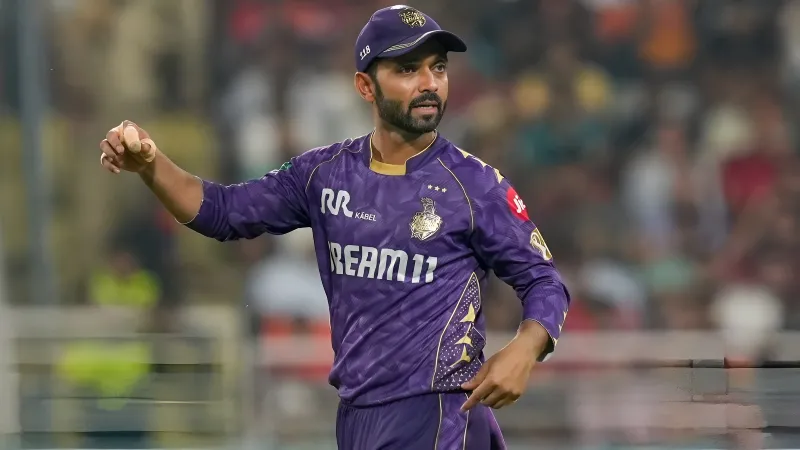

Ajinkya Rahane has the respect of teammates. He has the experience of a veteran. He has the composure that every captain needs when the match is live and the pressure is real. What he hasn’t produced at KKR is the specific output that justifies captaincy, a team that performs better because of how it’s led rather than despite how it’s managed. KKR’s inconsistent start isn’t just a results problem. It’s a structural problem where the batting order changes every match, the bowling rotations lack conviction, and the tactical decisions in key phases arrive a phase too late to matter. Rahane didn’t create every one of those problems. But as captain, the responsibility for solving them belongs to him.
Rahane Reacts When He Should Anticipate
The specific leadership gap that KKR’s early campaign has exposed isn’t tactical knowledge; Rahane understands T20 cricket well enough to explain every bowling change and batting decision after the fact. The gap is timing. T20 captaincy at the highest level requires making bowling changes before the expensive over rather than after it. Setting fields before the boundary is hit rather than in response to it.
Promoting the pinch hitter when the required rate is still manageable rather than when it has already climbed beyond comfortable acceleration. Rahane’s captaincy decisions are being made at the right conclusion, but one phase too late, which in a twenty-over format means the decision that would have changed the match has already been rendered irrelevant by the runs scored while the decision was being processed.
Tactical Decisions Look Wrong Every Match
The bowling rotation choices that have drawn the most scrutiny aren’t obviously wrong in isolation; each has a logical explanation. The problem is they’re adding up across multiple matches into a pattern where KKR’s bowling changes consistently fail to prevent the partnership or the scoring phase they were designed to interrupt.
Toss calls in conditions where the dew factor is a known variable, pitch choice on surfaces where the team’s specific strengths are least applicable, introduction of key bowlers in phases that don’t reflect their peak effectiveness, individually explainable, collectively forming the pattern of a captain whose match-reading speed doesn’t match the format’s demands.
IPL 2026 Exposed KKR’s Unsettled XI Problem
The 2026 campaign has confirmed that KKR’s XI instability isn’t a rotation strategy; it’s an absence of settled roles producing constant experimentation in match conditions rather than in practice. Batting order changes based on match situation rather than pre-defined function means every batter arrives at the crease, making the in-match decision that should have been made in the pre-match briefing. Cameron Green is batting in different positions across consecutive matches.
The overseas slot usage is shifting based on opposition rather than squad strength. The middle-order sequence adjusts to conditions rather than forming a settled baseline that allows execution to improve across matches. Settled XIs execute better across a tournament because players know their function before the first ball is bowled. KKR’s XI hasn’t given its players that certainty.
Leadership Change May Already Be Inevitable
The specific question isn’t whether KKR should change captains; it’s whether changing captains produces different results rather than just different decision-making under the same structural problems. KKR’s batting order instability, bowling role confusion, and XI selection uncertainty aren’t problems that automatically resolve through a captaincy change if the same selection decisions are made by a different person.
The realistic case for a leadership transition is the team dynamics reset rather than the tactical improvement. A new captain’s authority produces temporary focus and renewed clarity of purpose that sometimes breaks the psychological pattern of repeated failure more effectively than continued persistence with the struggling incumbent. The problem is that temporary focus fades within two or three matches, leaving the structural problems exactly where they were.
- Does Rahane turn KKR’s campaign around before the conversation about his captaincy becomes too loud to ignore, or does the structural problem persist long enough to make a mid-season leadership decision unavoidable? Drop your take and follow for IPL updates.
FAQs
What is the main issue with Ajinkya Rahane’s captaincy?
The primary concern is inconsistent decision-making combined with a lack of team stability in key match situations.
Why are the Kolkata Knight Riders struggling?
KKR’s struggles stem from poor team combinations, unclear roles, and failure to adapt tactically during matches.
Can KKR still recover in IPL 2026 under Rahane?
Yes, but it would require immediate tactical improvements and consistent performances across all departments.
Who could replace Ajinkya Rahane as KKR captain?
Internal options exist within the squad, making a mid-season transition a realistic possibility if results don’t improve.
Disclaimer: This blog post reflects the author’s personal insights and analysis. Readers are encouraged to consider the perspectives shared and draw their own conclusions.