

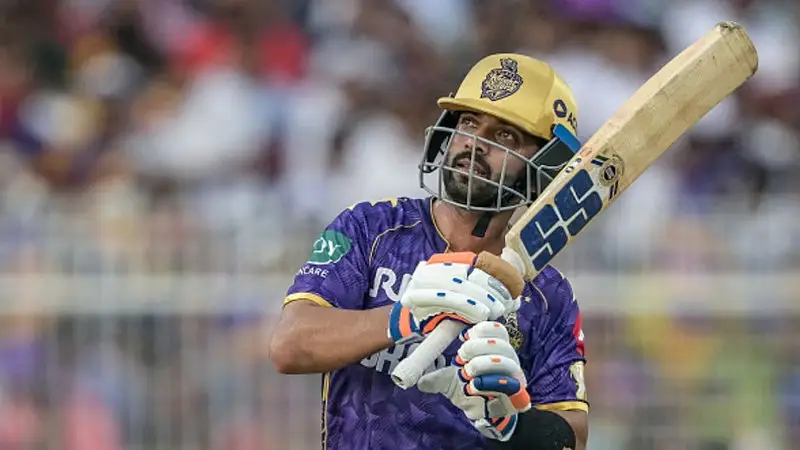

Ajinkya Rahane scored 8 off 10 balls against Sunrisers Hyderabad. That number circulated as evidence of a problem. Virender Sehwag looked at the same number alongside the match situation, the pitch conditions, the wickets in hand, and the partnership context, and concluded the criticism was missing the point. Rahane also scored 67 off 40 balls against the Mumbai Indians at Wankhede. The same critics who used the 8 out of 10 as a verdict didn’t weigh the 67 out of 40 equally in the opposite direction. Statistical cherry-picking produces the narrative you want rather than the assessment the evidence supports. Sehwag is right. The full picture looks different from the single-match highlight.
One Bad Innings Cannot Define Rahane
The specific problem with using 8 out of 10 as evidence of a strike rate crisis is that it ignores why those 10 balls were bowled the way they were. Eden Gardens’ slower surfaces in the early overs reduce the scoring window for every batter, not through individual technical failure but through surface conditions that make timing genuinely harder.
A batter who scores 8 off 10 on a surface that’s gripping and assisting seam movement in the first six overs isn’t necessarily failing; they’re surviving the phase where collapse risk is highest and preserving the partnership that allows the innings to reach the acceleration phase. The 8 out of 10 without the Eden Gardens context and the match situation that produced it is data. With that context, it’s a tactical contribution.
The Career Numbers That Defend Rahane
Rahane’s IPL career strike rate history provides the context that single-match criticism removes. 172.48 in 2023. 123.46 in 2024. 147.72 in 2025. Natural variation across seasons reflects different team roles, different pitch profiles, and different match situations rather than evidence of consistent underperformance. The 2024 figure is the one critics would isolate as evidence of the problem.
The 2023 and 2025 figures around it confirm the 2024 dip was contextual rather than permanent. His 67 off 40 balls against MI at Wankhede in the current campaign, the same season where the 8 off 10 became the narrative, confirms his ability to accelerate when conditions and match situations demand it.
IPL 2026 Needs Rahane’s Specific Function
The specific function Rahane provides for KKR in IPL that makes the strike rate criticism structurally flawed is the anchor role that allows aggressive batters around him to play without the cognitive burden of being the last reliable wicket. When Rahane is batting at the top alongside Finn Allen, Allen attacks because Rahane’s presence means his wicket isn’t the last boundary between KKR’s innings and a collapse.
That specific contribution, the security that enables aggression in the next batter, doesn’t appear in the strike rate column. It appears in Allen’s strike rate, in Rinku Singh’s finishing confidence, in the total KKR posts rather than the individual contribution Rahane’s numbers suggest.
Sehwag Said What Numbers Already Confirmed
Virender Sehwag’s public defence of Rahane is notable because Sehwag was himself the opposite batting profile, a pure aggressor whose own career was the antithesis of anchoring. When the most aggressive batter of his generation defends a cautious player’s tactical value, the argument carries more weight than when a defensive player defends defensive batting.
Sehwag’s point is statistical rather than sentimental: evaluated across multiple seasons and multiple match situations, Rahane’s T20 numbers confirm a consistent performer whose worst matches look worse than they are because the context that explains them isn’t captured in the raw data. The career numbers and Sehwag’s assessment agree.
- Is the Rahane strike rate criticism in IPL a fair assessment of underperformance or a narrow reading of one innings that ignores both his career record and his specific tactical function for KKR? Drop your take and follow for IPL updates.
FAQs
What is Ajinkya Rahane’s strike rate in IPL 2026 so far?
Rahane has had mixed strike rate outings depending on match context, balancing an anchoring role with bursts of acceleration when required.
Why do experts defend Rahane against strike rate criticism?
Analysts like Virender Sehwag highlight his consistent T20 performance, strategic batting, and adaptability under different conditions as reasons for defending him.
How does Rahane’s performance compare to previous seasons?
His strike rates have varied across IPL 2023–2025, reflecting changes in match roles, pitch conditions, and team strategies, showing overall consistency.
Which pitches affect Rahane’s scoring the most?
Slower, turning tracks such as Eden Gardens tend to reduce strike rates, while faster grounds like Wankhede Stadium allow him to accelerate effectively.