

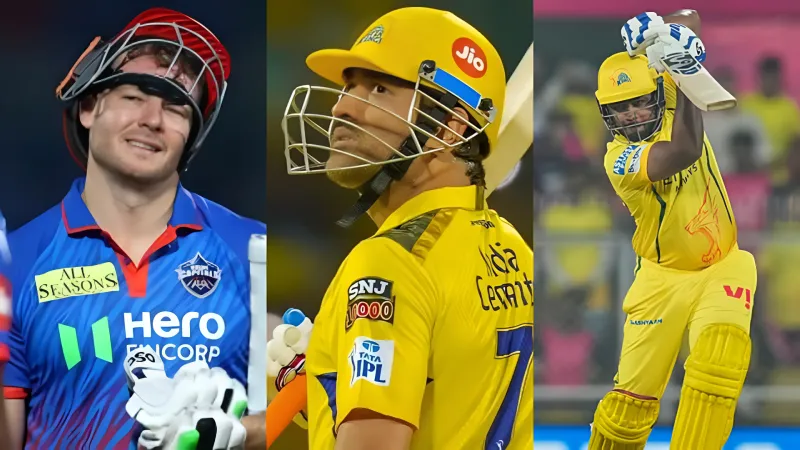

David Miller. On strike. Two runs needed from two balls. Non-striker at the other end. Prasidh Krishna is bowling. The logic was clean: keep the finisher on strike. Back your best hitter. Trust the training that produced the innings that got DC to this position. Miller refused the single that would have transferred strike and chose to face the last two deliveries himself. He missed the penultimate ball and needed a boundary off the final one. Jos Buttler ran him out with a direct hit. DC lost by one run. The logic was correct. The execution was not.
Dhoni Made the Same Costly Call
The 2014 T20I at Edgbaston provides the historical precedent that confirms this isn’t a situational error unique to Miller; it’s a recurring decision type that even the game’s most celebrated finisher has faced with the same outcome. India needed five from two balls. Dhoni refused a single to maintain strike, trusting his finishing ability in the same way Miller trusted his. The conditions favoured stroke play. The pressure altered execution. One run from the final ball meant India fell short narrowly. Dhoni’s decision wasn’t wrong by the logic of T20 finishing; an experienced, set batter facing the last two balls produces a statistically better outcome than exposing a lower-impact partner. But statistics describe probabilities. Individual deliveries produce outcomes that probabilities don’t guarantee.
IPL 2026 Proved Miller’s Call Was Wrong
The DC vs GT match in IPL 2026 adds the most recent and most precise data point to a pattern that T20 cricket produces repeatedly. A set batter refusing a single to maintain strike on the penultimate ball is the correct strategic instinct when execution follows. When execution fails, a missed shot, a yorker that lands exactly right, a slower ball that produces early commitment, the refused single retrospectively becomes the decision that cost the match. Miller was in form. The shot he planned was a reasonable response to the bowling. Prasidh Krishna executed a delivery that was specifically designed to remove that shot as an option. The margin between Miller’s bat and the right contact point was smaller than the margin between the single available and the two needed.
Samson Faced the Same 2021 Decision
IPL 2021’s Punjab Kings vs Rajasthan Royals fixture adds another case study that confirms the pattern’s consistency rather than its exceptions. Samson had scored a century and was the batter best positioned to win the match from the set position he occupied. Five runs needed from two balls. Single available on ball five. Samson refused it, trusting, as Miller and Dhoni had, that the set batter’s best chance of winning was maintaining control rather than creating a single-run-needed scenario with a less established partner at strike. Arshdeep Singh dismissed him on the final ball. The same logical framework produced the same outcome through a different match, a different player, and a different bowler executing the decisive delivery perfectly.
Right Decision Wrong Execution Same Outcome
The pattern across all three instances, Miller at Arun Jaitley, Dhoni at Edgbaston, and Samson in IPL 2021, is identical in structure even when different in detail. The decision to refuse the single is strategically sound by the logic of T20 finishing. The bowler on each occasion delivered precisely the ball that removed the specific shot the batter was planning. The margin between success and failure in each case was measured in centimetres of bat connection or ball placement rather than in decision quality. T20 cricket’s last-ball situations don’t produce the right decisions that guarantee the right outcomes. They produce decisions that are correct in probability while remaining susceptible to the single delivery that makes probability irrelevant for the specific batter facing the specific ball at the specific moment.
- Does the pattern of refused singles producing one-run defeats change how T20 finishers approach these situations in future matches, or does the logic of keeping the best hitter on strike remain the dominant strategy regardless of how often it produces the same outcome? Drop your take and follow for IPL updates.
FAQs
What happens if a batsman refuses a single on the second-last ball?
It forces them to face the final delivery, increasing control but also risk if they fail to score.
Why did David Miller refuse a single against the Gujarat Titans?
He aimed to keep striking as the finisher, trusting his ability to hit the winning runs.
Is refusing a single a good strategy in T20 cricket?
It can be effective if the striker is set and capable, but it depends on match conditions.
How often do teams lose after refusing a single in IPL matches?
There’s no fixed number, but several notable instances show it can backfire under pressure.
Disclaimer: This blog post reflects the author’s personal insights and analysis. Readers are encouraged to consider the perspectives shared and draw their own conclusions.