

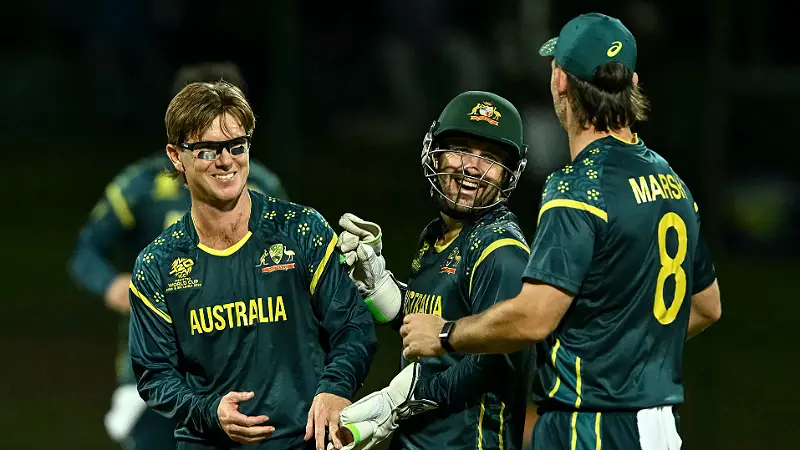

Yes, Australians care about the T20WC, even when public rhetoric suggests otherwise. Interest in the format hasn’t disappeared; it has shifted, fragmented, and become conditional on results and visibility. These debates around Australia’s white-ball priorities, preparation, and engagement have intensified. Statements from players like Adam Zampa highlight how seriously the team takes T20 cricket, even if fan behaviour and media narratives lag behind the team’s performance. This disconnect explains why Australia’s relationship with the T20WC feels so conflicted.
Public Interest vs Performance Cycles
Interest in T20 cricket in Australia fluctuates with performance. When performances are good, interest in the competition increases; however, should performance be poor, interest in the format is often sidelined. This is not just true of the T20 competition but is noticeably accentuated due to the short tournament’s window for visibility via early exits that reduce interest in emotionally investing in the format and support the conclusion that the T20 format does not matter.
Preparation Intensity Behind the Scenes
Despite outside perception, Australia’s T20 setup is deeply analytical and deliberately structured. Players and staff have repeatedly stressed that preparation for global events rivals and at times exceeds the work put into longer formats. Detailed opposition research, player-specific match-ups, role clarity within the XI, and flexibility based on pitch and venue conditions are central to planning. Training blocks are increasingly scenario-based, designed to mirror high-pressure moments rather than accumulate volume. The issue, therefore, isn’t neglect or lack of intent, but translating preparation into consistent execution under pressure, particularly in unfamiliar conditions where margins are thin, and adaptability becomes decisive.
T20 World Cup: Conditions, Scheduling, and Fan Access
T20 World Cups are often played outside Australian prime-time hours and largely behind paywalls. Limited free-to-air exposure and competition from domestic sports reduce casual viewership. Unlike Tests or the Ashes, T20 tournaments rely on immediacy and momentum factors disrupted when fans don’t regularly see their team play.
Results Snapshot, Not Records
Australia has reached multiple T20 World Cup knockouts and won the tournament in the past decade, proving its capability in the format. However, recent group-stage exits and losses to lower-ranked teams have shaped perception more than long-term trends. Short tournaments magnify failure far more than success.
Legacy vs Modern Reality
Australia’s historical success has been built on Tests and ODIs, where dominance over time matters more than short bursts. Early T20WCs followed a similar cycle: initial scepticism, gradual acceptance, then strategic buy-in. The difference now is scale: modern T20 cricket, driven by global leagues and analytics, punishes teams that adapt slowly. The lesson mirrors earlier ODI transitions; cultural resistance fades only after consistent success.
So, do Australians actually care? Yes, sort of. They’ll care about how each tournament turns out as much as how well they can connect with Australian performances through access, and whether there is something to build their confidence based on past results.
Should the preparation provide the execution, a significant follow-on of fan interest will be generated quickly. Conversely, if that does not occur, there will again be an indifference from them to protect themselves from any disappointment. Expect fan engagement to increase rapidly the moment that Australia looks like a serious contender!
Key Takeaway
Australians don’t dismiss the T20WC; they disengage when results fail to meet expectations.
FAQs
Why do Australians say they don’t care about the T20WC?
It often reflects frustration with results rather than genuine disinterest in the format.
Does Australia prepare seriously for T20 cricket?
Yes, players and staff consistently confirm extensive tactical planning.
Can scheduling affect fan engagement in Australia?
Yes, time zones and broadcast access significantly influence viewership.
Is T20 cricket less valued than Tests in Australia?
Culturally, yes, but competitive importance is steadily increasing.